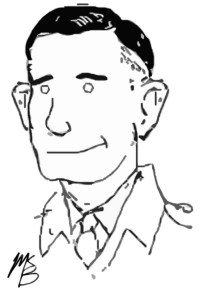
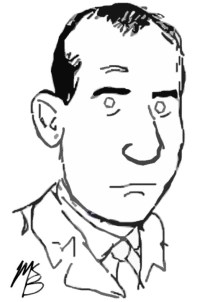
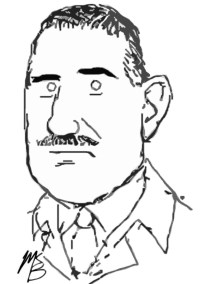
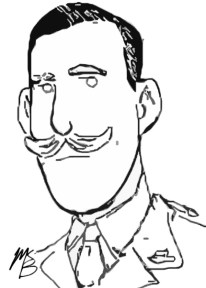
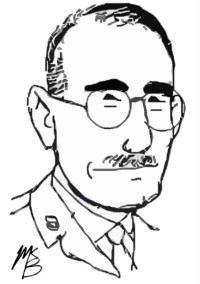
Maj. J.A. Hebb

Major John A. Hebb
West Nova Scotia Regiment
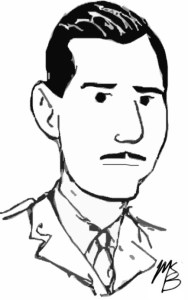
The Churchill visit was undoubtedly more than a matter of courtesy … This suggests that he completely recognizes Canada’s status as a world power as well as her unique position as a link with the United States on the one hand and Britain and France on the other. It is quite conceivable too that one of his motives was to draw the attention of the world to Canada’s present importance.

(quoted in National Post, 26 Jan 1952, 7)

Born in Hebbville, Nova Scotia on 19 August 1910, John Alexander Hebb was an graduate of University of King’s College and instructor at King’s College School in Windsor. An officer in the Lunenburg Regiment since 1927 and member of the COTC at university he mobilized with the West Nova Scotia Regiment on the outbreak of war in 1939.
Continue reading

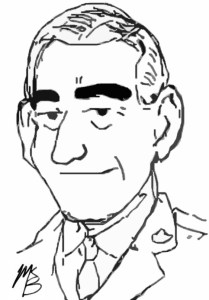
Lt-Col. L.T. Lowther

Lieutenant-Colonel L.T. Lowther
Prince Edward Island Light Horse
1st Infantry Brigade
West Nova Scotia Regiment

I think right now we are going through the most critical part of the war. What is needed most is equipment and money. Every plant in this country should be working night and day without holidays. It is not simply urgent that they do so; it is life and death. In my opinion, there isn’t anything that Canadians can do that they shouldn’t do, and do so quickly.

(Telegraph-Journal, 7 Jun 1941, 1)

Born in Prince Edward Island on 11 June 1896, Lewis Trueman Lowther was a First World War veteran, school principal, and commanding officer of the Prince Edward Island Light Horse since 1936. He enlisted with the 85th Battalion as a private in 1915 and served in France as a sergeant. After being commissioned as a lieutenant in England he returned to the front, where he was wounded in September 1918.

Continue reading

Maj. H.M. Eisenhauer

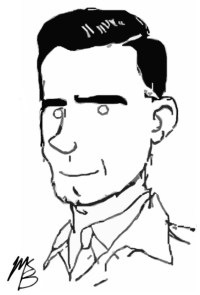
Major Harry Eisenhauer
West Nova Scotia Regiment
Eisenhauer

‘Tis true they say I died as heroes go,
I scorned to bow to shot and shell,
But boldly led on against the foe
And leading thus I fell.
Death comes swiftly for the brave.
This brush with glory
Meant the grave for me.

(Eisenhauer, “Visit from an Old Friend,” 1989)

Born on 9 July 1920 in Lower La Have, Nova Scotia, Harry MacDonald Eisenhauer was a Dalhousie University student when selected for officer training in 1940. He went overseas as a reinforcement officer and was attached to the West Nova Scotia Regiment. By the end of the war, when he led the regiment home as commanding officer, he was one of only a handful of originals still with the unit who had landed at Sicily on 10 July 1943.

Continue reading

Maj. W.W. Mair

Major W. Winston Mair
West Nova Scotia Regiment
Mair

Every Canadian must find his or her own answer to this problem of modern life. But we do have a responsibility to ensure that the answer does not lie behind a closed door—closed because we failed to think and act courageously and well … We also know that our outdoor heritage could slip away from us, while we ponder our choice of action in the name of progress.

(Winston Mair, North Bay Nugget, 10 Apr 1964, 3)

Born on 26 July 1914 in Battleford, Saskatchewan, William Winston Mair was an environmentalist and civil servant following service in the Second World War. Commissioned in August 1940, he joined the Saskatoon Light Infantry overseas and participated in the Spitzbergen Raid in Norway a year later. He served with the unit at the rank of major in the Italian theatre.

Continue reading

Lt-Col. J.A. Nesbitt

Lieutenant-Colonel J. Aird Nesbitt
West Nova Scotia Regiment
Nesbitt

“Monty runs his army, as I see it, on three main points—(1) Confidence—in each other and in our ability to beat the Hun. (2) Ruthless efficiency—you can deliver the goods or you get fired quickly. (3) Cheerfulness—everyone does his job cheerfully.

(Quoted in Jarymowycz, History of the Black Watch, 34)

Born in Westmount, Quebec in March 1907, James Aird Nesbitt was a McGill graduate and owner of Ogilvy’s Department Store in Montreal. Commissioned with the Royal Highlanders of Canada (The Black Watch), he went overseas in 1941 and transferred to the Cape Breton Highlanders (CBH), which deployed to the Italian theatre with the 11th Infantry Brigade in November 1943. “I went from private to brigadier-general in the army,” he later reflected on his military service. “And if anybody had told me during the 1930s that I would cross the golf course at Cannes with a tommy, I would have told them they were crazy.”

Continue reading

Lt-Col. F.E. Hiltz

Lieutenant-Colonel Frank Hiltz
West Nova Scotia Regiment
Hiltz

Maj. Frank Hiltz, a Nova Scotian … He had been running a variety of training programs at B Echelon and relieving the CO at times. Throughout those months he was among those left out of battle holding himself in readiness to take charge should the CO be disabled.

(Wilmot, Through the Hitler Line, 96)

Born in Halifax, on 9 July 1915, Frank E. Hiltz was the long serving second-in-command of the West Nova Scotia Regiment. He had joined shortly after Lieutenant-Colonel R.S.E. Waterman succeeded to command in December 1943. Hiltz took charge temporarily when Waterman was relieved in September 1944, but he would not officially assume command of the regiment until the removal of Lieutenant-Colonel A.L. Saunders in December 1944.

Continue reading

Lt-Col. A.L. Saunders

Lieutenant-Colonel Allan Saunders
West Nova Scotia Regiment
Saunders

Is conscientious and hard working … As [commander] he lacked confidence in himself and has apparently been unable to inspired his coy comds in carrying out their tasks. Under stress is pessimistic and indecisive and both these characteristics are communicated to his subordinates. He is not firm in assessing and dealing with shortcomings of his subordinates. Consider Saunders does not have required personality or qualities of leadership to comd inf bn in action.

(Adverse confidential report, Jan 1945)

Born on 24 April 1903 in Waterford, Ontario, Allan Livingston Saunders was a steel company general manager and militia officer with the York Rangers. He went overseas as captain in 1940, returned to take a course at RMC, and qualified as a general staff officer. While serving with the 1st Canadian Division in Italy, in September 1944, he was appointed the new commanding officer of the West Nova Scotia Regiment.

Continue reading

Lt-Col. R.S.E. Waterman

Lieutenant-Colonel Ronnie Waterman
West Nova Scotia Regiment
Waterman

A professional soldier of the Canadian permanent force, tough, colourful, jealous for the honour of his Regiment in battle or out of it, not always loved but always acknowledged a first-rate leader of men, he was destined to see the West Novas through some of their toughest battles and greatest glories and to make the Regiment famous throughout the Canadian Army.

(Raddall, West Novas: A History, 169)

Born in London, England on 25 November 1904, Roland Stephen Edward Waterman was a non-commissioned officer with twelve years in the Princess Patricia’s Canadian Light Infantry. Nicknamed “Ronnie the Rat,” according to C. Sydney Frost of the PPCLI, “Everyone was scared of him, not only because of his abrupt and intimidating manner but because he knew his stuff and was a highly professional soldier.” Commissioned in September 1939, Waterman was reassigned from the PPCLI to the West Nova Scotia Regiment in June 1943, shortly before the invasion of Sicily.

Continue reading

Brig. M.P. Bogert

Brigadier Pat Bogert
West Nova Scotia Regiment
2nd Infantry Brigade
Bogart

He always seemed to rise to the occasion when the going got tough, and set a wonderful example. He was an extremely brave man, and was invariably to be found somewhere up forward, personally leading the battalion, however stiff the climb or hard the marching. When he gave an order one always felt that his reasoning was sound and that he would not knowingly send you into an untenable position.

(Bill Thexton, quoted in John Gardam, Canadians in War and Peacekeeping, 10)

Born on 17 March 1908 in Toronto, Mortimer Patrick Bogert was an RMC graduate and Permanent Force officer since 1930. Still a lieutenant with the RCR shortly before the outbreak of the war, he rose quickly following mobilization and served as a general staff officer with the 1st Division. By late 1941 he was a lieutenant colonel attached as an observer with the British Army in Egypt and Libya. With this fighting experience from North Africa, he took command of the West Nova Scotia Regiment from July 1942 until January 1943, when temporarily assigned to staff of II Canadian Corps. By popular demand of his officers, he resumed command in June 1943.

Continue reading

Lt-Col. R.D. King

Lieutenant-Colonel R.D. King
West Nova Scotia Regiment
KingRD

There is no doubt that Col. King’s devotion to duty, both in the necessary administrative work prior to the operation and in the performance of his duties during the operation, contributed very considerably to the success of our attack on Dieppe.

(D.S.O. citation, 14 Sept 1942)

Born in Halifax on 29 April 1897, Robert Douglas King was drafted under the Military Service Act in June 1918 but would be discharged at the end of the year before going overseas. He however remained in the militia and would be commissioned in the Princess Louise Fusiliers. In 1940 he was appointed deputy assistant quartermaster general. While attached to 2nd Canadian Infantry Division, he earned the Distinguished Service Order for his “contribution to the success” of the Dieppe Raid on 19 August 1942, an operation not generally known as a success.

Continue reading