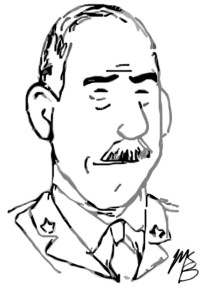
Lt-Col. V. Stott

Lieutenant-Colonel Vern Stott
South Saskatchewan Regiment
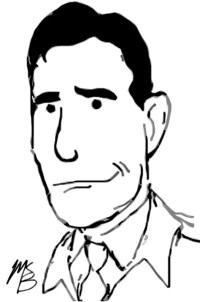
Stott

The excellent fighting qualities of the South Saskatchewan Regiment under Lieutenant Colonel Stott’s command have repeatedly demonstrated the influence of this officer’s high sense of duty and superb leadership in battle.

(D.S.O. citation, 13 Mar 1945)

Born on 27 May 1912 in Vancouver, Vernon Stott worked as sales representative for the Barber-Ellis paper company in British Columbia and Alberta. He volunteered with the Calgary Highlanders in 1940 and within three years rose to second-in-command. Although Brigadier W.J. Megill expressed little confidence in Lieutenant-Colonel Don MacLauchlan, he was impressed with Stott’s potential as a leader. During the battalion’s first action in Normandy, Stott relieved a “highly nervous” MacLauchlan until he was wounded himself by mortar shelling on 25 July.
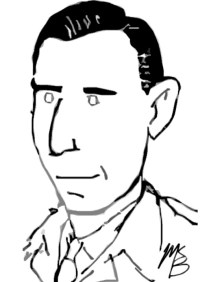
Continue reading

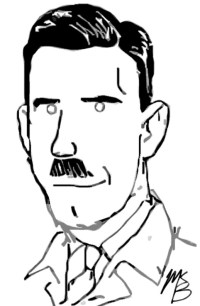
Maj. G.B. Buchanan

Major Buck Buchanan
South Saskatchewan Regiment
BuchananGE

They were very convinced Nazis and felt that Hitler could do no wrong and that the disasters which had hit the German army were the result of politics. They thought the Jews and communists were responsible for everything.

(quoted in Leader-Post, 18 Nov 1944, 1)

Born on 13 March 1910 in Medicine Hat, Alberta, George Bruce Buchanan was postal clerk when enlisted as a private in the South Saskatchewan Regiment on mobilization in September 1939. He received a commission the summer before the SSR went overseas in December 1940. He served as captain adjutant under Lieutenant-Colonel Cecil Merritt during the Dieppe Raid of 19 August 1942 and, as he described, “I was one of the few men who made it back to England that day.”

Continue reading

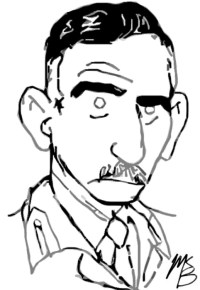
Brig. F.A. Clift

Brigadier Fred Clift
South Saskatchewan Regiment
6th Infantry Brigade
Clift

It is believed that his wounds are not grave, but deep regret was expressed by every soldier who knew him, because Clift is not merely a master of organization but also a great fair-minded fellow who is a born leader.

(J.M.A. Cook, Star-Phoenix, 14 Oct 1944, 5)

Born on 17 May 1908 in Melfort, Saskatchewan, Frederick Alexander Clift was a school teacher and commissioned officer with the Saskatoon Light Infantry since 1936. After a year overseas, he returned to Canada be a machine gun instructor. He rejoined the SLI as second-in-command but was then appointed commanding officer of the South Saskatchewan Regiment in October 1942. “Col. Clift proved to be no exception to the list of outstanding C.O.s the regiment had been favoured with,” the regimental history declared. “He firmly believed that a battalion was only as good as its officers and for this reason the officers trained even harder than the men.”

Continue reading

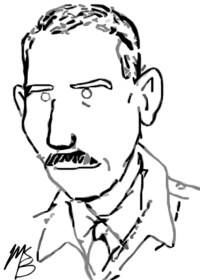
Lt-Col. H.T. Kempton

Lieutenant-Colonel H.T. Kempton
South Saskatchewan Regiment
Kempton

So again passed another of the original officers of the regiment into higher army service. He, like Lt.-Col. Wright, seemed to be a very part of the flesh and blood of the unit. He was keenly disappointed on not going into “action” with the men with whom he had trained from the beginning.

(Maj. G.B. Buchanan, The March of the Prairie Men, chap. 4)

Born on 1 January 1895 in Barking, Essex, England, Harold Thomas Kempton owned a bookstore in Weyburn, Saskatchewan with his brother since 1912. He served in the Royal Air Force during the First World War and joined the Weyburn Regiment afterward. By the outbreak of the Second World War, Kempton was a major in the amalgamated South Saskatchewan Regiment. He led the advance party overseas in August 1940 before the rest of the battalion followed in December.

Continue reading

Lt-Col. C.C.I. Merritt

Lieutenant-Colonel Cecil Merritt
South Saskatchewan Regiment
Merritt

My war lasted six hours. There are plenty of Canadians my age who went all the way from the landings in Sicily to the very end … It was an enforced idleness. It cannot be escalated into virtue.

(Quoted in Ottawa Citizen, 3 Sept 1966, 66)

Born on 8 November 1908 in Vancouver, British Columbia Charles Cecil Ingersoll Merritt was an RMC graduate, football player, and barrister. Since 1929, he was a commissioned officer in the Seaforth Highlanders, the regiment his father had belonged to before being killed at Second Ypres in April 1915. Merritt went overseas as a major, attended staff college, and served on the general staff of the 3rd Division. In March 1942, he was appointed new commanding officer of the South Saskatchewan Regiment, which would land at Dieppe over four months later.

Continue reading

Brig. S. Lett

Brigadier Sherwood Lett
South Saskatchewan Regiment
4th Infantry Brigade
Lett

And this is the man I first saw one rainy day in the First World War, welcoming us to a rat-infested land of death and destruction. Sherwood Lett, an ordinary Canadian officer in 1915, has come a long way … Surely, here is one Canadian who has had, and is still having a full life. As a politician, he might well have been a Prime Minister of Canada.

(Jim Greenblatt, Star-Phoenix, 10 Aug 1963, 15)

Born on 1 August 1895 in Iroquois, Ontario, Sherwood Lett was a University of British Columbia graduate, a decorated First World War veteran, a Rhodes Scholar a t Oxford, and a lawyer in Vancouver. He had served as a captain with the 46th (Saskatchewan) Battalion in France and earned the Military Cross for conspicuous gallantry under heavy fire. Commanding officer of the Irish Fusiliers from 1932 to 1937, Lett volunteered again and went overseas as brigade major with the 2nd Canadian Division.

Continue reading

Lt-Col. J.E. Wright

Lieutenant-Colonel J.E. Wright
South Saskatchewan Regiment
WrightJE

Lt.-Col. Wright had been the admired leader and valued friend of every last man in the unit. He knew them all by name and background, and his sense of impartial discipline was greatly respected. One unknown soldier made the fitting remark “When God made a man, he made Lt.-Col. Wright.”

(Maj. G.B. Buchanan, The March of the Prairie Men, chap. 3)

Born on 30 December 1898 in Carnduff, Saskatchewan, James Ewart Wright was a dentist and First World War veteran. He had enlisted with the 78th Battalion in November 1915, served in France in 1916 until transferred to England in 1917, and ended the war as a cadet training with the Royal Air Force. He attended Regina College after demobilization then graduated from the University of Toronto with a dentistry degree. He opened a practice in Estevan where he also became commanding officer of the Saskatchewan Border Regiment.

Continue reading

Lt-Col. B.R. Ritchie

Lieutenant-Colonel Bruce Ritchie
Royal Hamilton Light Infantry
South Saskatchewan Regiment
Royal Highlanders of Canada (The Black Watch)
Ritchie

When the battalion went into action after D-Day, they guys had had three or four years’ training. But after the first big slap in the ass at St. Andre, we were never able to get organized with trained troops. Even when we got replacements, the battalion had been knocked down with such strength that they weren’t a fighting entity any more.

(Ritchie quoted in Denis Whitaker, Tug of War, 172)

Born in Regina, Saskatchewan in 1912, Bruce Rowlett Ritchie graduated from RMC and McGill University, and work for Sun Life Insurance in Montreal. He originally served as signals officer with the Black Watch but after the Normandy campaign began, he found himself moved around to several units before finally returning to the Royal Highlanders. While attached to the Algonquin Regiment as second-in-command, Ritchie rejoined his old regiment at the request of Lieutenant-Colonel Frank Mitchell who had taken command after the death of Lieutenant-Colonel S.S.T. Cantlie on 25 July 1944.

Continue reading