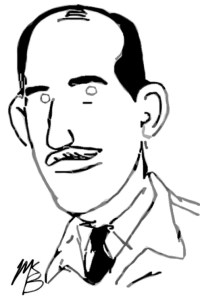
Lt-Col. S.V. Radley-Walters

Lieutenant-Colonel S.V. Radley-Walters
27th Armoured (Sherbrooke Fusilier) Regiment
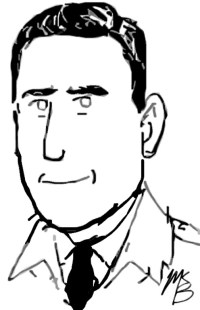
Radley-Walters

You’ve got to be seen; you can’t hang back. You’ve got to be with the men … we had some that hung back and you could tell by the resistance that came, not necessarily resistance, but no enthusiasm at all from the men. And they wanted to see their leader with them doing the things that they [were] doing and so on, and they [wanted] him up in front.

(Quoted in Radley-Walters interview, 6 Dec 2006)

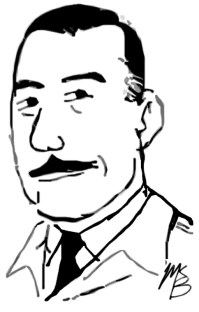
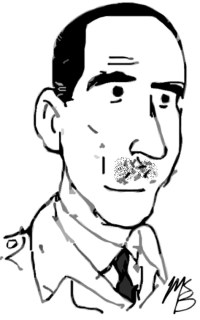
Born on 11 January 1920 in Gaspé, Quebec, Sydney Valpy Radley-Walters was one of the most decorated Canadian tank commanders and the Allies’ leading tank ace of aces in Northwest Europe. He was commissioned with the Sherbrooke Fusilier Regiment after gradating from Bishop ‘s College in 1940. By the D-Day landings of 6 June 1944, Radley-Walters, nicknamed “Rad,” commanded a squadron of Shermans. At the end of the campaign, he had knocked out eighteen German tanks as well as many more enemy vehicles, earning him the Military Cross and D.S.O.
Continue reading

Lt-Col. F.T. Jenner

Lieutenant-Colonel Fred Jenner
27th Armoured (Sherbrooke Fusilier) Regiment
Jenner

A man is here to-day and to-morrow he is vanished: when he is taken away from our sight he is quickly out of our mind. Yet the men whose names appear on the Roll of Honour of the Sherbrooke Fusilier Regiment will never go from our memories. Those who died, whose lives passed like a shadow, are the men who are the real heroes of this Regiment.

(Jenner’s message in Roll of Honour, war diary, Jun 1945)

Born on 20 July 1909 in Elkhorn, Manitoba, Frederick Thomas Jenner was an accountant and auto dealer in Olds, Alberta. He mobilized with the Calgary Regiment as battalion adjutant and participated in the Dieppe Raid of 19 August 1942. He returned to Canada for general staff instruction and was assigned to the directorate of training. He went back overseas in November 1943 to be assigned to the Canadian Armoured Corps with First Canadian Army headquarters.

Continue reading

Lt-Col. M.B.K. Gordon

Lieutenant-Colonel M.B.K. Gordon
27th Armoured (Sherbrooke Fusilier) Regiment
Gordon

I had meant to speak to all of you before leaving but time would not permit. We have known joy end sorrow together which I feel and hope has welded us together so tightly that no matter what the lapse of time, nothing can destroy that feeling of wonderful teem spirit we have developed. Each and every one of you has been magnificent in his job, Your loyalty end will to get on has been more then anyone could ask

(Gordon farewell address, war diary, 7 Feb 1945)

Born on 7 September 1905 in Dixie, Ontario, Melville Burgoyne Kennedy Gordon was a Quebec lawyer and graduate of the University of Toronto, where he had belonged to the Canadian Officers’ Training Corps. Commissioned with the Governor General’s Body Guard in 1924, he transferred to the Princess Louise Dragoon Guards in 1928, rising to the rank of major. He mobilized for active service in May 1941 with the 12th Armoured (Three Rivers) Regiment. In February 1943, he was promoted to command the 27th Armoured (Sherbrooke Fusilier) Regiment.

Continue reading

Maj. B.D. Lyon

Major Bert Lyon
27th Armoured (Sherbrooke Fusilier) Regiment
Lyon

A farewell party was given in the Officer’s Mess last night for Major B.D. Lyon who will be leaving soon to return to Canada. He was presented with a silver cigarette box by Major D.W. Beaudry, who in a few well chosen words expressed our regrets and assured him that our best wishes would go with him.

(War diary, 13 March 1943)

Born on 2 June 1905 in Island Brook, Quebec, Bertram Dawson Lyon attended McGill University and owned a Sherbrooke tobacco shop. In 1934, he was subject of an odd prosecution by the Crown, which argued that a whiffle-board made his shop a “common gambling house.” The judge immediately dismissed the case ruling that “the machine was in itself no more a gambling device than a billiard table or bowling alley.”

Continue reading

Maj. J.C. Cave

Major John C. Cave
27th Armoured (Sherbrooke Fusilier) Regiment
Cave

It’s a strange thing I can remember in detail what happened between 1925 and 1939, and yet the war years I guess I don’t want to remember them. Because it wasn’t a very pleasant thing to see men killed. I never got any real opportunity to distinguish myself if I could have, I never thought about it.

(Cave interview, 24 Aug 1978)

Born on 24 December 1907 in Birkenhead, Cheshire, England, and raised in Winnipeg, John Clifford Cave was a Permanent Force non-commissioned officer and armoured corps instructor. He had joined the PPCLI in 1925, trained as a machine gunner and was posted to the army tank school in 1938. He was commissioned in 1940 and served as tank instructor at Fort Knox, Kentucky before being assigned to the 4th Division under General F.F. Worthington.

Continue reading

Lt-Col. J.A. Biron

Lieutenant-Colonel J. Aimé Biron
27th Armoured (Sherbrooke Fusilier) Regiment
Fusiliers de Sherbrooke

Major Biron has always taken a great interest in the welfare of the men and he will be missed by everyone, perhaps more by the French elements of the Unit of which he was a representative.

(War diary, 30 Apr 1942)

Born on 9 July 1902 Coaticook, Quebec, Joseph Aimé Biron was a longtime militia member of Les Fusiliers de Sherbrooke since 1920. He joined as a private and was commissioned in 1923. When the Sherbrooke Fusilier Regiment was formed in July 1940 from the amalgamation of the English and French Sherbrooke militia regiments, Biron became second-in-command under Lieutenant-Colonel M.W. McA’Nulty. In February 1942, following garrison duty in Newfoundland Biron assumed command of the bilingual unit when McA’Nulty went overseas for training in England.

Continue reading

Lt-Col. M.W. McA’Nulty

Lieutenant-Colonel Matthias McA’Nulty
27th Armoured (Sherbrooke Fusilier) Regiment
McANulty

Col. M.W. McA’Nulty, Canadian officer chosen to take back Hong Kong and evacuate Canadian prisoners of war in Japan, told … it was not the atomic bomb which made the Japs call it quits, but the terrible pounding they took from the American B-29’s.

(St. Johnsbury Republican, 22 Mar 1946, 1)

Born on 17 February 1893 in Point Alexander, Ontario, Matthias William Cyrus McA’Nulty was a stockbroker in the Eastern Townships of Quebec, commandant of the Cadet Officer Training Corps at Bishop’s College and commanding officer of the Sherbrooke Regiment from 1924 to 1930. During the First World War, he had enlisted with the Railway Construction and Forestry Depot as a lieutenant in August 1917 and went to France on a draft to the Canadian Machine Gun Corps a year later. McA’Nulty took command of the Regiment again in 1939.

Continue reading