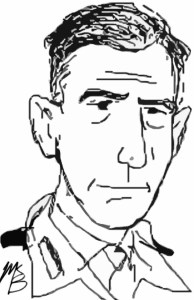
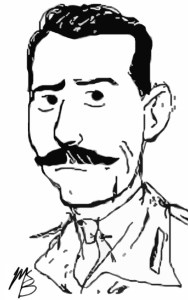
Col. W. Dec

Colonel Wladyslaw Dec
3rd Rifle Brigade
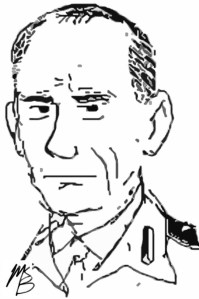
‘To hell with women just now — what I need is a bridge! Report your discovery to the General.’ I shouted somewhat un-gallantly. I forgot that the world is small and while a mountain might not meet up with another, people are in fact likely to meet again. Also, I didn’t think that one day people would remember that I preferred a bridge to women.

(Quoted in Dec, Narvik and Falaise, 377-9)

Born on 13 February 1898 in Sokołów Małopolski, Władysław Dec was drafted into the Austro-Hungarian Army during the First World War and was commissioned a second lieutenant in 1916. He joined the newly formed Polish Army in November 1918 and fought during the wars of independence. After the September 1939 campaign, Major Dec escaped with his brigade to France via Hungary and the Balkans.
Continue reading

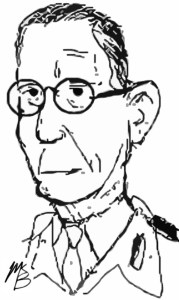
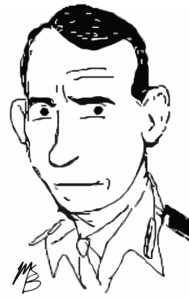
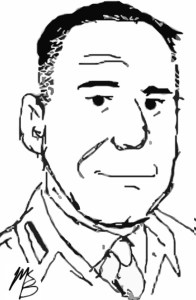
Lt-Col. K. Complak

Lieutenant-Colonel Karol Complak
1st Podhale Rifles Battalion

Without Lieutenant Colonel Complak’s presence, this attack on very heavily defended enemy’s position, would have been very costly, both in men and time lost. Throughout the fighting in France, Belgium, Holland and Germany, Lieutenant Colonel Complak has shown great coolness and personal bravery and been an example of true Soldier’s bravery on the Battlefield.”

(D.S.O. citation, 28 June 1945)

Born on 20 November 1899, Karol Józef Complak was a veteran of the First World War, having served in the Polish Legions while attached to the Austrian Army. By November 1918, he joined the newly created Polish Army and participated in the Polish–Ukrainian War then the Polish-Soviet War. A major by the outbreak of the Second World War, he escaped into Romania then made his way to France.

Continue reading

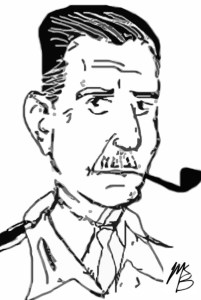
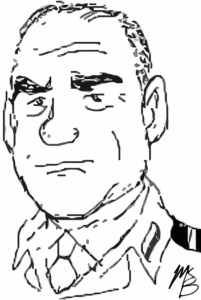
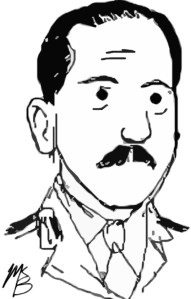
Maj. Kański & Lt-Col. Dowbor

Major Jan Kański
&
Lieutenant-Colonel Romuald Dowbor
24th Polish Uhlan Regiment

Born on 10 November 1898 in Ternopilska, Ukraine, Jan Witold Kański took command of the 24th Polish Uhlan Regiment in November 1942. During the Battle of Falaise, he was badly wounded by artillery fire and died shortly thereafter on 27 August 1944. Within days he was succeeded by Major Romuald Jerzy Dowbor who was born on 11 February 1905 and joined the Polish Army at an early age. He had been taken prisoner by the Soviets in September 1939 but escaped and eventually reached France via Hungary and the Balkans. He then joined the reconstituted 24th Polish Uhlan Regiment in 1940 and became a squadron commander with the 10th Mountain Rifle Regiment after the evacuation to the United Kingdom

Continue reading

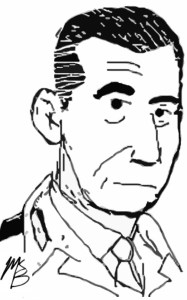
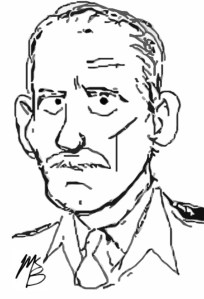
Col. F. Skibiński

Colonel Franciszek Skibiński
3rd Rifle Brigade
10th Armored Cavalry Brigade

Well, just the liberation of the concentration camp—well, it was a discovery [of] Papenburg. It was the first camp I saw in my life. I heard the stories about how this camp were [sic] looking. But to see heaps of terribly lean naked bodies lying … Well, it was a very shocking sight. And it shocked me and my soldiers, as well, very, very deeply. I do remember this moment.

(Interview, October 1981, https://collections.ushmm.org/search/catalog/irn513325)

Born on 15 August 1899 in Munich, Germany, Franciszek Maria Maksymilian Skibiński served with the Puławy Legion during the First World War and joined the secret Polish Military Organization in 1918. He served with the Polish Army during the wars of independence and was commissioned a second lieutenant in 1920. Although reprimanded by an officers’ court of honour for an incident of disturbing the peace in 1925 and arrested for firing a gun allegedly while intoxicated in 1927, he continued to advance through the ranks, rising to a major by the September 1939 campaign.

Continue reading

Col. M. Wieroński

Colonel Marian Wieroński
3rd Rifle Brigade (Poland)

I made personnel changes to the more important positions. Current suitability for combat was the decisive factor … Colonel Wieroński was a very good infantryman, decorated by me with the Virtuti Militari Order for the Battle of Potigny on 15 August; however, he had not taken to the particular nature of combat … and thought that someone else would be better in this position.

 —General Stanisław Maczek

(Quoted in Jenny Grant, Price of Victory)

Born on 2 August 1896 in Krakow, Marian Stanisław Wieroński was a long-serving infantry officer in the Polish Army. After a series of promotions and postings, he had advanced to lieutenant-colonel by March 1937. He commanded the 3rd Rifle Battalion during the invasion of Poland in September 1939. He escaped to France where he commanded the 9th Infantry Regiment before the fall and occupation of the country to German forces.

Continue reading

Col. T. Majewski

Colonel Tadeusz Majewski
10th Armoured Cavalry Brigade (Poland)

Poland did not capitulate after the fall of France, and the Poles by various stages crossed to Great Britain, that last fortress of freedom, so that finally, together with the forces of the great British Empire, they might match themselves against those of our enemies.

(Quoted in Blairgowrie Advertiser and East Perthshire News-Review, 3 Apr 1942, 6)

Born on 26 August 1899 in Lwów, Poland, Tadeusz Adam Feliks Majewski served in the Polish Legions before being conscripted into the Austro-Hungarian Army on the Italian Front in 1918. At the end of the First World War, he joined the Blue Army formed by Polish soldiers in France. He advanced in the Polish Army through the interwar years, rising to lieutenant-colonel by March 1939. Six months later, he escaped to France following the invasion and occupation of Poland.

Continue reading

Lt-Col. Z. Szydłowski

Lieutenant-Colonel Zdzislaw Szydłowski
9th Flemish Rifle Battalion (Poland)

My father, who finally was in command at Maczuga, told me of the feelings of the men. They were not beaten, but they were in a serious position. I have the impression that General Maczek was surprised they hung on, but they would not give up. The Polish soldiers were happy to meet the Canadians on that hill. The biggest emotion was relief and also it was pride that the cork stayed. That was the impact of the whole action. Pride overruled fear.

(Chris Szydłowski quoted in Whitaker, Normandy, 293)

Born on 21 September 1900 in Lwów, Poland, Zdzisław Mateusz Lubicz-Szydłowski was a soldier and scientist, having received a doctorate in biology from Poznair University in 1928. After Poland’s independence in November 1918, he served in the army during the Polish-Ukrainian War then the Polish-Soviet War and took a commission in 1923. In 1929, he had a duel with fellow officer and medical doctor Alojzy Pawelek. The next year, Szydłowski shot and killed Pawelek in his office after a violent argument. Szydłowski was arrested and briefly imprisoned but resumed his military career.

Continue reading

Lt-Col. W. Zgorzelski

Lieutenant-Colonel Władysław Zgorzelski
10th Dragoons Regiment (Poland)

There’s no better mentor than Col. Zgorzelski who coached the Irish Olympic team in 1960 and who coached the Argentine team for nine years. He’s a dapper little man who is stern when sternness is needed, who seems to have a deeply rooted belief that most American instructors push their pupils too quickly … and who is man enough to diplomatically handle even the most difficult problems between pupil, horse and instructor.

(Washington Evening Star, 19 May 1963, 60)

Born on 20 February 1901, Żytomierz, Russian Empire, Władysław Zgorzelski was a member of the secret Polish Military Organization and joined the newly formed Polish Army in November 1918. He was commissioned in 1922. In addition to his military career, he was a champion equestrian and participated in competitions worldwide during the interwar period.

Continue reading

Lt-Col. A. Nowaczyński

Lieutenant-Colonel Aleksander Nowaczyński
8th Rifle Battalion (Poland)

On the top of Hill 262 stands Lieut. Col Nowaczynski, the battalion commander, with the commander of the Canadian tanks, staring in silence at the battlefield. Over the khaki uniforms, at the emerald-blue lance pennons of the dead soldiers of the 8th Battalion, the disfigured faces, jutting jaws and teeth in deathly smiles, human parts — torsos, legs, bloodied stretchers, pieces of an anti-tank gun, and nearby a barrel of a broken mortar in the convulsive grip of a dead gunner. In the middle of a few blackened, smoking Shermans, on their turrets hangs a leaning torso, half scorched hands lying listlessly.

(Quoted in Halik Kochanski, The Eagle Unbowed, 484)

Born on 24 November 1900 in Urzędów, Aleksander Nowaczyński was active in the nationalist secret Polish Military Organization and witnessed the emergence of an independent Poland in November 1918 at the end of the First World War. He joined the newly created Polish Army and participated in the Polish–Ukrainian War then the Polish-Soviet War. He was commissioned a lieutenant in 1923 and by September 1939 was a major. He organized evacuation to Romania during the Soviet invasion of eastern Poland.

Continue reading

Lt-Col. S. Koszutski

Lieutenant-Colonel Stanislaw Koszutski
2nd Armoured Regiment (Poland)

Under hellish fire from cannons and mortars, the 3rd Armoured Squadron supports and covers the first two … The guns were hot to the extreme for all the shots they fired and the crews were all but deaf from the explosions and choking on the smoke. However, it saved the lives of dozens of its colleagues who managed to jump out from the burning tanks. It can be proud of how it performed its task.

(Quoted in Zbigniew Mieczkowski, Horizons, 89)

Born on 15 August 1903 in Kielce region of Poland, Stanislaw Paweł Koszutski was a veteran of the Polish Legion, the Third Silesian uprising, and the Polish-Soviet War. He was commissioned a second lieutenant in the Polish Army in 1923 and rose through the ranks of the artillery branch. He was captured by the Soviets during the invasion of September 1939 but escaped to join the Polish forces in France and then England.

Continue reading