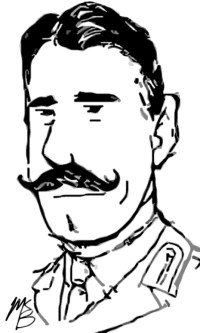
Lt-Col. W.T. Cromb

Lieutenant-Colonel Bill Cromb
Lincoln and Welland Regiment
Loyal Edmonton Regiment
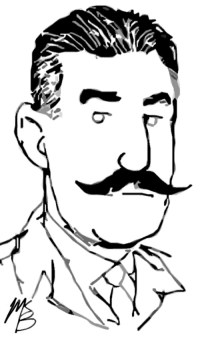
Cromb

My biggest day in the army came on Aug. 17, the day we closed the Falaise gap. I had just taken command of the Lincoln and Welland Regiment five days previously and we were ordered to take the town of Trun. We got into it without any trouble and captured more than 2,000 prisoners including a German major-general and his complete staff. Only one of our men was hurt … I wish the entire war had been that easy.

(Cromb in Edmonton Bulletin, 6 Oct 1945, 3)

Born in Glasgow, Scotland on 5 November 1903, William Taylor Cromb was an Edmonton vice-principal, president of the public school teachers association, and a popular tenor. A junior militia officer since 1937, he mobilized with the Edmonton Regiment in September 1939. He led a platoon in the Spitzbergen Raid in 1941 and commanded a company during the invasion of Sicily in July 1943.
Continue reading

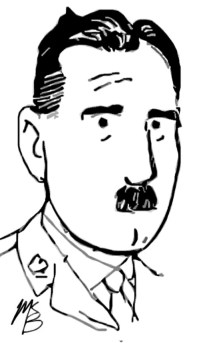
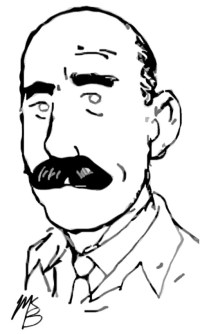
Lt-Col. J.R. Stone

Lieutenant-Colonel Jim Stone
Loyal Edmonton Regiment
Stone

Persons who are not exposed to the bullets and shells in a slit trench situation or having to advance over open ground against a determined enemy should be very careful of using the words “cowardice,” “yellow,” and “malingerer.” Sooner or later, in those circumstances, we would all break down, some sooner than others.”

(Stone quoted in Copp and McAndrew, Battle Exhaustion, 70)

Born in Winterbourne, Gloucestershire, England on 2 August 1908, James Riley Stone immigrated to Alberta in the late 1920s and worked in a forestry camp. He volunteered as a private with the Edmonton Regiment on mobilization in September 1939 and went overseas as a lance corporal. He gained a commission in March 1942 and proved to be one of the battalion’s fiercest fighters in the Italian campaign.

Continue reading

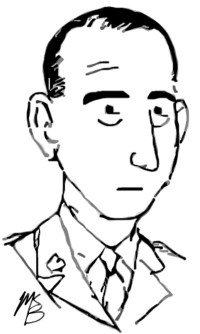
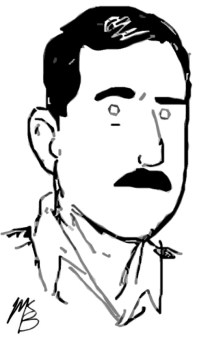
Lt-Col. R.C. Coleman

Lieutenant-Colonel Rowan Coleman
Loyal Edmonton Regiment
Lincoln and Welland Regiment

Coleman

Rowan was, beyond doubt, one of the most liked and respected officers in the 2nd Brigade … Armed with only his pipe, he was completely unflappable, and always exuded a quiet confidence, no matter how desperate the situation … He was one of the few officers who went out of his way to show me the ropes and give me a little encouragement when I badly needed some help. Yet, he would not suffer gladly junior officers who didn’t measure up, or who groused about their problems.

(C. Sydney Frost, Once a Patricia, 424)

Born in Winnipeg on 22 June 1915, Rowan Corry Coleman, was son of the president of the Canadian Pacific Railway and a graduate of McGill University and Dalhouise law school. Commissioned with the McGill Officer Training Corps in 1940, he joined the PPCLI in the United Kingdom and served as a company commander during the invasion of Sicily in July 1943. Earlier that year, Coleman had been one of the Canadian officers attached to the British First Army in North Africa to gain combat experience fighting with the Royal Buffs in Tunisia.

Continue reading

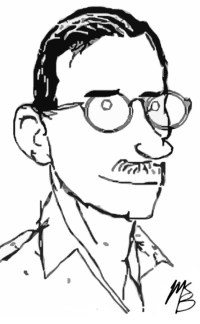
Lt-Col. E.W. Day

Lieutenant-Colonel Ted Day
Loyal Edmonton Regiment
Day

I discussed Pte Crock’s difficulties with him at which time he told me that his nerves absolutely on edge and that he could not go forward to his Coy. position. I told him that I did not consider his reasons sound and said, “I am ordering you to join your Company if you do not go you will be guilty of an offence.” Pte Crock said, “I can’t do it Sir, I must refuse.” I then placed him under arrest.

(Day at FGCM of Pte. Crock, 12 Mar 1944)

Born in Toronto on 29 August 1901, Egerton Winnett (Ted) Day grew up in Daysland, Alberta where his father was founder and mayor. Having belonged to the Canadian Officers Training Corps at the University of Alberta, he joined the 19th Alberta Dragoons in 1924. He joined the Edmonton Regiment as a captain on mobilization in September 1939 and became second-in-command in the United Kingdom in December 1942.

Continue reading

Brig. J.C. Jefferson

Brigadier Jim Jefferson
Loyal Edmonton Regiment
10th Infantry Brigade

Jefferson

Jim Jefferson was not the “brass hat” type of Commander, and we can say that the men of his Regiment were really devoted to him, to the extent that they knew he would not send them into any kind of action that he would not take on himself. This feeling of confidence was frequently borne out during his various commands, from Company to Brigade. He was a fighting soldier who had the respect of officers and men at all times, and that says plenty.

(The Fortyniner, Jan 1974, 15)

Born in Northumberland, England on 6 January 1906, James Curry Jefferson joined the Edmonton Regiment in 1923, gained a commissioned four years later, and became a major in 1937. When General Bernard Montgomery inspected the battalion in early 1942, he had been unimpressed with the senior officers. Lieutenant-Colonel E.B. Wilson was removed along with several other older majors. Four months later, in December 1942, Jefferson succeeded Lieutenant-Colonel George Kitching, who had been brought in to “shakeup” the regiment.

Continue reading

Maj-Gen. G. Kitching

Major-General George Kitching
Edmonton Regiment
11th Infantry Regiment

4th Canadian (Armoured) Division
Kitching

To command an infantry battalion must surely be the most rewarding command of any in the Army. It is the last time in the chain of command that you actually command men whose allegiance is to you because in our system the regiment or battalion is the cell on which brigades, division and corps are based. In the Army, loyalty is something that cannot be stretched too far. I do not think you can ask anyone to be “loyal” to a corps, division or brigade.

(Kitching, Mud and Green Fields, 130)

Born on 9 September 1910 in Guangzhour, Canton, China, George Kitching was a professional British Army officer and graduate of the Royal Military College at Sandhurst. Following Far East postings to Singapore and India with the Gloucestershire Regiment, Kitching suddenly resigned his commission and moved to Montreal in 1938. He joined the Royal Canadian Regiment on the outbreak of the Second World War and was attached with the 1st Canadian Division overseas as a staff officer.

Continue reading

Lt-Col. E.B. Wilson

Lieutenant-Colonel Ernie Wilson
Edmonton Regiment
WilsonEB

Since I have been in this theatre I have seen considerable numbers of both officers and men of the unit and I can assure you that not only will they doubly appreciate your thoughtfulness but that in the case of the Loyal Edmonton Regiment they are all extremely proud that the regiment bears the name of the city, coupled with the honor ‘loyal’ bestowed by His Majesty.

(Wilson to Mayor Fry in Edmonton Journal, 14 Aug 1944, 9)

Born in Innisfail, Alberta on 2 March 1904, Ernest Brown Wilson was King’s Counsel and a graduate of the University of Alberta, where he had belonged to the Canadian Officers Training Corps. He went overseas with the Edmonton Regiment in December 1939 and succeeded Lieutenant-Colonel W.G. Stillman in August 1940. He remained in command in England for almost the next two years.

Continue reading

Lt-Col. W.G. Stillman

Lieutenant-Colonel Bill Stillman
Edmonton Regiment

And within 20 minutes His Majesty had arrived. He chatted freely to me as he passed down the line, had me introduce every one of the officers, and spoke with a number of our men. Altogether he spent more than 15 minutes with us. And what a delightful gentleman he was! Absolutely no side at all. We felt quite at home immediately. And the King remembered me from his visit to Edmonton; what do you think of that?

(Lt-Col. Stillman in Edmonton Journal, 15 Feb 1940, 11)

Born in Tunbridge Wells, Kent, England on 16 July 1892, William George Stillman was a provincial civil servant, musician, and First World War veteran. He had immigrated to Canada in 1912, enlisted as a private in the 175th Battalion and served in France as a lieutenant with the 31st Battalion in 1918. He rejoined the militia in the early 1930s and had becoming command officer of the Edmonton Regiment shortly before the outbreak of the Second World War.

Continue reading

Lt-Col. H.P. Bell-Irving

Lieutenant-Colonel H.P. Bell-Irving
Seaforth Highlanders of Canada
Loyal Edmonton Regiment

Bell Irving

In the attack of the Seaforths of Canada on Agira, July 28, 1943, Major Bell-Irving, officer commanding “A” company was ordered to gain and hold the sharp ridge on the right which was held by the enemy in strength …The courage and determination with which this offer pressed forward completely disregarding his own safety was an inspiration and contributed to the success of the battalion attack.

(D.S.O. citation, Vancouver Sun, 15 Oct 1943, 16)

Born in Vancouver on 21 January 1913, Henry Pybus “Budge” Bell-Irving came from a prominent military family and was son of a Royal Canadian Navy commander. Having joined the Seaforth Highlanders in the early 1930s, he left the University of British Columbia to go overseas with the regiment in December 1939. With an award of the Distinguished Service Order for heroism in Sicily, Bell-Irving became second-in-command after the promotion of Major J.D. Forin to take over the battalion.

Continue reading