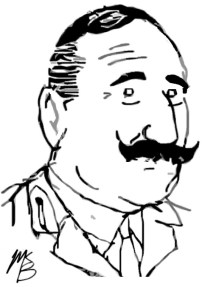
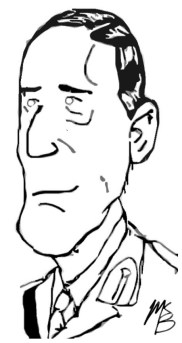
Lt-Col. J.M. McAvity

Lieutenant-Colonel Jim McAvity
2nd Armoured Regiment (Lord Strathcona’s Horse)
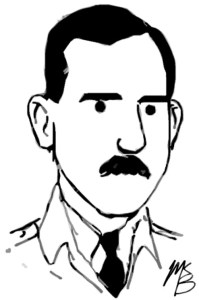
McAvity

Throughout these operations and previously in the Italian theatre throughout the breaking of the Gothic Line in August 1944, the crossing of the River Conca, up to Coriano Ridge and the battles of the Po Plain the outstanding ability, enthusiasm and drive of this officer was undoubtedly of very great bearing on the successful completion of these operations.

(D.S.O. citation, 8 May 1945)

Born on 20 November 1909 in Montreal, James Malcolm McAvity was a tennis player and businessman. A graduate of RMC in 1931, he joined the army in 1940 and was one of a dozen officers to attend tank tactics training in England. He personally bought 18,000 acres of land for the Meaford tank range near Camp Borden. He went overseas with the Halifax Rifles in June 1943 and transferred to the Lord Strathcona’s Horse in August.
Continue reading

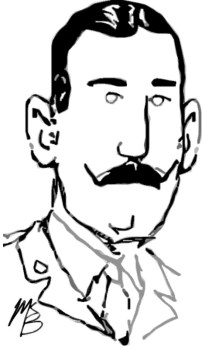
Lt-Col. P.G. Griffin

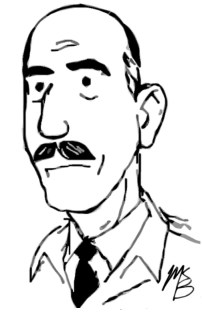
Lieutenant-Colonel Pat Grffin
2nd Armoured Regiment (Lord Strathcona’s Horse)
Griffin

Many orders may mean the sacrifice of life to gain an ultimate important objective such orders will not be given by the comd without a great deal of consideration and when given they must be obey instantly and implicitly.

(P.G. Griffin, LdSH War Diary, 28 Apr 1944)

Born in County Down, Ireland, on 8 March 1893, Philip (Patrick) George Griffin was an advertising manager in Toronto and a First World War veteran. He had joined the Royal Canadian Dragoons in 1913 and earned a commission with the Canadian Machine Gun Brigade at Vimy Ridge. He served the Lord Strathcona’s Horse until retirement in 1929 for health reasons. Ten years later he joined his old regiment as a captain and went overseas as second-in-command in November 1941.

Continue reading

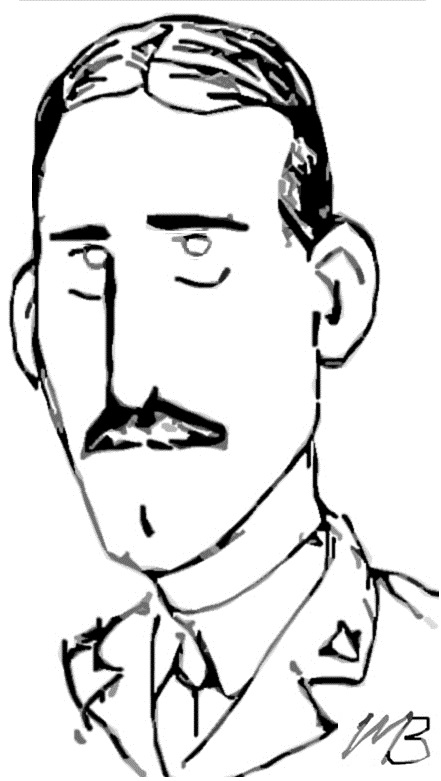
Brig. N.A. Gianelli

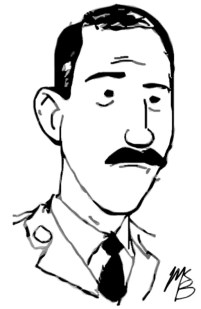
Brigadier Norman Gianelli
2nd Armoured Regiment (Lord Strathcona’s Horse)
Gianelli

I resent very much his using the title brigadier. He has it on his door. I don’t know whether he uses it to make people think they are coming up before someone high and mighty, but as far as I’m concerned, a brigadier is only a lance-jack general.

(Councilman David Post in Toronto Star, 17 Feb 1955, 26)

Born in Toronto on 29 January 1895, Norman Angelo Gianelli was a First World War veteran and professional army officer. Commissioned with the 8th Canadian Mounted Rifles in February 1915, he went overseas for training and instructional duties. While on a tour of the front with an artillery battery in May 1916, he was wounded and shell shocked. On return to Canada in 1917, he served as assistant adjutant-general in Ottawa, and joined the Permanent Force in 1920. Serving for twenty years with the Lord Strathcona’s Horse, he succeeded Lieutenant-Colonel F.M.W. Harvey in July 1940.

Continue reading

Maj. Gen. Steele

Major General Sir Sam Steele
2nd Canadian Division
Steeke

Climbed the high hill to where the 19th, 20th [Bns.] and engineers were busy digging trenches and completing them. They are doing very well indeed, all hands working with a will, but I thought what an awful thing it is to be obliged to do this for the sake of our freedom, and to enable us to kill other men.

(Gen. Steele diary, 1 July 1915)

Born on 5 January 1848 in Medonte Township, Upper Canada, Samuel Benfield Steele was among the first officers of the North-West Mounted Police and the first commanding officer of the Lord Strathcona’s Horse in the Boer War. His leadership during the Klondike Gold Rush and his memoirs contributed to linking his name with the iconic image of the Mountie. As Canada’s most famous policeman and soldier, Steele received an appointment to command the 2nd Canadian Division in May 1915.

Continue reading

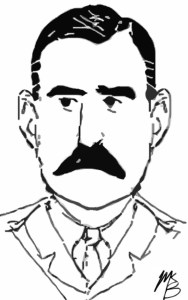
Lt. Col. Docherty

Lieutenant Colonel M. Docherty
Lord Strathcona’s Horse
Docherty

We had 200 men, the Germans about 2,000. We had no artillery support, but the Huns had all kinds. But we stopped their counter-attack. Colonel Docherty fell a few feet from me, shot dead, clean through the head.

  (LdSH soldier’s letter, Winnipeg Tribune, 29 Dec 1917)

Born in Scotland on 1 May, 1877, Malcolm Docherty was a Boer War veteran, marksman and polo player in Winnipeg. A prewar sergeant in the Lord Strathcona’s Horse, he went to France as a lieutenant in May 1915. Six months later, he received a promotion to captain and the Distinguished Service Order for gallantry.

Continue reading

Lt. Col. MacDonald

Lieutenant Colonel D.J. MacDonald
Lord Strathcona’s Horse

For conspicuous gallantry and devotion to duty. In the attack launched by a cavalry brigade he led the reserve squadron of the regiment to the attack. Though suffering acute pain from a wound in the ankle, he continued to direct operations and led his men forward until the position was finally secured. But for his outstanding courage, skill and dash the position could not have been held

(Lt. Col. MacDonald, D.S.O. Bar citation, 1 Jan 1918)

Donald John MacDonald was son of an Ontario MPP and farmer born on 25 July 1889 in Glengarry, Ontario. He was commissioned as a lieutenant in Lord Strathcona’s Horse (LdSH) on 22 September 1914 and proceeded to France on 4 May 1915. After less than a month he was wounded and returned to recover in England and was given rest leave to Canada. He rejoined the LdSH in the field in October 1915 and within a few months had been promoted to major. Continue reading

The Missing

Lieutenant Colonel A. E. Shaw †
6th and 1st Canadian Mounted Rifles
Shaw

Never was there a more popular or respected Commanding Officer.  It was a common feeling throughout the battalion, that it was entirely due to the good advice and excellent management of our colonel that the casualties of the battalion were kept so low during the earlier part of our tour in the salient, and I don’t think there were any of us but would have gone anywhere with him, as like all good soldiers he never asked a man to do anything he wouldn’t do himself.

(Trooper C. S. Cole to Mrs. Shaw [wife], Jul 1916)

Alfred Ernest Shaw was presumed killed in action defending the front line against a German assault on 3 June 1916. His body was never found. Born in Millbrook, Ontario on 21 November 1881, he was a former NWMP constable and member of the 3rd Dragoons and Lord Strathcona’s Horse.

Continue reading

The Diarist

Lieutenant Colonel Lewis H. Beer
140th (St. John’s Tigers) Battalion

I forgot to mention that Gen. Seeley [sic] comes back on Tuesday the 10th. Well I have made up my mind to not stay when he returns. I am quite sure I would only get into trouble and would never feel easy under his command knowing he is not to be trusted. He is the kind of man who pats you on the back and at the same time knifes you. I want nothing to do with him. I have discovered him now in several lies not only about me but about other people. I have applied to return to England at the same time if humanly possible. I am going to make every effort to secure another place in France.

(L. H. Beer, Diary, 8 July 1917)

Lewis Herbert Beer was born in Charlottetown, Prince Edward Island on 12 December 1873. He was a member of Loyal Orange Lodge No. 614, worked in insurance and belonged to the 36th P.E.I. Light Horse. In October 1914, Beer joined Lord Strathcona’s Horse as a lieutenant. He served in England and France until December 1915 when he returned to Canada in order to raise the 140th Battalion from New Brunswick.

Continue reading

The Aristocrat

Major General Jack Seely, M.P.
Canadian Cavalry Brigade Seely

It was at that time, when carrying out a smaller raid, that my horse got shell-shocked, though not myself, I hope, and fell on me and smashed up five bones in my poor old body. However, I managed to get back all right.

(Seely Speech, Empire Club of Canada, 4 Oct 1920)

John Edward Bernard Seely, 1st Baron Mottistone, was a British soldier and politician. Born on 31 May 1868 in Brookhill Hall, Derbyshire, he was the son of Sir Charles Seely (1833—1915), a long-serving Liberal Unionist MP. During the Boer War, Seely joined the Imperial Yeomanry and won the Distinguished Service Order. In 1900, he was elected to the House of Commons as a Conservative. In 1904, he switched to the Liberal Party and later became a cabinet minister in Prime Minister Herbert Henry Asquith’s Government.

Continue reading