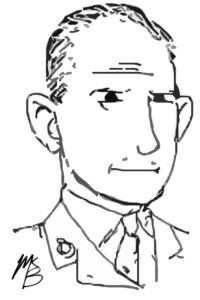
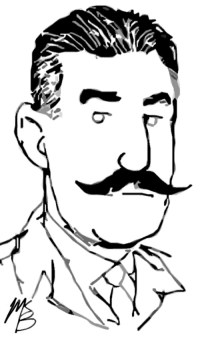
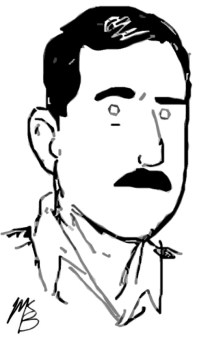
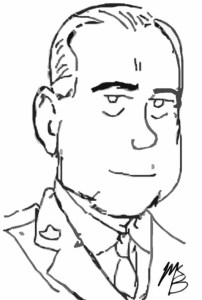
Lt-Col. J.F. Swayze

Lieutenant-Colonel Jim Swayze
Lincoln and Welland Regiment

All ranks are held together by the fear of having their peers realize that they too are afraid, particularly among those of the social system to which we belong … It’s very, very difficult to have them men come to the situation where you realize that you’re going to say “charge” and they’re going to get up and run across a field and fire their weapons at someone else and; at the same time, there’s a fair chance that they’re going to get hit.

(Swayze quoted in Hayes, “The Friction of War,” 218)

Born on 1 January 1916 in Niagara Falls, Ontario, James Fletcher Swayze was an athlete and graduate of McMaster University. He was commissioned with the Lincoln and Welland Regiment and served as company commander for much of the Northwest Europe campaign. In the final days of the war as the battalion pushed into Germany, Lieutenant-Colonel R.C. Coleman said to him “You put in the first attack of the Lincoln and Welland. Now I want you to put in the last.” As Swayze recalled, “And I took A company and moved forward a thousand yards and stopped and that was the last we made.”
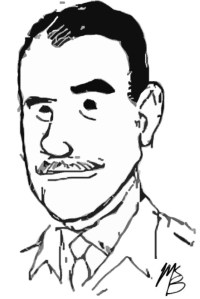
Continue reading

Lt-Col. J.G. McQueen

Lieutenant-Colonel Jack McQueen
2nd Canadian Parachute Battalion
Lincoln and Welland Regiment

He looked like a real soldier, but he was one of the yellowest men in the army … But a regiment is only as good as its leaders, and out leader, Colonel McQueen, was simply no good. A good peacetime soldier and a disciplinarian, but he didn’t have the guts of a rabbit. And he could not plan a battle and carry it out. At Butcher Hill, he got down in a hole and would not come out … When we came down off the hill, he kept right on going, and we were all glad to see the end of him.

(Charles D. Kipp, Because We Are Canadians, 58)

Born on 7 July 1913 in Medicine Hat, Alberta, John Grant McQueen was supervisor with the Dominion youth training program and member of the South Alberta Regiment since 1927. Commissioned in 1935, he volunteered with the Calgary Regiment on the outbreak of the Second World War. In July 1942, he was recalled from the United Kingdom to join the joint Canadian-American 1st Special Service Force then training in Montana.

Continue reading

Lt-Col. C.A. Muir

Lieutenant-Colonel C.A. Muir
Lincoln and Welland Regiment

We aren’t a Field Unit yet and are still attached to Reinforcements but the Colonel and most of the old crowd are carrying on just as if we were back in Canada. I am one of the outcasts in the Unit because I want to train men to fight while this bunch of phoney peace-time soldiers run a social club.

(Anonymous officer’s letter, Sept 1943 censor report)

Born on 26 November 1896 in Glasgow, Scotland, Charles Andrew Muir moved to Canada as a teenager and settled in Hamilton. He enlisted with the 36th Battalion in April 1915 and reinforced the 4th Battalion in France. After a year at the front, he was put out of action by shrapnel at the Somme in October 1916. During the First World War, two brothers were wounded while another two were killed.

Continue reading

Lt-Col. R.S.W. Fordham

Lieutenant-Colonel R.S.W. Fordham
Lincoln and Welland Regiment

It is sometimes extremely difficult to make certain Refugees comfortable and happy in any sense of the words, as instance occur where they seem anxious to find fault and complain … Actually, many changes have been made of late for the benefit of Refugees, and it is probably correct to say that nowhere are they treated better than in Canada.

(Fordham quoted in Eric Koch, Deemed Suspect, 216)

Born on 9 May 1897 in London, England, Reginald Sydney Walter Fordham was a lawyer in Niagara Falls and a First World War veteran. He had joined the 98th Battalion as a lieutenant in December 1915 and joined the 13th Battalion in France at the end of September 1916. Less than two weeks later he went missing in action and spent almost the next two years a prisoner of war. He returned to law practice after the war and in July 1936 became commanding officer of the Lincoln and Welland Regiment.

Continue reading

Lt-Col. W.T. Cromb

Lieutenant-Colonel Bill Cromb
Lincoln and Welland Regiment
Loyal Edmonton Regiment

Cromb

My biggest day in the army came on Aug. 17, the day we closed the Falaise gap. I had just taken command of the Lincoln and Welland Regiment five days previously and we were ordered to take the town of Trun. We got into it without any trouble and captured more than 2,000 prisoners including a German major-general and his complete staff. Only one of our men was hurt … I wish the entire war had been that easy.

(Cromb in Edmonton Bulletin, 6 Oct 1945, 3)

Born in Glasgow, Scotland on 5 November 1903, William Taylor Cromb was an Edmonton vice-principal, president of the public school teachers association, and a popular tenor. A junior militia officer since 1937, he mobilized with the Edmonton Regiment in September 1939. He led a platoon in the Spitzbergen Raid in 1941 and commanded a company during the invasion of Sicily in July 1943.

Continue reading

Lt-Col. R.C. Coleman

Lieutenant-Colonel Rowan Coleman
Loyal Edmonton Regiment
Lincoln and Welland Regiment

Coleman

Rowan was, beyond doubt, one of the most liked and respected officers in the 2nd Brigade … Armed with only his pipe, he was completely unflappable, and always exuded a quiet confidence, no matter how desperate the situation … He was one of the few officers who went out of his way to show me the ropes and give me a little encouragement when I badly needed some help. Yet, he would not suffer gladly junior officers who didn’t measure up, or who groused about their problems.

(C. Sydney Frost, Once a Patricia, 424)

Born in Winnipeg on 22 June 1915, Rowan Corry Coleman, was son of the president of the Canadian Pacific Railway and a graduate of McGill University and Dalhouise law school. Commissioned with the McGill Officer Training Corps in 1940, he joined the PPCLI in the United Kingdom and served as a company commander during the invasion of Sicily in July 1943. Earlier that year, Coleman had been one of the Canadian officers attached to the British First Army in North Africa to gain combat experience fighting with the Royal Buffs in Tunisia.

Continue reading