The Stand-patter

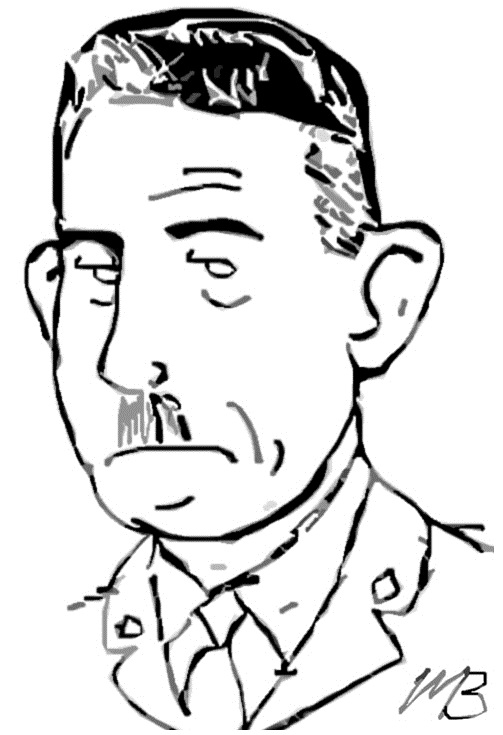
Lieutenant Colonel John. I. McLaren
19th (Central Ontario) BattalionMcLaren
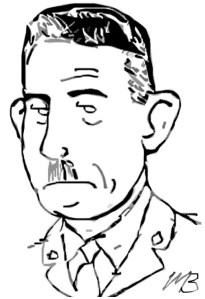
“I don’t matter at all,” he said in a personal reference, “but the men who do matter are the privates and corporals who have gone through the Gethsemane of the front line trenches without a worry, save the worry they have about their dependents at home being cared for. These men and their families will demand that men who have given service to their country without profit to themselves shall represent them in the next Parliament..”

(McLaren, Toronto Globe, 3 Nov 1917, 4)

In anticipation of a possible wartime election, on 28 May 1915, the Liberal Party nominated John Inglis McLaren to run in Hamilton West. McLaren had just departed Canada in command the 19th Battalion. By the time of the December 1917 federal election and the formation of the Union Government, Liberals and Tories implored McLaren to withdraw in favour of a civilian Unionist nominee. He refused and contested the race as a soldier-candidate.
Continue reading

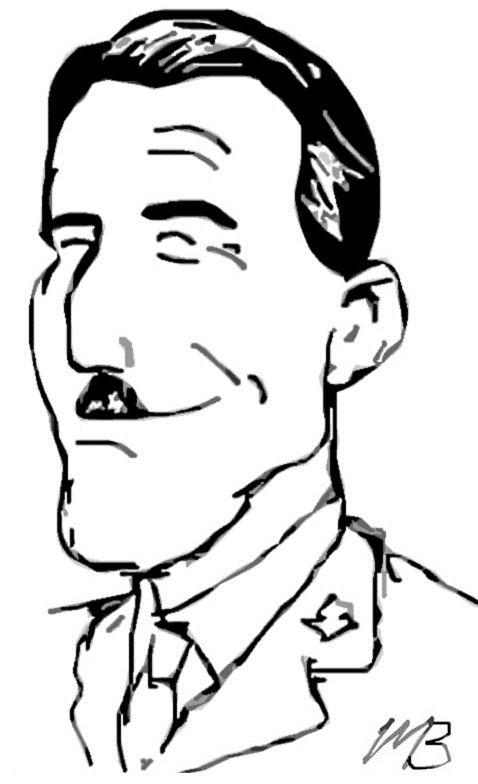
The Ambassador

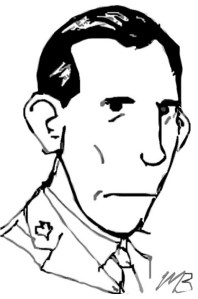
Brigadier General Victor Odlum 7th
(1st British Columbia) Battalion Odlum

Victor Wentworth Odlum was a curious specimen. Warfare fascinated him. It was said that he had taken to peacetime soldering because it presented an interesting problem, that he had set himself the task of mastering the psychology of war.

(Pierre Berton, Vimy, 1985, 114)

Victor Wentworth Odlum was a prominent journalist, businessman, diplomat and media tycoon. Born in Cobourg, Ontario on 21 October 1880, he moved to British Columbia as a young man to become a reporter and later editor for the Vancouver Daily World. A veteran of the Boer War and member 6th Regiment, he volunteered with the 7th Battalion in September 1914. He deployed to France as second-in-command.

Continue reading

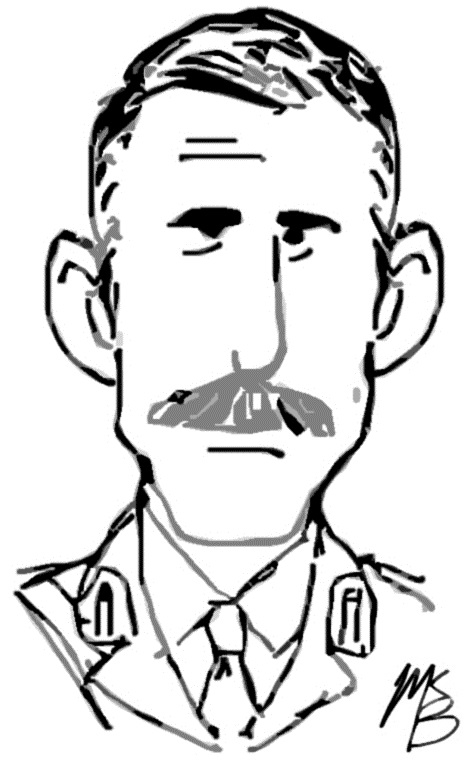
The Jack-of-All-Trades

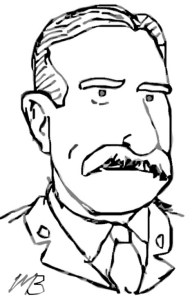
Lieutenant Colonel John G. Rattray
10th (Fighting Tenth) BattalionRattray

But when I find myself honored by such frenzied attacks by the Rabbi Samuel, the chief Hebrew apologist of Jewry and Jewish morals, and this attack signed by the Canadian Jewish committee (what’s in a name!) a short statement of my side of the story would appear necessary…

If it is personal attack, it is apparent in every paragraph that the Hebrews are ‘out to get Colonel Rattray.’

(Rattray to Winnipeg Free Press, 13 Jan 1922, 19)

John Grant Rattray was a schoolteacher, militia officer, hardware salesman, newspaper publisher, businessman, town reeve, insurance agent, soldier, police chief, political campaigner, civil servant, veterans’ official and sportsman. Born on 15 January 1867 in Banffshire, Scotland, he immigrated to Manitoba in the 1880s. As commanding officer of the 20th Border Horse, he organized the 10th Battalion at Valcartier when the Canadian Expeditionary Force assembled in September 1914.

Continue reading

The Liberal

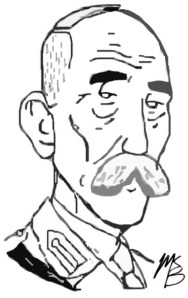
Lieutenant Colonel George B. McLeod
63rd (Edmonton) BattalionGBMcLeod

Every consideration should be given to the question of sentiment and it is well to encourage the idea of community of interest among the people of a certain locality. If a certain battalion is known as an Edmonton battalion, or an Alberta battalion… those who remain behind and those who have gone forward, have an interest in what that battalion is doing that he otherwise would not have had, and ignoring of that fact has tended very greatly against rapid recruiting in many parts of the country.

(Frank Oliver, Debates, 8 May 1916, 3589)

George Brown McLeod was born in Guelph, Ontario on 3 March 1870. He moved west in 1901 in order to pursue business interests in Edmonton. A member of the 101st Fusiliers, McLeod first enlisted as a captain with the 31st Battalion. He later became second-in-command of the 51st before receiving a promotion to lieutenant colonel in order to raise the 63rd from Edmonton.

Continue reading

The Manly Man

Lieutenant Colonel A. H. Borden, D.S.O.
85th (Nova Scotia Highlanders) BattalionBorden

Oh, wha is foremaist and a’ and a’,
Oh, wha does follow the blaw, the blaw,
Colonel Borden, the king o’ us a’ hurra’,
Wi’ his hundred Pipers and a’ and a’,
His bonnet and feather he’s wavin’ high,
His prancing steed maist seems to fly.
He’ll lead us to Berlin across the Rhine,
Wi’ his 85th Highlanders bonny and fine.

(Songs of the 85th Battalion, 1917, 16)

In September 1915, Allison Hart Borden raised the 85th Nova Scotia Highlanders, nicknamed with the Gaelic motto Siol na Fear Fearail (The Breed of Manly Men). Encouraged by rapid recruitment in the province, Borden proposed a four battalion Highlander Brigade from the Maritimes. The battalions (the 85th, 185th, 193rd, 219th) departed Canada in October 1916. After arriving in England, the Brigade was broken up to the dismay and confusion of many citizens and politicians in the province.

Continue reading

The Clear Grit

Major General Robert Rennie, M.V.O.
3rd (Toronto Regiment) BattalionRennie

As a candidate, I seek election not on my personal record so much, but on that of those who were associated with me in the great war. I am now more a civilian than a soldier, but—and please let there be no frills about this—if war should threaten again, I am ready to offer my services.

I stand on a Liberal platform because I am a Liberal and always have been. I believe in the great principles of Liberalism…

(Rennie’s speech, Toronto Globe, 21 Nov 1921, 1)

Robert Rennie was a Toronto seed merchant and thirty-four year member of the Queen’s Own Rifles. He joined as a rifleman in 1880 and rose to become lieutenant colonel by 1914. Born on 15 December 1862 in Markham, Canada West, Rennie was an expert marksman, respected businessman and prominent sportsman, with a specialty in curling.

Continue reading