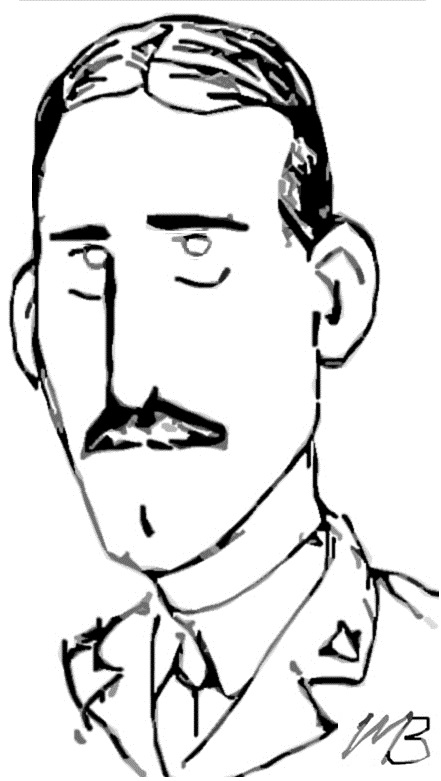
Lt-Col. Stannus

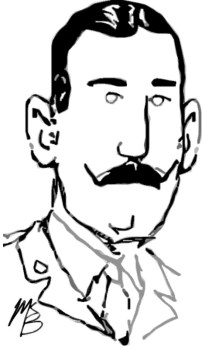
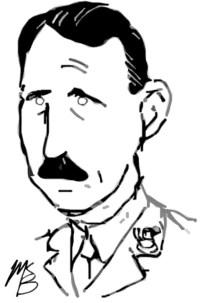
Lieutenant-Colonel T.R.A. Stannus
7th Bn., Leinster Regiment (Royal Canadians)
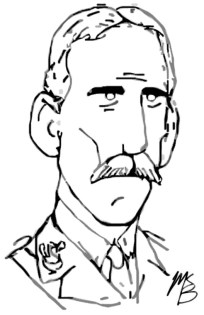
Stannus

Although severely wounded, and thereby unluckily precluded from leading them to the attack his careful supervision and preliminary preparations undoubtedly ensured the success which his men attained. His adjutant was wounded at the same moment, but Lieut.-Colonel Stannus declined all aid until the other officer had been attended to. He had previously done splendid work when acting as O.C., on one occasion frustrating a raid with great loss to the enemy, entirely through personal foresight and grasp of the situation.

(Lt. Col. Stannus, D.S.O. citation, 18 Sept 1917)

Born on 29 September 1870 in Clonygowan, Ireland, Thomas Robert Alexander Stannus was a long serving soldier and Boer War veteran. He was taken prisoner and later wounded in action with the Imperial Yeomanry in South Africa. Having served with the Leinster Regiment since 1889, he retired to the Special Officer Reserve in April 1914. On the outbreak of the Great War, he rejoined the 4th (Extra Reserve) Battalion at the rank of major.
Continue reading

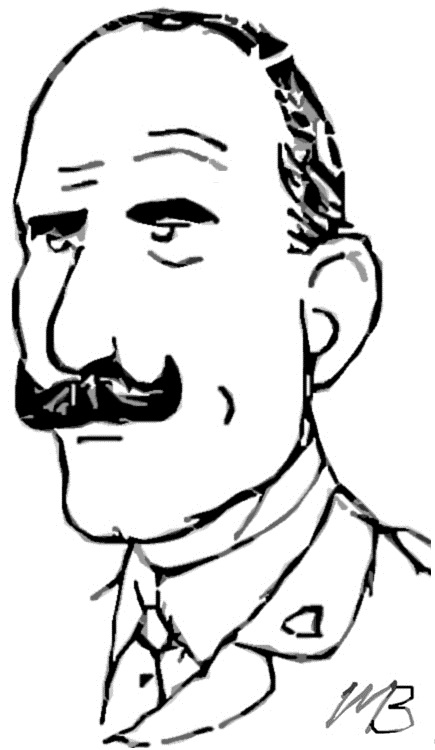
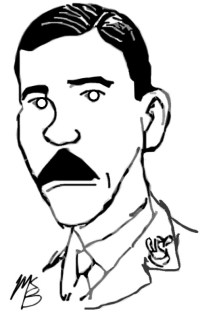
Lt-Col. Murphy

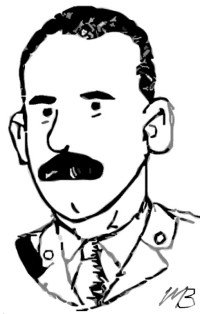
Lieutenant-Colonel A.D. Murphy
2nd Bn., Leinster Regiment (Royal Canadians)
Murphy

The commanding officer seemed to bear a charmed life, and it became a belief in the Battalion that he could not be killed. But he exposed himself fearlessly not because he was invulnerable but because he was brave. No braver man than Alfred Durham Murphy ever stepped on French soil.

(Witton, The History of the Prince of Wales’s Leinster Regiment, vol. 2, 244)

When Major Alfred Durham Murphy assumed command of the 2nd Leinsters in August 1916 at the age of twenty-six, he was one of the youngest battalion commanders on the Western Front. Born on 4 July 1890 in Southwark, Surrey, England, was the son of a retired Tipperary colonel and joined his father’s regiment in 1911. He went to France in September 1914 with the 2nd Leinsters as a junior lieutenant but by May 1916 was second-in-command.

Continue reading

Maj. Conyers

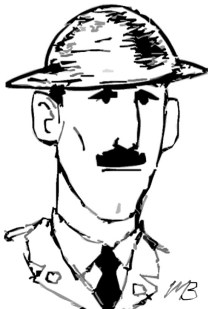
Major Charles Conyers†
1st Bn., Leinster Regiment (Royal Canadians)
Conyers

6pm – Trench in firing line lost. Battalion ordered to counter attack. Left about 11pm. ‘C’ Coy gained the captured trench but were obliged to retire owing to enfilade machine gun fire being brought to bear on them. Major Conyers (commanding Bn) mortally wounded.

(1st Bn., Leinster Regiment War Diary, 11 May 1915)

Charles Conyers was born on 19 November 1867 at his family estate Castletown Conyers in Limerick, Ireland. He had been commissioned since 1889, served in the Boer War, and was a major with the Royal Irish Fusiliers on the out break of the Great War. He transferred to the 1st Battalion, Leinster Regiment to succeed Lieutenant-Colonel C.B. Prowse on 29 April 1915

Continue reading

Lt-Col. Prowse

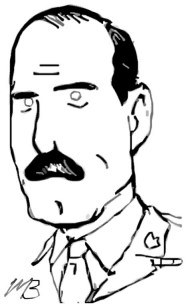
Lieutenant-Colonel C.B. Prowse†
1st Bn., Leinster Regiment (Royal Canadians)

Between the newly captured German lines the Brigadier was cheering us on, when a big shell dropped about 20 or 30 yards away, and a piece must have hit him on the explosion for he was seen to fall. Several men rushed to his assistance. Before he died he cheered the men, and told them to keep up the name of the “Stonewall Brigade.”

(The Wells Journal, 14 July 1916, 5)

Charles Bertie Prowse was born in West Monkton, England on 23 June 1869. He had been commissioned since 1889 and served as a staff officer during the Boer War. He was commanding officer of the 1st Battalion, Prince Albert’s (Somerset Light Infantry) Regiment during the early fighting of 1914 in France. He briefly took command of the 1st Battalion, Leinster Regiment in March 1915 until his promotion to brigadier general of the 11th Infantry Brigade the next month.

Continue reading

Lt. Col. Docherty

Lieutenant Colonel M. Docherty
Lord Strathcona’s Horse
Docherty

We had 200 men, the Germans about 2,000. We had no artillery support, but the Huns had all kinds. But we stopped their counter-attack. Colonel Docherty fell a few feet from me, shot dead, clean through the head.

  (LdSH soldier’s letter, Winnipeg Tribune, 29 Dec 1917)

Born in Scotland on 1 May, 1877, Malcolm Docherty was a Boer War veteran, marksman and polo player in Winnipeg. A prewar sergeant in the Lord Strathcona’s Horse, he went to France as a lieutenant in May 1915. Six months later, he received a promotion to captain and the Distinguished Service Order for gallantry.

Continue reading

Lt. Col. Miller

Lieutenant Colonel Armour Miller
134th (48th Highlanders of Toronto) Battalion
Miller

A reliable and conscientious Officer. He has always been keen and anxious to acquire new ideas. His work here, both theoretical & practical, has shown that he possesses sound military knowledge with the capacity of imparting it to others. He has a cherry disposition.

(Senior Officers School report, 15 Dec 1917)

Along with the 15th and 92nd Battalions, the 134th was the third overseas unit organized by the 48th Highlander Regiment in Toronto. Initiated by Lieutenant Colonel Duncan Donald, the battalion began recruiting in November 1915 to replace the losses suffered by the 15th at St. Julien. Born on 17 December 1869, Donald was a Toronto barrister and commanding officer of the 48th Highlanders. He had served for over twenty-three years in the militia regiment. After Donald stepped down due to illness in July 1916, Armour Adamson Miller assumed command of the 134th.

Continue reading

Lt. Col. Gardner

Lieutenant Colonel Stan Gardner, M.C.†
7th (1st British Columbia) Battalion
Gardner

Lieut.-Col. Gardner is known and respected not only as a fighting man and successful officer, but also a true friend to the soldier who does his duty as it should be done.

(Daily Colonist, 15 Sept 1916, 5)

Born in London, England on 22 August 1880, Stanley Douglas Gardner was a member of the 22nd London Regiment before immigrating to British Columbia. A veteran of the Canadian Mounted Rifles in the Boer War, he enlisted as a captain with the 7th Battalion in September 1914. Stanley was soon appointed battalion adjutant but he was seriously wounded at Festubert on 25 May 1915 and invalided to England. Continue reading

The Cricketer

Lieutenant Colonel Billy Marshall, D.S.O.
15th (48th Highlanders) Battalionmarshall

The list of honors for the second battle of Ypres was out and my name had been omitted.

 I was pleased, however, to see that Major Marshall, my second in command whom I had recommended for “mention in dispatches,” had received a D.S.O. He was a professional soldier and this meant much more to him than it did to me. He was later to fall in the front line trenches the victim of a German sniper. A great athlete, a splendid soldier, a universal favorite, Canada and the Empire could ill spare such a man. His solicitude for his men was such that I have known him to give his clothing to some ailing private. He was one of the bravest, truest and kindest of Canadians.

(J.A. Currie, The Red Watch, 1916, )

William Renwick Marshall was an amateur athlete and Boer War veteran with over twenty years’ service in the militia. Born in Hamilton on 20 March 1875, he played cricket while a student at Upper Canada College and toured the United States and Britain with the Canadian Zingari between the 1890s to the 1910s. He fought bravely at the second battle of Ypres and shortly thereafter assumed command of the 15th Battalion.

Continue reading

The Missing

Lieutenant Colonel A. E. Shaw †
6th and 1st Canadian Mounted Rifles
Shaw

Never was there a more popular or respected Commanding Officer.  It was a common feeling throughout the battalion, that it was entirely due to the good advice and excellent management of our colonel that the casualties of the battalion were kept so low during the earlier part of our tour in the salient, and I don’t think there were any of us but would have gone anywhere with him, as like all good soldiers he never asked a man to do anything he wouldn’t do himself.

(Trooper C. S. Cole to Mrs. Shaw [wife], Jul 1916)

Alfred Ernest Shaw was presumed killed in action defending the front line against a German assault on 3 June 1916. His body was never found. Born in Millbrook, Ontario on 21 November 1881, he was a former NWMP constable and member of the 3rd Dragoons and Lord Strathcona’s Horse.

Continue reading

The Gurkha

Lieutenant Colonel A. H. G. Kemball, D.S.O. †
54th (Kootenay) BattalionKemball

So Kemball was ignored. That gallant officer—the adjective in his case is deserved—defied orders and refused to stay in the rear when his men were in peril. He led them personally on an attack he knew was futile.

(Pierre Berton, Vimy, 1986, 129)

Born in Belgaum, India on 4 January 1861, Arnold Henry Grant Kemball was a professional soldier with thirty-two years’ experience in the Indian Army.  A veteran of the Gurkha Rifles, Kemball served in the Hazara Expedition (1888), the North West Frontier (1897) and Tirah Campaign (1898). He retired as commander of the 5th Gurkhas in 1910 and moved to British Columbia.

Continue reading