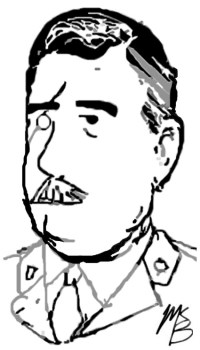
Lt. Col. Macdonald

Lieutenant Colonel J.B.L. Macdonald, D.S.O.
3rd Canadian Railway Troops

MacdonaldJBL

This being dominion day and the fiftieth anniversary of Confederation the personnel of this observed a holiday so far as was possible.

(3rd CRT, war diary, 1 July 1917)

Born in Invernessshire, Scotland on 22 July 1867, James Brodie Lauder Macdonald was second-in-command of the 239th Battalion under Vancouver railway tycoon Colonel Jack Stewart. Prior to the war, Macdonald had been a railway contractor in one of Stewart’s firms and member of the 72nd Seaforth Highlanders. He appears to have lowered his age five years on enlistment.
Continue reading

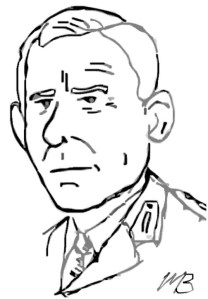
Lt. Col. W.A. Munro

Lieutenant Colonel W.A. Munro
90th (Little Black Devils) Battalion

Munro

Heart disease, which originated in the first gas attack at Ypres in 1915, resulted in the death last night of Lieut.-Col. W.A. Munro, D.S.O., a prominent figure in the active militia in Western Canada.

 (Winnipeg Tribune, 2 Feb 1927, 2)

A native of Toronto, William Aird Munro was born on 12 June 1872. He joined the newly formed 48th Highlanders in 1891 before moving to Winnipeg three years later. At the outbreak of the Great War, he had twenty-years’ service with the 90th Winnipeg Rifles (The Little Black Devils). The regiment’s nickname dated back to the Métis resistance of 1885. A captured rebel remarked, “The red coats we know, but who are those little black devils?” referring to the 90th soldiers’ rifle green uniforms.

Continue reading

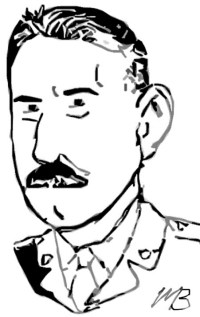
Lt. Col. Harstone

Lieutenant Colonel Jack Harstone
4th Canadian Railway Troops
Harstone

There is no transcontinental railway in operations today on the North American continent which he has not had some part in building.

(The Forty-Niner, Jan 1932, 18)

John Brunton Harstone was born in Port Arthur, Ontario on 15 September 1879. He enlisted as a lieutenant with the 49th Battalion in January 1915. Earning the nickname, “Fighting Jack,” he served in France from October 1915 until he was wounded a year later. While recovering he received the Distinguished Service Order.

Continue reading

Lt. Col. McMordie

Lieutenant Colonel S.P. McMordie
13th Canadian Railway Troops
McMordie

His real desire I am sure would be to land in the frontline trenches; however, his age and loss of an eye undoubtedly bars him from that objective. On learning from the press that there were many escapes from internment camps, and that two officers in charge of these camps had been suspended, it occurred to me you needed a tough guy and the Colonel was your man.

(G.W. Nickerson to secretary, Minister of National Defence, 19 May 1941)

Stewart Percival McMordie was born on 15 November 1877 and worked in Prince Rupert, British Columbia, as a contractor. He enlisted in the 48th Battalion in August 1915 and went overseas as a major. Following an instructional tour of the front, he re-joined the 48th which was re-designated 3rd Canadian Pioneers. On 13 June 1916, McMordie was badly wounded by a high explosive shell. A steel splinter resulted in the loss of his right eye.

Continue reading

The Railway Tycoon

Brigadier General Jack Stewart, D.S.O.
239th (Railway Construction) Battalion

JWStewart

Stewart ran up railways with a rapidity that astounded the authorities… If I had been Prime Minister, he would have found a seat in the British House of Peers, the only recognition adequate to his vast services to the Empire in her worst hour of peril.

(T.P. O’Connor- Irish-Nationalist MP for Liverpool Scotland)

Responding to the critical Allied need for rail support in France, the Canadian government authorized the creation of several battalions designated for railway construction. In May 1916, noted Vancouver railway builder, John William Stewart began recruiting for the 239th Battalion. Born on 12 December 1865 in Sutherland, Scotland, Stewart moved to Canada in 1882. Rising from a poor immigrant labourer, Stewart became a very successful railway manger and contractor in western Canada and Montana.

Continue reading