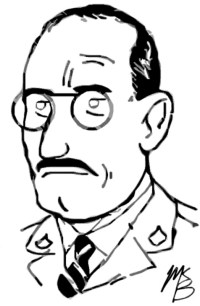
Lt-Col. G.C.A. Macartney

Lieutenant-Colonel G.C.A. Macartney
Irish Regiment of Canada
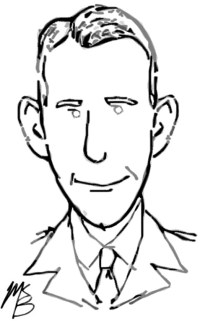
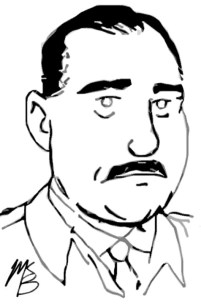
Macartney

It is rather disconcerting, in the middle of the 20th century, to sit down with a Canadian and hear about Indian raids. Yet G.C.A. Macartney, a one-time Hudson’s Bay Company trader at Yellowknife, N.W.T., who left Canada’s north because it was “too cold,” is one of the few white men who works and lives in an area where Indians still loose volleys of arrows at invaders.

(Montreal Star, 22 Feb 1955, 12)

Born in India on 21 August 1919, George Charles Antony Macartney came to Canada from England in 1938. Two years later he enlisted in the Irish Regiment in Toronto as a private and gained a commission before going overseas. He earned the Distinguished Service Order at the Gothic Line and rose to second-in-command when the unit redeployed to Northwest Europe. In June 1945, he succeeded Lieutenant-Colonel Leige Payne, who had volunteered for the Pacific theatre, and led the regiment home to Toronto by the end of the year.
Continue reading

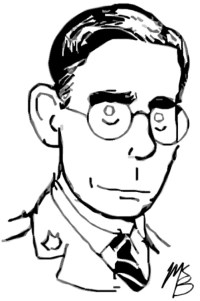
Lt-Col. L.C.H. Payne

Lieutenant-Colonel Leige Payne
Irish Regiment of Canada
Payne

Apparently “Lest We Forget” only pertains to one day of the year, Nov 11. I refer to the shabby treatment afforded the late Lt-Col. Lee Payne by Sunnybrook. Lee Payne was a soldier Canada should be proud of. He rose from the ranks of the Irish Regiment to become its commander, an achievement few can lay claim to. I had the privilege of serving with him and knowing him … Who cares whether or not he was entitled to treatment?

(Ernie Newman, Toronto Star, 6 Jan 1958, 6)

Born in Winnipeg on 3 September 1914, Leige Clifford Harry Payne worked in the yarn business and enlisted as a private in the Irish Regiment of Canada in 1940. He earned a commission before the unit went overseas in October 1942 and became second-in-command by the end of the Italian campaign. He succeeded Lieutenant-Colonel R.C. Clark in February 1945 as I Canadian Corps prepared for redeployment to Northwest Europe.

Continue reading

Lt-Col. R.C. Clark

Lieutenant-Colonel Bob Clark
Irish Regiment of Canada
ClarkR

During the day, the enemy subjected the Regiment to heavy shelling, which at times became intensive. It was expected that the Regiment would remain there for a few days. The first troops to enter the town had painted “Bobby Clarkeville” on a wall, in honour of the CO, with the additional note “In bounds to all Canadian Troops.”

(Irish Regiment War Diary, 2 Sept 1944)

Born in South Africa 15 September 1903, Robert Charles Clark was son of First World War battalion commander Brigadier General Robert Percy Clark (1872–1932), an RMC graduate, and Permanent Force officer in the Royal Canadian Regiment. Nicknamed “Knobby,” he went overseas with the RCR as a captain and adjutant. Once in England, he served as brigade major for the 2nd Infantry Brigade before returning to Canada in April 1942.

Continue reading

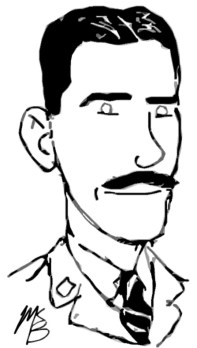
Lt-Col. Duthie & Maj. Cockeram

Lieutenant-Colonel H.B. Duthie
Duthie
&
Major Alan Cockeram
Irish Regiment of Canada
Cockeram

I could give [the defence minister] names of officers who served in the militia in peace time, who are here doing senior staff jobs and who never saw active service. That condition is definitely wrong. I think everyone will agree that those of us who wore the uniform in peace time should fight in the front line.

(Cockeram, House of Commons Debates, 12 Jun 1941, 3926)

Born in Toronto on 28 June 1889, Harold Bruce Duthie was a contractor and First World War veteran. Commissioned on enlisting in 1917, he served with the Canadian Engineers in France during the final Hundred Days of the war. In 1938, he became commanding officer of the 1st Battalion, Irish Regiment of Canada, succeeding fellow veteran Lieutenant-Colonel Alan Cockeram. Born in Devon, England on 6 December 1894, Cockeram had earned the D.S.O. in 1917 and was member of parliament for York South. On the mobilization during the Second World War, Cockeram reverted from command of the 2nd Battalion (Reserve), Irish Regiment to go active with the 1st Battalion as second-in-command.

Continue reading