Lt. Col. Scroggie

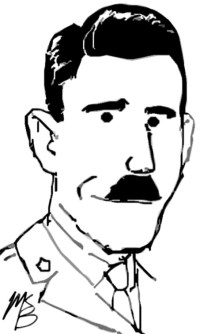
Lieutenant Colonel J.A. Scroggie, D.S.O., M.C.
16th (Canadian Scottish) Battalion
Some correspondents have stated that trench warfare days were days of monotony broken by half-hours of Hell. While that is exaggerated it is in a sense true.

(Lt. Col. Scroggie speech, Kingston Standard, 7 Mar 1922, 2)

Born in Scotland on 4 August 1890, James Austin Scroggie immigrated to Canada in 1911 and took up fruit farming in British Columbia. He enlisted with the 30th Battalion as a private in November 1914, and joined the 16th Battalion in the field on a reinforcement draft six months later. Having proven himself as the NCO leader of the bombing section, he was commissioned a lieutenant on 12 May 1916. By the end of the war, he was twice-wounded, three-times mentioned in dispatches, and earned the Military Cross and two Bars.
Continue reading

The Biographer

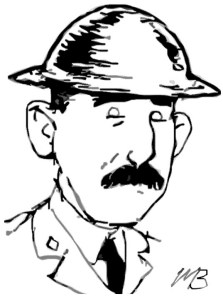
Lieutenant Colonel Hugh Urquhart, D.S.O.
43rd (Cameron Highlanders of Canada) BattalionUrquhart

There remains but to refer lightly to the characteristics typical of the Canadian soldier in that crisis which probed into the innermost recesses of character. This is not to claim that the Canadian possessed merits not shared by his comrades in arms everywhere; the soldierly virtues is the birthright of the true fighting man in all lands. But the soldiers of the Dominion exhibited those instincts in their own way. They were hidden under an exterior of independence, which sometimes misled the casual observer as to the soldierly spirit, potent in its strength, lying beneath this mask.

(Urquhart, History of the 16th Battalion CEF, 1932, 332)

A native of Scotland, Hugh MacIntyre Urquhart was born on 13 August 1880 and immigrated to Canada in 1909. He originally enlisted with the 16th Battalion at Valcartier in August 1914. In recognition for his courage in the field, he was awarded the Military Cross and the Distinguished Service Order. In Canadian military historiography, he is best known as the author of Arthur Currie: The Biography of a Great Canadian (1950).

Continue reading