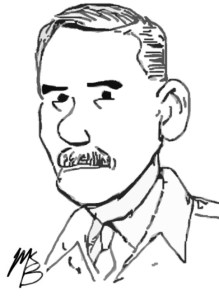
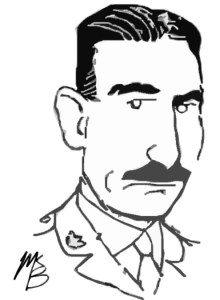
Lt-Col. R.D. Hodgins

Lieutenant-Colonel Ray Hodgins
Highland Light Infantry of Canada

I came to, lying on the side of the ramp. Young Sparks was dead on the other side, a cigarette hanging from his mouth. I had shrapnel wounds in my buttocks which is the best place you can get hit. They just seared through the flesh. I didn’t even realize I had a lacerated rear end.

(Quoted in Snowie, Bloody Buron, 73)

Born on 1 June 1913 in Preston, Ontario, Raymond Dent Hodgins was commissioned in the Highland Light Infantry in 1936 and mobilized as a lieutenant in 1940. He served as a “C” Company commander on D-Day and during the Normandy campaign. During the “Blood Buron” attack of 8 July 1944, he was part of the battalion command group that was struck was an enemy shell. A lieutenant and three signallers were killed while Lieutenant-Colonel F.M. Griffiths was wounded. Hodgins suffered a shrapnel wound to the buttocks, “the best place to get hit.”
Continue reading

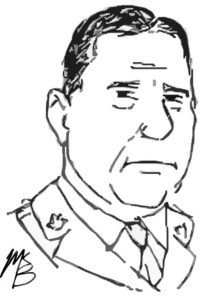
Lt-Col. P.W. Strickland

Lieutenant-Colonel Phil Strickland
Highland Light Infantry of Canada

Later, on the 12th October, at Driewegen … Lieutenant Colonel Philip Wheaton Strickland again led his battalion with great courage and determination against a strongly held German position which threatened to delay the advance of 9 Canadian Infantry Brigade.

(D.S.O. citation, 27 Nov 1944)

Born on 9 April 1913 in Saskatoon, Saskatchewan, Philip Wheaton Strickland was a manufacturing executive in Chatham, Ontario, having graduated the University of Saskatchewan with a law degree and attended Columbia University. He mobilized with the Highland Light Infantry in 1940 serving as intelligence officer but soon qualified for staff officer duties. He served with First Canadian Army until the early phase of the Normandy campaign when he was appointed brigade major with 9th Infantry Brigade.

Continue reading

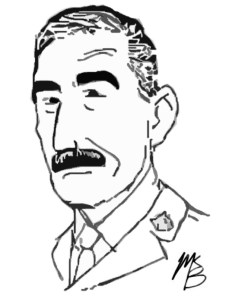
Lt-Col. N. Kingsmill

Lieutenant-Colonel Nichol Kingsmill
Highland Light Infantry of Canada

Does not feel able to think and has no confidence that he can carry on. This officer in my opinion has an anxiety state which is associated with the handling of men. His chief fear seems to be the responsibility of sending men and officers out on missions from which he knows they are likely not to return. He is afraid of unnecessary casualties through some error on his part.

(Neuropsychiatrist report, 6 Nov 1944)

Born on 22 December 1906 in London, Ontario, Nicol Kingsmill was a Toronto lawyer and graduate of the University of Toronto and RMC. He was son of Lieutenant-Colonel Walter Bernard Kingsmill (1976—1950), commanding officer of the 123rd Battalion in the First World War. The younger Kingsmill served with the Canadian Officer Training Corps and the Royal Regiment of Canada before returning to Canada in January 1942 with an appointment to be a brigade major in the 6th Division.

Continue reading

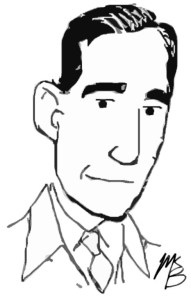
Lt-Col. F.M. Griffiths

Lieutenant-Colonel Frank Griffiths
Highland Light Infantry of Canada

Although all good biographies start with date and place of birth, Nifty would be the most disappointed man in the would if one failed to refer to Niagara Falls. Griff, though small of stature has an enviable record as an athlete … His infectious good humour and endless supply of good jokes has helped us over many a blue day.

(RMC Review, Class of 1931, 30)

Born in Niagara Falls, Ontario, on 2 October 1909, Franklyn McCallum Griffiths was a graduate of the Royal Military College and an Osgoode Hall-trained lawyer in Niagara. He had belonged to the Lincoln and Weiland Regiment before the Second World War and transferred to the Royal Canadian Regiment in late 1939. He completed a course at RMC in 1942 and served as brigade major and staff officer when he went back to England.

Continue reading

Lt-Col. R.F. Shantz

Lieutenant-Colonel R.F. Shantz
Highland Light Infantry of Canada

There are a lot of jobs in England at the present time that could be done by women … I feel that more girls could have been enlisted a long time ago. If that had been the case, the Canadian army wouldn’t need the reinforcement it does today.

(Quoted in news clipping in HLIC War Diary, Apr 1944)

Born in Preston, Ontario on 24 June 1905, Robert Frederick Shantz was superintendent for the family foundry business and member of the Highland Light Infantry since 1924. He joined as drum major, was commissioned in 1925, promoted to captain in 1932, and promoted to major in 1935. He succeeded Lieutenant-Colonel H.W. Foster to take command of the battalion in February 1943.

Continue reading

Lt-Col. R.J. McPherson

Lieutenant-Colonel R.J. McPherson
Highland Light Infantry of Canada

Made of good, solid stuff … would do well despite conservative ideas and limited imagination.

(Bernard Montgomery quoted in English, Monty and the Canadian Army, 68)

Born on 20 March 1906 in Puslinch, Ontario, Robert John McPherson was a prewar member of the Highland Light Infantry in Galt and mobilized as second-in-command in 1940. He succeeded Lieutenant-Colonel J.A. MacIntosh in January 1942. The next month, during his inspection of the 9th Infantry Brigade, General Bernard Montgomery, thought McPherson “good stuff” with promise to do well, although Monty also noted that the newly promoted colonel evidently lacked imagination.

Continue reading

Lt-Col. J.A. McIntosh

Lieutenant-Colonel J.A. McIntosh
Highland Light Infantry of Canada

A good Officer. Reliable and energetic. Even tempered and tactful, and can command men. Has worked very well during the Course, has gained much in self-confidence, and shows great improvement in expressing his intentions both verbally and on paper. With a little more experience should make a good C.O.

(Senior Officer School report, 16 Mar 1918)

Born on 10 December 1885 in Galt, Ontario, John Alexander McIntosh was an accountant and commanding officer of the Highland Light Infantry since 1937. He had enlisted with the 18th Battalion in November 1914. He deployed to France September 1915, was promoted to captain in January 1916 and became a major six months later. He served ten months as 18th Battalion second-in-command before he attended senior officer school. He was twice wounded, twice mentioned in despatches, and received the Distinguished Service Order.

Continue reading

Maj-Gen. H.W. Foster

Major-General Harry Foster
4th Princess Louise Dragoon Guards
Highland Light Infantry of Canada
13th & 7th Infantry Brigades
4th & 1st Canadian Divisions
Foster

He was just as guilty of murder as I was at the time … or any other senior officer in the field during a battle. The difference between us was that I was on the winning side. That makes a big difference.

— Gen. Foster on Kurt Meyer

(Quoted in Tony Foster, Meeting of Generals, 1988)

Born on 2 April 1904 in Halifax, Nova Scotia, Harry Wickwire Foster left Royal Military College the in 1924 to take a commission with the Lord Strathcona’s Horse. His father, Major-General Gilbert Lafayette Foster, had been director of medical services for the Canadian army during the First World War. With the outbreak of Second World War in September 1939, Foster was appointed brigade major of the 1st Canadian Brigade in England.

Continue reading