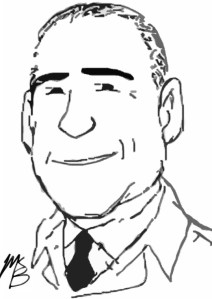
Lt-Col. G.T. Baylay

Lieutenant-Colonel G.T. Baylay
21st Armoured Regiment (The Governor General’s Foot Guards)
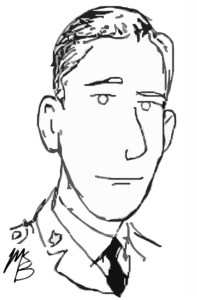
… a cheery soul of artistic temperament who, being gifted with magnificent good nature, quickly became one of the most popular men of the class. His famous drawings were the mainstay of the “artists fatigue” and of the class during many a dull lecture.

(RMC Review, 1936, 28)

Born in Peel, Ontario on 13 June 1913, George Taylor Baylay was a graduate of RMC where he had a reputation of an entertaining cartoonist. He joined the Governor General’s Foot Guards as a lieutenant on unit mobilization in 1940. He rose from platoon leader, intelligence officer to adjutant to squadron commander to second-in-command, serving throughout the Normandy campaign. He succeeded Lieutenant-Colonel E.M. Smith in September 1945, recurving a promotion to lieutenant-colonel himself soon thereafter.  
Continue reading

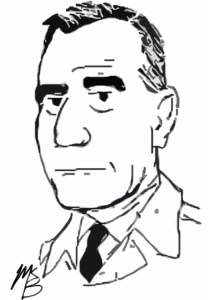
Lt-Col. E.M. Smith

Lieutenant-Colonel E.M. Smith
21st Armoured Regiment (The Governor General’s Foot Guards)

His unique personality and quick understanding of the problems of those under his command made him an outstanding figure in the life of the Regiment from the very beginning … the Governor General’s Foot Guards would enter the battles ahead with a commanding officer of great tactical ability and one who would always look after “his boys” and ensure that the Regiment would continue to add laurels to its already famous name.

(The Guard’s Star, 22 Sep 1945, 2)

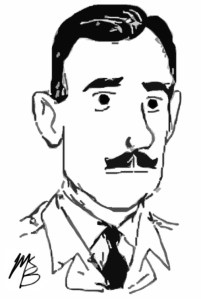
Born in Ontario in 1904, Edward Marshall Smith served as a captain in the Regiment de Hull but transferred to the Governor General’s Foot Guards following mobilization in 1940. The regiment converted to armour in 1942 and he preceded the re-designated 21st Armoured Regiment to England for special training. When the Foot Guards deployed to France in July 1944, Smith commanded a tank squadron.

Continue reading

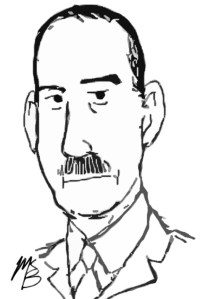
Maj. H.F. Baker

Major Harold F. Baker
21st Armoured Regiment (The Governor General’s Foot Guards)

The real sad thing was that I lost all my good friends back there and after working with them for nearly five years, it was tough.

(Baker to father, letter 1944)

Born on 10 November 1904 in Casselman, Ontario, Harold Foster Baker was a graduate of Queen’s University and car dealer. A prewar officer in the Lanark and Renfrew Scottish Regiment, he transferred to the Governor General’s Foot Guards with a promotion to major following unit mobilization in 1940. Overseas, he became second-in-command of the re-designated 21st Armoured Regiment, which had embarked for the United Kingdom in September 1942.

Continue reading

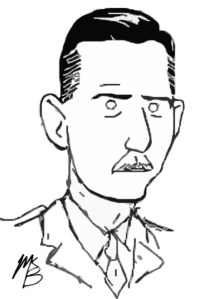
Lt-Col. M.J. Scott

Lieutenant-Colonel M.J. Scott
21st Armoured Regiment (The Governor General’s Foot Guards)

I do want to say that my days with the Regiment were very happy and I am very grateful for the co-operation, the loyalty and the deep sense of duty shown at all times by all ranks. It is my desire to render any service at any time, within my power, to the Regiment and to those who have served with it.

 (Scott letter, war diary, 12 Oct 1944)

Born on 20 Nov 1902 in Saint John, New Brunswick, Murray Joseph Scott began his militia service with the Saint John Fusiliers and then joined the Canadian Grenadier Guards on moving to Montreal in 1933. He mobilized with that battalion as a major and company commander but in 1942 transferred to the Governor General’s Foot Guards as second-in-command under fellow Grenadier Lieutenant-Colonel H.W. Rick.

Continue reading

Lt-Col. H.W. Rick

Lieutenant-Colonel H.W. Rick
21st Armoured Regiment (The Governor General’s Foot Guards)

I know I have a tough job ahead of me, but if I receive the same measure of co-operation and loyal support in my new task as I have received here I shall be happy. History is now in the making. I shall do my best to contribute to it.

(Montreal Star, 2 Jan 1942, 2)

Born on 25 February 1897 in Montreal, Howard Wilfred Rick attended McGill University, where he joined the Canadian Officer Training Corps. He enlisted with the 148th Battalion in January 1916 and granted a commission the next year when he was seconded the Royal Flying Corps. After the First World War, he joined the Canadian Grenadier Guards and became second-in-command following mobilization in 1940. A broken back from a training accident forced him to relinquish this post but after a long recovery returned to duty as staff officer with Military District No. 4.

Continue reading

Lt-Col. W.G. Wurtele

Lieutenant-Colonel W.G. Wurtele
21st Armoured Regiment (The Governor General’s Foot Guards)

First of all he must make himself a psychologist with one end in view—The mutual trust and reliance between himself and his men, that he is worse than useless unless he develops. You need have no fear about your men, they will do their part if you do yours. You have the real job and you need have no illusions that you can fool your men.

 (Wurtele address, war diary, 6 Feb 1940)

Born on 27 October 1895 in Kingston, Ontario, William Godfrey Wurtele was a decorated First World War veteran and commanding officer of the Governor General’s Foot Guards since 1938. As a student at RMC, where his father was a professor, he enlisted in the 59th Battalion in February 1916. He served as a lieutenant with the Royal Canadian Regiment in France, where he was three-times wounded and twice gassed. By the end of the war, he had earned the Military Cross for “dashing leadership” in capturing an enemy battery.

Continue reading