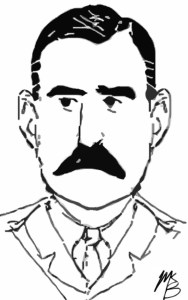
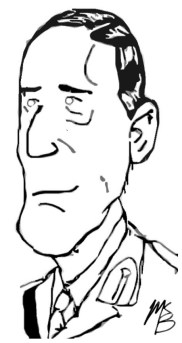
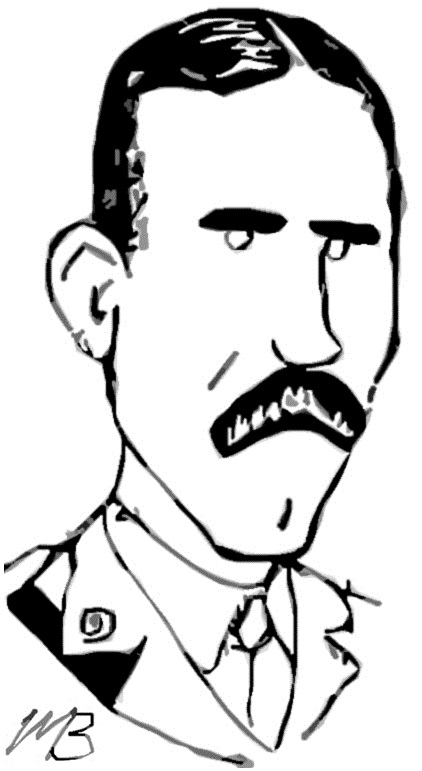
Lt. Col. W.H. Bell

Lieutenant Colonel Walker Bell, D.S.O.
3rd (Light) Tank Battalion
Bvt. Lt.-Colonel W.H. Bell is an able officer of sound judgement with decided personality and character. His knowledge of the application of tactical principles is sound as also are his views on matters connected with the training and administration of a Cavalry Regiment. In my opinion he is up to the standard of officers attending this school.

(Senior Officer School confidential report, 16 Aug 1924)

Walker Hardenbrook Bell was a Boer War veteran and Permanent Force member since 1906 when he was commissioned in the Royal Canadian Dragoons. He was born in St. John, New Brunswick on 28 December 1881. He served as second-in-command of the R.C.D. from July 1916 until January 1918, when he transferred to the British Army Tank Corps. His war service anticipated the eventual replacement of traditional cavalry with modern armour.
Continue reading

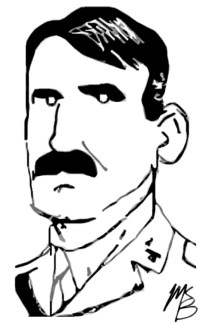
Lt. Col. S.F. Smith

Lieutenant Colonel Sandford F. Smith
4th Canadian Mounted Rifles
SmithSF

This Officer while on training duty in France was thrown by his horse and sustained a fracture of the head of the left humerus. He was evacuated to England June 10th 1917, and has been a patient at Helena Hospital until to-day, when he was discharged as completely recovered.

(Proceedings of Medical Board, 1 July 1917)

Born in Peterborough, Ontario on 4 May 1873, Sandford Fleming Smith was the grandson of famed Scottish-Canadian engineer Sir Sandford Fleming. Smith was a Toronto architect, former member of the Queen’s Own Rifles and commanding officer of the Governor-General’s Body Guard.

Continue reading

The Horseman

Brigadier General R. W. Paterson
6th (Fort Garry Horse) Battalion Paterson

I told him [Col. MacDonald] the whole story of the [Canadian Cavalry Brigade] and how they would like to be under command of a Canadian. He intends seeing the Bde. before going back to London. I told him everyone swears by Col. Paterson.

(Lt-Col. Beer, Diary, 15 July 1917)

Born on 22 October 1876 in Guelph, Ontario, Robert Walter Paterson founded the Fort Garry Horse in 1912. He had moved to Manitoba in 1902 and worked as a bank manager and manufacturer. In August 1914, he organized the 6th Battalion from Western cavalry militia units, including the Fort Garry Horse, 18th Mounted Rifles, 20th Border Horse, 22nd Saskatchewan Light Horse and 32nd Manitoba Horse.

Continue reading

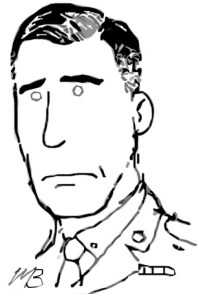
The Diarist

Lieutenant Colonel Lewis H. Beer
140th (St. John’s Tigers) Battalion

I forgot to mention that Gen. Seeley [sic] comes back on Tuesday the 10th. Well I have made up my mind to not stay when he returns. I am quite sure I would only get into trouble and would never feel easy under his command knowing he is not to be trusted. He is the kind of man who pats you on the back and at the same time knifes you. I want nothing to do with him. I have discovered him now in several lies not only about me but about other people. I have applied to return to England at the same time if humanly possible. I am going to make every effort to secure another place in France.

(L. H. Beer, Diary, 8 July 1917)

Lewis Herbert Beer was born in Charlottetown, Prince Edward Island on 12 December 1873. He was a member of Loyal Orange Lodge No. 614, worked in insurance and belonged to the 36th P.E.I. Light Horse. In October 1914, Beer joined Lord Strathcona’s Horse as a lieutenant. He served in England and France until December 1915 when he returned to Canada in order to raise the 140th Battalion from New Brunswick.

Continue reading

The Aristocrat

Major General Jack Seely, M.P.
Canadian Cavalry Brigade Seely

It was at that time, when carrying out a smaller raid, that my horse got shell-shocked, though not myself, I hope, and fell on me and smashed up five bones in my poor old body. However, I managed to get back all right.

(Seely Speech, Empire Club of Canada, 4 Oct 1920)

John Edward Bernard Seely, 1st Baron Mottistone, was a British soldier and politician. Born on 31 May 1868 in Brookhill Hall, Derbyshire, he was the son of Sir Charles Seely (1833—1915), a long-serving Liberal Unionist MP. During the Boer War, Seely joined the Imperial Yeomanry and won the Distinguished Service Order. In 1900, he was elected to the House of Commons as a Conservative. In 1904, he switched to the Liberal Party and later became a cabinet minister in Prime Minister Herbert Henry Asquith’s Government.

Continue reading