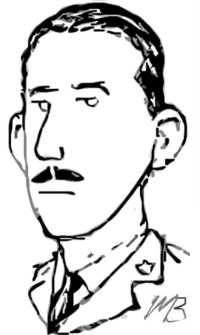
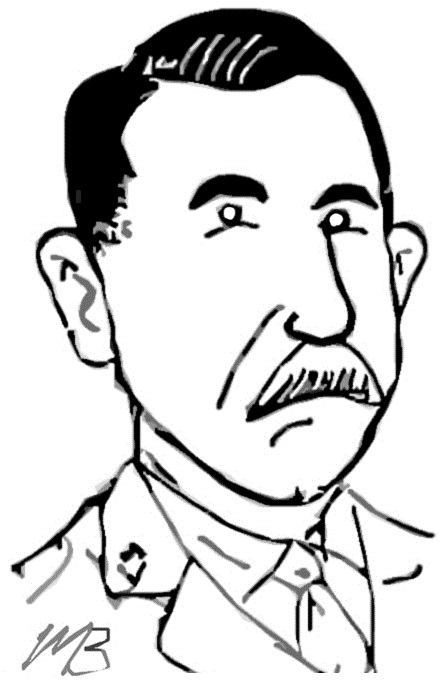
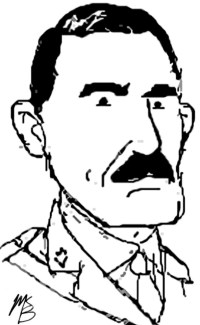
Maj. Pearson

Major A.G. Pearson
Princess Patricia’s Canadian Light Infantry
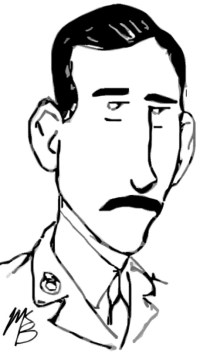
Pearson

After practically all the garrison at the front trenches had been killed or wounded by enemy shell fire, L/Cpl Pearson with a few men still held on and fortunately although wounded himself managed to bring out the survivors in safety after a new position had been taken up.

(Pearson, DCM citation, 14 Jan 1916)

Born in Endon, Staffordshire, England on 16 August 1880, Alfred Glynn Pearson was shipping agent who enlisted as a private in Winnipeg in December 1914. He was one of the few non-commissioned volunteers to rise through the ranks and command a battle by the end of the war. While serving as a corporal with the PPCLI, he received the Distinguished Conduct Medal and a promotion to lieutenant. After recovering from shrapnel wounds, Pearson rejoined the PPCLI in spring 1916.
Continue reading

Lt. Col. Scroggie

Lieutenant Colonel J.A. Scroggie, D.S.O., M.C.
16th (Canadian Scottish) Battalion

Some correspondents have stated that trench warfare days were days of monotony broken by half-hours of Hell. While that is exaggerated it is in a sense true.

(Lt. Col. Scroggie speech, Kingston Standard, 7 Mar 1922, 2)

Born in Scotland on 4 August 1890, James Austin Scroggie immigrated to Canada in 1911 and took up fruit farming in British Columbia. He enlisted with the 30th Battalion as a private in November 1914, and joined the 16th Battalion in the field on a reinforcement draft six months later. Having proven himself as the NCO leader of the bombing section, he was commissioned a lieutenant on 12 May 1916. By the end of the war, he was twice-wounded, three-times mentioned in dispatches, and earned the Military Cross and two Bars.

Continue reading

The Other Ranker

Lieutenant Colonel Dick Worrall, D.S.O., M.C.
14th (Royal Montreal Regiment) Battalion

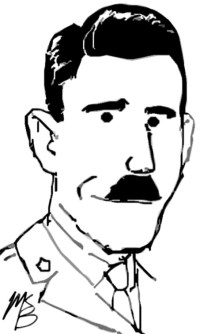
Worrall

He advanced his line half a mile and under heavy fire maintained his position all day. The following day, though his left was exposed to withering machine gun and artillery fire, he captured a village, taking prisoners a whole battalion. Still pushing on, he took the final objective, and established his position, having advanced some 5,000 yards from the jumping off line. He displayed fine courage and leadership.

(Worrall D.S.O. Citation, London Gazette, 11 Jan 1919, 1605)

Richard Worrall was born in Woolwich, England on 8 July 1890. He served for eight years in the Dorsetshire Regiment before emigrating to the United States. He seemed to have joined the US Army but evidently deserted to fight for Canada at the outbreak of the Great War. He was one of the very few men to enlist as a private and rise through the ranks to command an infantry battalion.

Continue reading

Lt. Col. Sutherland

Lieutenant Colonel D.H. Sutherland
No. 2 Construction Battalion

SutherlandDH

Lieut.-Col. D.H. Sutherland, O.C. of the battalion, speaking for recruits, mentioned the excellent discipline the colored men already enlisted had shown, and commended them for their soldierly appearance … Many colored men, he said, were dissatisfied because they had been refused at the beginning of the war. This, he said, had been due merely to prejudice on the part of a few officers, and was not general throughout the Dominion.

(London Advertiser, 20 October 1916)

Born in Pictou, Nova Scotia on 10 September 1880, Daniel Hugh Sutherland was a railway contractor who enlisted as a private with the 193rd Battalion. In June 1916, he received a commission and promotion to lieutenant colonel to recruit No. 2 Construction Battalion, the only segregated Black battalion in the Canadian Expeditionary Force. Except for Honorary Captain Reverend William A. White, all the officers were white.

Continue reading

The Bug

Lieutenant Colonel A. L. Saunders, D.S.O., M.C.
8th (90th Winnipeg Rifles) BattalionSaunders

At 1 PM on January 20th 1915, we fell in to march to Tidworth. Pte. Bug Saunders (afterwards Lt. Col. Saunders, D.S.O. and bar, M.C. and bar) distinguished himself by getting into a fight and appearing on parade with one eye closed.

(A. H. J. Andrews, Diary, Jan 1915)

Alec Laurence Saunders was born on 28 September 1888 in Kingston, Ontario. In September 1914, the five-foot-three and a half Winnipeg clerk enlisted as a private with the 6th Battalion. Four years later, he was commanding officer of the 8th Battalion for the final Hundred Days of the war. Although initially viewed skeptically for his short stature, Saunders, nicknamed Bug, quickly distinguished himself in battle.

Continue reading