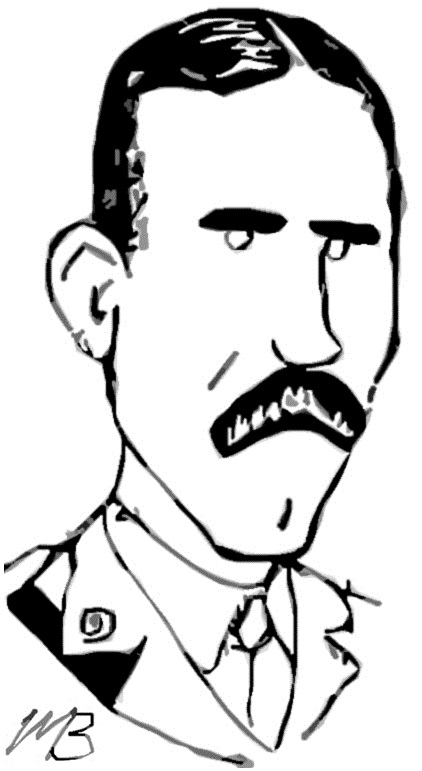
Lt-Col. E.M. Wilson

Lieutenant-Colonel E.M. Wilson
10th Armoured (Fort Garry Horse) Regiment
WilsonEM

His relations with the other arms throughout could not be improved upon. His never failing willingness to help, and his quick appreciation of the difficulties faced by the infantry greatly eased the task of every infantry commander. LCol Wilson by frequently visiting the forward areas, which involved trips of a most hazardous nature over routes only partially cleared of the enemy, was always completely “in the picture” when called upon to undertake a new task.

(D.S.O. citation war diary, 16 Jun 1945)

Born on 1 March 1901 in Goderich, Ontario, Eric MacKay Wilson was a former school teacher and newspaper publisher. In 1939, he became managing editor of the Toronto office for the Montreal Star. A cadet instructor during the First World War, he was commissioned in the militia in 1924 and volunteered for active service in 1940. Following overseas training with an armour unit in England, he joined the Fort Garry Horse as a squadron commander.
Continue reading

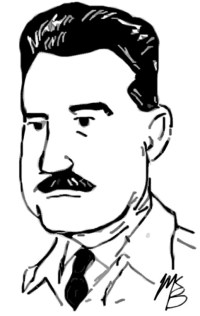
Lt-Col. R.E.A. Morton

Lieutenant-Colonel Ronald Morton
10th Armoured (Fort Garry Horse) Regiment
Morton

He commanded our respect, our obedience and our love. On leaving he reported Officers are the soul of a Regt, the Sgts are its backbone. To write a biography of Col., MORTON is impossible here, but surely it may be and should be done elsewhere. “If I have built a good foundation, the Regt will be just / as well off without me.”

(FGH war diary, 28 Aug 1944)

Born in Toronto on 12 December 1900, Ronald Edward Alfred Morton graduated from RMC in 1923 and joined the Permanent Force. In October 1941, he transferred from second-in-command of the Lord Strathcona’s Horse to replace Lieutenant-Colonel S.J. Cox of the Fort Garry Horse. Despite eighteen years in Winnipeg with the LdSH, he was still viewed as an outsider but soon accepted as a “synthetic westerner.” He would serve as commanding officer for the unusually long period of almost three years, and led the FGH Tanks in the invasion of Normandy on 6 June 1944.

Continue reading

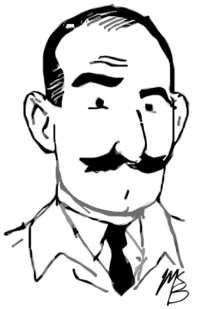
Lt-Col. S.J. Cox

Lieutenant-Colonel S.J. Cox
10th Armoured (Fort Garry Horse) Regiment
Cox

Everybody seemed to be in uniform. Women were much in evidence in all kinds of work and very enthusiastic about it. Traveling around, I found no names or directions, not even on stations. One has to follow a map; it’s very difficult at night in blackouts.

(Cox quoted in Winnipeg Tribune, 29 Oct 1942, 9)

Born in Kildare, Ireland on 5 July 1885, Samuel Joseph Cox had served three years with the South Irish Horse and belonged to the Fort Garry Horse since 1913 shortly after immigrating to Canada. A Winnipeg accountant, he volunteered as a lieutenant in August 1916 and served two years in France with the FGH. He became commanding officer in November 1936, when the unit was amalgamated with the Manitoba Horse.

Continue reading

The Horseman

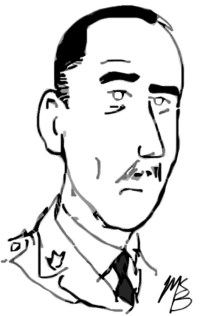
Brigadier General R. W. Paterson
6th (Fort Garry Horse) Battalion Paterson

I told him [Col. MacDonald] the whole story of the [Canadian Cavalry Brigade] and how they would like to be under command of a Canadian. He intends seeing the Bde. before going back to London. I told him everyone swears by Col. Paterson.

(Lt-Col. Beer, Diary, 15 July 1917)

Born on 22 October 1876 in Guelph, Ontario, Robert Walter Paterson founded the Fort Garry Horse in 1912. He had moved to Manitoba in 1902 and worked as a bank manager and manufacturer. In August 1914, he organized the 6th Battalion from Western cavalry militia units, including the Fort Garry Horse, 18th Mounted Rifles, 20th Border Horse, 22nd Saskatchewan Light Horse and 32nd Manitoba Horse.

Continue reading