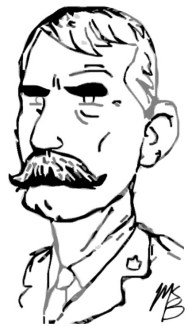
Lt. Col. Sutherland

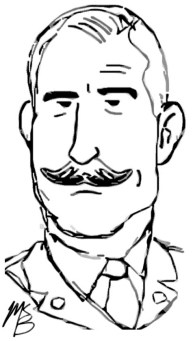
Lieutenant Colonel D.H. Sutherland
No. 2 Construction Battalion
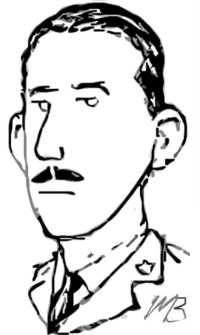
SutherlandDH

Lieut.-Col. D.H. Sutherland, O.C. of the battalion, speaking for recruits, mentioned the excellent discipline the colored men already enlisted had shown, and commended them for their soldierly appearance … Many colored men, he said, were dissatisfied because they had been refused at the beginning of the war. This, he said, had been due merely to prejudice on the part of a few officers, and was not general throughout the Dominion.

(London Advertiser, 20 October 1916)

Born in Pictou, Nova Scotia on 10 September 1880, Daniel Hugh Sutherland was a railway contractor who enlisted as a private with the 193rd Battalion. In June 1916, he received a commission and promotion to lieutenant colonel to recruit No. 2 Construction Battalion, the only segregated Black battalion in the Canadian Expeditionary Force. Except for Honorary Captain Reverend William A. White, all the officers were white.
Continue reading

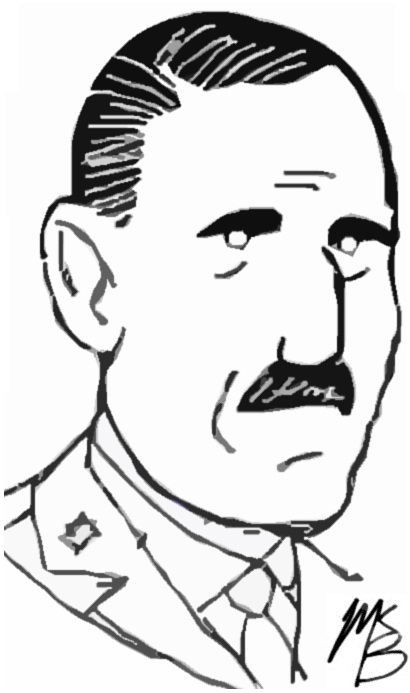
Lt. Col. Grant

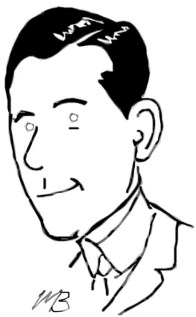
Lieutenant Colonel D.M. Grant
122nd (Muskoka) Battalion
Grant

This affords an opportunity to the men who are accustom to working in the bush to take on their regular line of work for the next year or so, have a trip to England or France and if on the ground when Peace is declared will have the time of their lives. It is ENTIRELY a separate force from the fighting units.

(122nd Batt., Recruiting Poster, 1917)

Born on 2 April 1868 in Deleware, Ontario, Donald McKenzie Grant was a Huntsville lawyer and son of Rev. George Munro Grant (1835—1902). Commanding officer of the 35th Regiment, he was initially authorized to raise a new battalion from Simcoe County in November 1915. However, he soon ordered to switch with Lieutenant Colonel D. H. MacLaren of the 157th to organize the 122nd from Muskoka. A local newspaper wrote, “Such a change would have made many men give up their work in disgust, but such was not the case with Col. Grant, who thus roved his true military worth, sincerity, loyalty and determination.” Continue reading

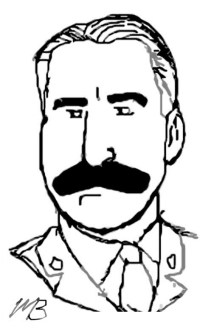
Lt. Col. White, MP

Lieutenant Colonel G.V. White, MP
224th (Lumbermen) Battalion
GWhite

We cannot be too generous in our treatment of our sailors, soldiers and airmen. I take it that this measure will recompense fairly generously the men and women who have served their country well. I believe the people of Canada will wholeheartedly endorse this very important legislation.

(Senator White, Debates, 11 Aug 1944, 452)

Gerald Verner White was Conservative Member of Parliament for Renfrew North. Born on 6 July 1879 in Pembroke, Ontario, he was the son of Peter White (1838—1906), a lumber tycoon and former Speaker of the House of Commons. After his father’s death, the younger White won a by-election for Renfrew North in 1906. A militia officer with the 42nd Regiment, White enlisted as senior major with J. F. De Hertel’s 130th Battalion in November 1915. By February 1916, he transferred to the 224th Foresters as second-in-command to Alexander McDougall. Continue reading

Lt. Col. Vicars

Lieutenant Colonel J.R.O. Vicars
172nd (Rocky Mountain Rangers) Battalion
Vicars

The duty of all Canadians is to shed their last drop of blood in defence of the dear old Motherland. But why ask such a question? Is there a cur with a drop of British blood in his veins who doubts his duty? As for myself and Rangers, we are ready. Only let Colonel Sam. [Hughes] give the word. I speak for my men. They know me, and I know them.

(Vicars to Montreal Daily Star, 3 Aug 1914)

Too bad they broke us up for had they not we would have been in Berlin by this time or all in Heaven …  Although the latter place has already many of our poor fellows and every day adds to the number.

(Vicars to Kamloops Standard-Sentinel, 21 Sept 1917)

Despite his enthusiastic offer to volunteer on the outbreak of war in August 1914, sixty-year-old John Richard Odlum Vicars did not receive authorization to raise an overseas battalion until January 1916. Vicars was a British Columbia land surveyor and commanding officer of the 102nd Rocky Mountain Rangers. Born in Dublin, Ireland on 16 April 1855, he immigrated to Canada with his family in 1858 and moved west in the 1880s.

Continue reading

The Unsinkable

Major Charles A. Low
146th (Frontenac County) BattalionLow

Everybody aboard was preparing to leave the ship and glad that the journey was over, as the constant rumors of submarines and the nervous strain which is associated with same is not conductive to comfortable feelings.

At exactly 10.51, while in my cabin, the ship was hit on the starboard side, at the after well deck, close to the engine rooms. I was thrown across the cabin; there was no mistaking what had happened…

(Low to Kemp, 27 Mar 1918)

A native of Kingston, Ontario, Charles Adamson Low was born on 26 November 1874. A fourteen-year member of the 14th Princess of Wales’ Own Rifles, Low enlisted as junior major in Lieutenant Colonel W. G. Ketcheson’s 80th Battalion. In November 1915, he was authorized to raise the 146th Battalion from Frontenac County.

Continue reading

The Grandson

Lieutenant Colonel J.A.R. de Salaberry
230th (Voltigeurs Canadiens-Français) BattalionDe Salaberry

I thought the name DeSalaberry would thrill the people of Quebec, but let us be frank and tell the story… he was practically assaulted by the parish priest… I thought the grandson of the hero of Chateauguay was entitled to some recognition and he got it. But everywhere there was a hidden hand.

(Sam Hughes, Debates, 8 April 1918, 411)

Joseph Alexandre René de Salaberry was the grandson of Charles de Salaberry, the famous War of 1812 military leader. During the American invasion of Lower Canada in 1813, Colonel de Salaberry led the Canadien militia defence of Montreal. For his victory at Chateauguay, he became a celebrated war hero in the history of Quebec.

Born on 2 July 1870 in Chambly, Quebec, J.A.R. de Salaberry was a graduate of Laval University, a lawyer and advocate with the King’s Counsel. At the outbreak of the First World War, he enlisted at Valcartier in the 2nd Battalion. Following frontline service in France, de Salaberry returned to Canada in order to recruit a French Canadian unit.

Continue reading