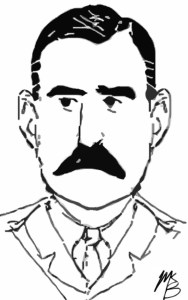
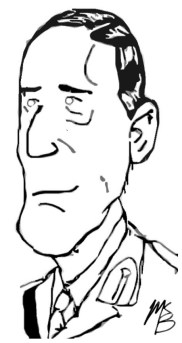
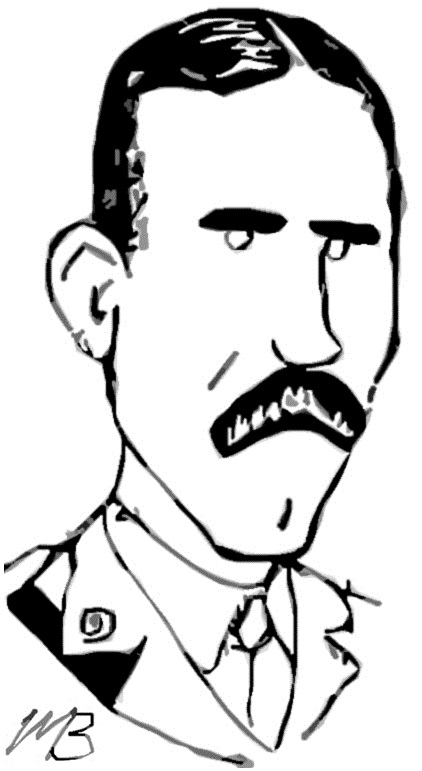
Lt. Col. Docherty

Lieutenant Colonel M. Docherty
Lord Strathcona’s Horse
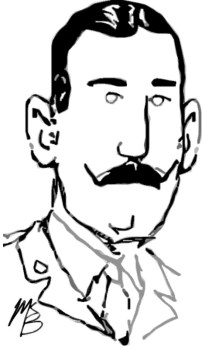
Docherty

We had 200 men, the Germans about 2,000. We had no artillery support, but the Huns had all kinds. But we stopped their counter-attack. Colonel Docherty fell a few feet from me, shot dead, clean through the head.

  (LdSH soldier’s letter, Winnipeg Tribune, 29 Dec 1917)

Born in Scotland on 1 May, 1877, Malcolm Docherty was a Boer War veteran, marksman and polo player in Winnipeg. A prewar sergeant in the Lord Strathcona’s Horse, he went to France as a lieutenant in May 1915. Six months later, he received a promotion to captain and the Distinguished Service Order for gallantry.
Continue reading

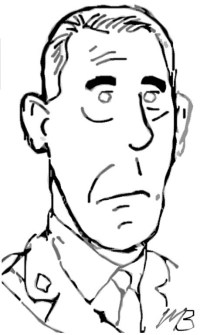
Lt. Col. MacDonald

Lieutenant Colonel D.J. MacDonald
Lord Strathcona’s Horse

For conspicuous gallantry and devotion to duty. In the attack launched by a cavalry brigade he led the reserve squadron of the regiment to the attack. Though suffering acute pain from a wound in the ankle, he continued to direct operations and led his men forward until the position was finally secured. But for his outstanding courage, skill and dash the position could not have been held

(Lt. Col. MacDonald, D.S.O. Bar citation, 1 Jan 1918)

Donald John MacDonald was son of an Ontario MPP and farmer born on 25 July 1889 in Glengarry, Ontario. He was commissioned as a lieutenant in Lord Strathcona’s Horse (LdSH) on 22 September 1914 and proceeded to France on 4 May 1915. After less than a month he was wounded and returned to recover in England and was given rest leave to Canada. He rejoined the LdSH in the field in October 1915 and within a few months had been promoted to major. Continue reading

Lt. Col. Stevenson

Lieutenant Colonel H.I. Stevenson
1st Canadian Mounted Rifles and Fort Garry Horse
Stevenson

When our line was temporarily pierced, he led a charge with great skill and dash, by which the enemy were driven back and a new line established. He succeeded in establishing communication with the troops on his right flank, and though heavily outnumbered maintained this line until relieved by fresh infantry units. His prompt action and cool leadership were the means of allowing two battalions of infantry, who were in danger of being cut off, to withdraw safely to our line.

 (D.S.O. Citation, Gazette, 22 June 1918)

Herbert Irving Stevenson was in Richibucto, New Brunswick on 17 July 1878. After serving in the Boer War he moved west to Manitoba in 1903. He began working for the Dominion Forestry Service in 1912. He organized the 1st Canadian Mounted Rifles in December 1914 but was replaced a year later when the mounted rifles became infantry.

Continue reading

The Horseman

Brigadier General R. W. Paterson
6th (Fort Garry Horse) Battalion Paterson

I told him [Col. MacDonald] the whole story of the [Canadian Cavalry Brigade] and how they would like to be under command of a Canadian. He intends seeing the Bde. before going back to London. I told him everyone swears by Col. Paterson.

(Lt-Col. Beer, Diary, 15 July 1917)

Born on 22 October 1876 in Guelph, Ontario, Robert Walter Paterson founded the Fort Garry Horse in 1912. He had moved to Manitoba in 1902 and worked as a bank manager and manufacturer. In August 1914, he organized the 6th Battalion from Western cavalry militia units, including the Fort Garry Horse, 18th Mounted Rifles, 20th Border Horse, 22nd Saskatchewan Light Horse and 32nd Manitoba Horse.

Continue reading

The Diarist

Lieutenant Colonel Lewis H. Beer
140th (St. John’s Tigers) Battalion

I forgot to mention that Gen. Seeley [sic] comes back on Tuesday the 10th. Well I have made up my mind to not stay when he returns. I am quite sure I would only get into trouble and would never feel easy under his command knowing he is not to be trusted. He is the kind of man who pats you on the back and at the same time knifes you. I want nothing to do with him. I have discovered him now in several lies not only about me but about other people. I have applied to return to England at the same time if humanly possible. I am going to make every effort to secure another place in France.

(L. H. Beer, Diary, 8 July 1917)

Lewis Herbert Beer was born in Charlottetown, Prince Edward Island on 12 December 1873. He was a member of Loyal Orange Lodge No. 614, worked in insurance and belonged to the 36th P.E.I. Light Horse. In October 1914, Beer joined Lord Strathcona’s Horse as a lieutenant. He served in England and France until December 1915 when he returned to Canada in order to raise the 140th Battalion from New Brunswick.

Continue reading

The Aristocrat

Major General Jack Seely, M.P.
Canadian Cavalry Brigade Seely

It was at that time, when carrying out a smaller raid, that my horse got shell-shocked, though not myself, I hope, and fell on me and smashed up five bones in my poor old body. However, I managed to get back all right.

(Seely Speech, Empire Club of Canada, 4 Oct 1920)

John Edward Bernard Seely, 1st Baron Mottistone, was a British soldier and politician. Born on 31 May 1868 in Brookhill Hall, Derbyshire, he was the son of Sir Charles Seely (1833—1915), a long-serving Liberal Unionist MP. During the Boer War, Seely joined the Imperial Yeomanry and won the Distinguished Service Order. In 1900, he was elected to the House of Commons as a Conservative. In 1904, he switched to the Liberal Party and later became a cabinet minister in Prime Minister Herbert Henry Asquith’s Government.

Continue reading