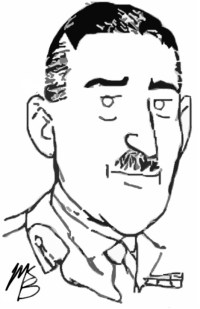
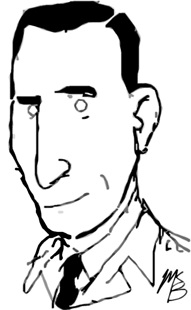
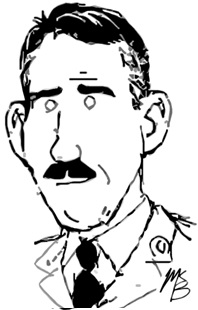
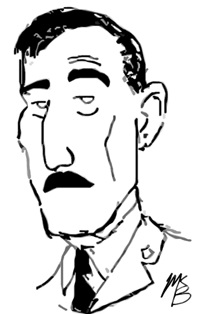
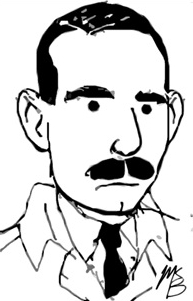
Lt-Col. W.D. Heyland

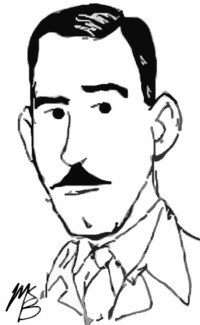
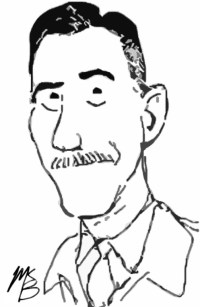
Lieutenant-Colonel Dalt Heyland
Calgary Highlanders
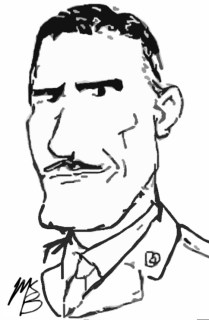
Heyland

His outstanding leadership and sound tactics were reflected in the continued successes of his battalion in battle. Major Heyland by his devotion to duty, vigorous enthusiasm and fearless bearing has earned for himself the admiration and respect of his entire unit and by his efforts has contributed very materially to the efficiency and the fine record of the Calgary Highlanders.

(D.S.O. citation, 10 Nov 1945)

Born on 31 October 1906 in Claresholm, Alberta, William Dalton Heyland commanded “B” Squadron in the 15th Alberta Horse, having belonged to the militia since 1930. He reverted to lieutenant on mobilization and joined the Calgary Highlanders as a platoon leader overseas by the end of 1940. He went overseas with his friend and fellow Alberta Horse member Lieutenant Ross Ellis. Another local friend wrote home from England that “Dalt is just as handsome as ever and it is a treat to watch the feminine eyes follow him down the street. We would say Claresholm is doing alright.”
Continue reading

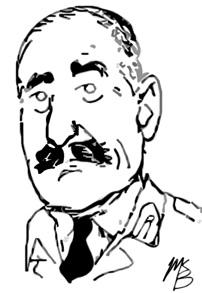
Lt-Col. R.L. Ellis

Lieutenant-Colonel Ross Ellis
Calgary Highlanders
Ellis

This is quite a day in history, 5 years of war … Day by day doesn’t count anymore because so often there is no distinction between days and then a date catches up to me. I realize it as a date that brings me closer to you and that is what I am living and praying for.

(Ross Ellis to Marjorie Ellis, 3 Sept 1944)

Born on 15 June 1915 in High River, Alberta, Ross Laird Ellis was a sergeant in the 15th Alberta Horse before qualifying for a commission in August 1940. He joined the Calgary Highlanders in England as a platoon leader by the end of the year but was soon selected for training as an instructor. He was posted to Camp Vernon, British Columbia at the rank of major. He reverted to captain to return overseas and rejoin the Highlanders when they deployed to France in July 1944.

Continue reading

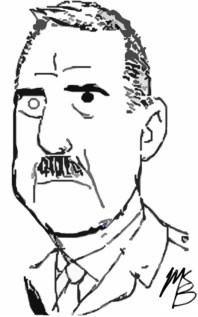
Lt-Col. D.G. MacLauchlan

Lieutenant-Colonel Don MacLauchlan
Calgary Highlanders
MacLauchlan

There is no doubt that MacLauchlan never succeeded in hiding his fears well enough to give his men the impression that he was courageous–a possible great failing in a field commander. He had voided the front even though, ironically, he found himself under fire, or close to it, several times … In later years [Brig] Megill would recall: ‘It was quite genuine battle exhaustion that knocked him out.

(Bercuson, Battalion of Heroes, 180)

Born on 19 July 1905 in Charlottetown, Prince Edward Island and raised in Alberta, Donald George MacLauchlan joined the Calgary Highlanders out of high school in 1921. His enthusiasm for soldiering and time devoted to militia training cost him his job as a newspaperman just a year before the outbreak of war. He went overseas as a company commander in August 1940 and became second-in-command in England. He succeeded Lieutenant-Colonel J. Fred Scott in February 1942, although his appointment appeared tenuous.

Continue reading

Lt-Col. J.F. Scott

Lieutenant-Colonel Fred Scott
Calgary Highlanders
Scott

Perhaps the person reading this Diary right now has become rather fed up with my constant reference to Battle Drill but perhaps if you continue on reading this Diary and come to the day, say a year or two from now, and read “The Calgary Highlanders captured an important enemy position by a machine-like pincer movement” you will see why I have stressed so much this type of training.

(War diary, 31 Dec 1941)

Born in Meaford, Ontario on 3 July 1892, James Fred Scott enlisted with the 89th Battalion in 1916 and served with the Royal Flying Corps before returning to the infantry with the 50th Battalion in France. He was struck off strength to Canada with a diagnosis of trench fever in summer 1917. Following demobilization, he completed a law degree in Toronto and passed the Alberta Bar. Commanding officer of the 15th Alberta Horse since 1936, in September 1939, he succeeded Lieutenant-Colonel H.H. Riley of the Calgary Highlanders, who had been declared medical unfit for active service.

Continue reading

Lt-Col. C.A. Richardson

Lieutenant-Colonel Stoney Richardson
14th (Calgary) Tank Regiment

“He was unique in the army,” said Fred Ritchie, his second-in-command. “He was the ideal colonel; spit and polish didn’t impress him. He rolled dice with his boys, and still had their respect.”

(Maclean Kay, Globe and Mail, 29 Aug 2007)

Born in Vegreville, Alberta on 12 October 1908, Clinton Argue (Stoney) Richardson was a store grocer when he joined the Calgary Regiment on mobilization in February 1941. He earned a temporary commission prior to the unit going overseas in June 1941 and became regimental quartermaster. Known as “old stone face,” Richardson soon came to be nicknamed Stoney. He served with the Calgary Tanks for the whole duration of the war from mobilization in March 1941 to demobilization in December 1945 when he led the regiment home as commanding officer.

Continue reading

Lt-Col. C.H. Neroutsos

Lieutenant-Colonel C.H. Neroutsos
14th (Calgary) Tank Regiment
Neroutsos

There was such a tremendous loss of life that it will be very hard to treat it in an objective way. These are not tapes of historians, they’re merely tapes of a man who happened to be there with all his weaknesses and his emotions. And I do not know how far I want to go.

(C.H. Neroutsos tapes, undated)

Born in Victoria, British Columbia on 24 August 1904, Cyril Houlton Neroutsos was a McGill University graduate and marine and aviation representative for International Paints Canada Ltd. A prewar reserve officer in the machine gun brigade, in September 1939, he volunteered with the Three Rivers Regiment, which would be redesignated a tank battalion in the armoured corps. He served as second-in-command of the 12th Tank (Three Rivers) Regiment overseas while the Canadian tank brigade trained in the United Kingdom.

Continue reading

Lt-Col. J. Begg

Lieutenant-Colonel John Begg
14th (Calgary) Tank Regiment

It’s a personal war with this unit now. We were the first Alberta regiment and the first armored regiment to see action. Give us time to refit and we’re going back.

(Begg in Calgary Herald, 24 Aug 1942, 1)

Born in Lanarkshire, Scotland on 18 Mar 1899, John Begg had started in the Cyclists Corps in the First World War and commanded a tank regiment in the second. An accountant with the Canadian National Railway, he had been commissioned in the Calgary Regiment in 1922 and became a major in 1936 when it was redesignated a tank battalion. He served as second-in-command stationed with the “floating reserves” during the Dieppe Raid on 19 August 1942.

Continue reading

Lt-Col. J.G. Andrews

Lieutenant-Colonel Johnny Andrews
14th (Calgary) Tank Regiment
AndrewsJG

There is just one chance in a thousand that he is alive, but that is the way he would have liked to go if he had to go … I can well imagine John leaving his tank and leading a charge on the enemy pillboxes on foot. He was just that type.

(Andrews’ father to Toronto Star, 22 Aug 1942)

Born on 18 February 1909 in Elgin, Ontario, John Gilby Andrews had joined the Permanent Force in 1930, attended RMC, and was former instructor at the Armoured Fighting Vehicles School. On the formation of 1st Army Tank Brigade in March 1941, he was appointed brigade major and by December had succeeded Lieutenant-Colonel G.R. Bradbrooke in command of the Calgary Tank Regiment overseas.

Continue reading

Brig. G.R. Bradbrooke

Brigadier G.R. Bradbrooke
14th (Calgary) Tank Regiment
5th Armoured Brigade
Bradbrooke

 I think a made a success of every command I had. But what annoyed me was that I never was able to use those units, I never got into a fight. I never got into a battle. That was my disappointment in the Second World War.

(Bradbrooke, interview, 29 May 1980)

Born on 1 November 1896 in Blatchley, England, Gerard Renvoize Bradbrooke was a decorated First World War veteran and long serving army officer. A self-described “puny little runt,” he had first enlisted as bugler in November 1914, served as a machine gunner in the trenches, and was commissioned from the ranks in May 1917. Twice wounded, he earned the Military Cross at Passchendaele. “Mud was up to you knees,” he later explained. “I remember moving forward … and here were British infantry lying dead in waves.”

Continue reading

Lt-Col. W.K. Jull

Lieutenant-Colonel W.K. Jull
Calgary Highlanders
Jull

He went forward under heavy fire to reconnoitre the enemy’s dispositions. He succeeded in reaching his objective and brought back valuable information. Later, when the company on the left flank was held up by an enemy machine-gun nest, he rushed forward and succeeded in killing three of the crew and capturing the remainder, thus allowing the company to continue its advance.

(M.C. citation, 4 Oct 1919)

Born on 20 October 1891 in Rosen, Manitoba, Walter Kingsley Jull was a Calgary barrister and commanding officer of the Calgary Regiment since May 1938. As a law student he had enlisted with 31st Battalion in November 1914. He was three times wounded in action, earned a commission in February 1917, and received the Military Cross for “marked courage” in October 1918. Following the reorganization of the postwar Canadian militia, he became a captain in the Calgary Regiment in 1923 and second-in-command in 1931.

Continue reading