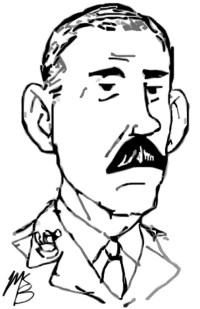
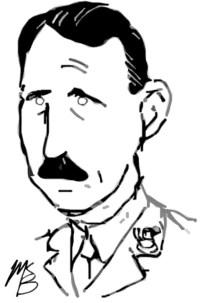
Lt-Col. Murphy

Lieutenant-Colonel A.D. Murphy
2nd Bn., Leinster Regiment (Royal Canadians)
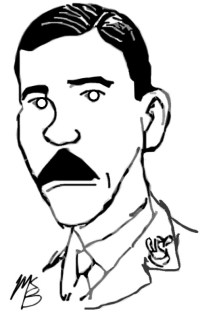
Murphy

The commanding officer seemed to bear a charmed life, and it became a belief in the Battalion that he could not be killed. But he exposed himself fearlessly not because he was invulnerable but because he was brave. No braver man than Alfred Durham Murphy ever stepped on French soil.

(Witton, The History of the Prince of Wales’s Leinster Regiment, vol. 2, 244)

When Major Alfred Durham Murphy assumed command of the 2nd Leinsters in August 1916 at the age of twenty-six, he was one of the youngest battalion commanders on the Western Front. Born on 4 July 1890 in Southwark, Surrey, England, was the son of a retired Tipperary colonel and joined his father’s regiment in 1911. He went to France in September 1914 with the 2nd Leinsters as a junior lieutenant but by May 1916 was second-in-command.

Continue reading

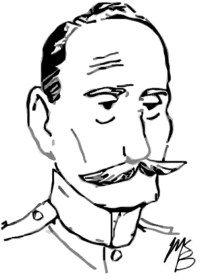
Lt-Col. Orpen-Palmer

Lieutenant-Colonel R.A.H. Orpen-Palmer
2nd Bn., Leinster Regiment (Royal Canadians)
OrpenPalmer

Now that the actual disbandment of the Battalion is about to commence, I wish all ranks to know how proud I have been to command such a body of men. At Home and Abroad, in peace and in war, whether in France, Belgium, Colchester or Silesia, the Battalion has won a fine reputation second to none, a reputation acknowledged everywhere by Brigade and Divisional Commanders. It is a grief and more to all of us that we see our splendid Regiment destroyed; but it is through no fault of our own, and we as Irishmen have done our duty, to our Country and our Empire.

(Lt-Col. Orpen-Palmer, Part 1 Orders, 5 June 1922)

Born in Dublin on 26 December 1877, Reginald Arthur Herbert Orpen-Palmer was commissioned a second lieutenant with the Leinster Regiment in 1898 and served in the Boer War. All three of his brothers served as officers in the First World War, including one who lost an eye fighting with the Leinster Regiment in fall 1914. Initial news reports misidentified R.A.H. Orpen-Palmer as the wounded brother but was adjutant for the 5th (Extra Reserve) Battalion until he went to France in April 1915.

Continue reading

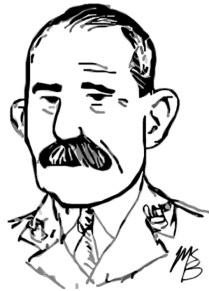
Lt-Col. Mather

Lieutenant-Colonel J.D. Mather
1st Bn., Leinster Regiment (Royal Canadians)
Mather

I was just sitting down to breakfast (in the M de Prémesques farm) when the greatest burst of fire I have every heard broke out … C and D companies (Leinster Regt) had been driven out of their trenches by the enemy’s attack.

(J.D. Mather, diary, 20 October 1914 in 2nd Bn., Leinster Regiment War Diary)

Born in North Shields, Northumberland, England on 17 March 1872, John Dryden Mather had been commissioned with the Leinster Regiment in 1892 and served in the Boer War. Following sick leave for bronchitis in April 1915, Mather joined the 1st Leinsters on 26 June 1915. He took command after Lieutenant-Colonel Charles Conyers had been mortally wounded in action on 11 May. Following a relatively quiet summer after the heavy fighting of late 1914 and early 1915, the 1st Leinsters learned their division was to be redeployed from the Western Front. In November 1915, the 27th Division sailed from Marseilles “for an unknown destination.”

Continue reading

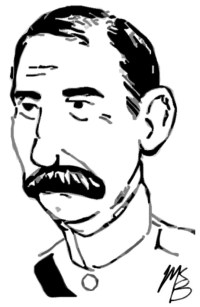
Lt-Col. Farrell

Lieutenant-Colonel E.F. Farrell
5th Bn., Leinster Regiment (Royal Canadians)
Farrell

PATRICK WHITE asked the Secretary of State for War whether he will state the name of the commanding officer of the 5th Battalion Leinster Regiment, formerly the Meath Militia; whether he is aware that on the annual training of the men instructions were issued on their separating that they were not to join the Irish Volunteers, and that anyone so doing would be dealt with by the military authorities; whether such threats were issued with the sanction of the military authorities; and what instructions, if any, have been issued to officers with regard to their attitude towards men who wish to join the Irish Volunteers?

 (Hansard, Vol. 65, 20 July 1914)

Born in Dublin on 1 January 1863, Edward Francis Jenico Joseph Farrell and his family had deep connections with the Leinster Regiment. In 1886, he had been commissioned in the 5th Battalion, also known as the Royal Meaths from its pre-1881 militia identity. Four of his nephews also served with the regiment during the Great War. On the eve of the war, with tensions over Home Rule in Ulster threatening civil war in Ireland, Nationalist MP Patrick White, alleged that Farrell had threatened his reservists to not join the Irish Volunteers. Prime Minister Asquith replied, “the statement is wholly incorrect and that he has issued no such instructions.”

Continue reading

Lt-Col. A.A. Weldon

Lieutenant-Colonel A.A. Weldon
4th Bn., Leinster Regiment (Royal Canadians)
AAWeldon

I think myself, the later rebellion ill judged and ill advised as it was, has opened the eyes of the people to the dangers of carrying arms which should never have been allowed … At the same time, I think out of ill may come some good as some measure of local government will be devised with the wish of the whole country which will bring peace to this unhappy country in the future.

(Lt. Col. A.A. Weldon in Freeman’s Journal, 3 August 1916, 6)

Born on 1 March 1863 in London, Sir Anthony Arthur Weldon, had been commissioned in the Leinster Regiment in 1885 and served in the Natal Field Force during the Boer War. He was aide-de-camp to Commander-in-Chief of the Forces Lord Wolseley from 1895 to 1900. On the death of his father in January 1900, Weldon became the 6th Barnonet of Dunmore. Since 1908, he was commanding officer of the 4th Leinsters.

Continue reading

Lt-Col. Canning

Lieutenant-Colonel A. Canning
3rd Bn., Leinster Regiment (Royal Canadians)
Canning

His departure was sorely regretted by all ranks, for during the twelve months he had been with the 7th, his capabilities as a commander had only been surpassed by his solicitude for the men’s welfare, so that he had made his way into out hearts as a popular soldier.

(Capt. S.J. Wilson, The Seventh Manchesters: July 1916 to March 1919, 4)

Born on 3 October 1861 in Wiltshire, England, Albert Canning was a veteran of the Anglo-Egyptian War (1882) and the Sudan campaign (1884-5). He had joined the ranks of the 19th Hussars in 1881, received a commission in the South Wales Borders in 1888, became a captain with the Leinster Regiment in 1895 and retired as a major in 1911. He came out of retirement on the outbreak of the Great War to take command of the 3rd (Special Reserve) Battalion.

Continue reading

Lt-Col. Bullen-Smith

Lieutenant-Colonel G.M. Bullen-Smith
2nd Bn., Leinster Regiment (Royal Canadians)
BullenSmith

 his departure, followed by that of Lieutenant-Colonel Bullen-Smith, left scarcely any of the officer who had landed with the Battalion in September, 1914. Death had claimed his due as he had done from other units in the field; many had been so severely wounded as to be unfit for further service in the field; and the ever-growing national army drained off the few remaining Regular officers from their own units.

(Whitton, The History of the Prince of Wales’s Leinster Regiment, vol. 2, 224)

Born in India on 5 February 1870, George Moultrie Bullen-Smith attended Sandhurst and was commissioned a second lieutenant in 1891. He was appointed to The Black Watch before being exchanged for another officer in the Leinster Regiment in 1894. When the 2nd Leinsters went to France in September 1914, Bullen-Smith was second-in-command. He became acting battalion commander following the wounding of Lieutenant-Colonel W.T.M. Reeve on 19 November 1914.

Continue reading

Lt-Col. Reeve

Lieutenant-Colonel W.T.M. Reeve
2nd Bn., Leinster Regiment (Royal Canadians)
Reeve

“Terrier” Reeve was devoted to the Battalion in which he had done all his regimental service and of which he had been adjutant and commanding officer. After his severe wound in 1914 he could have secured a comfortable appointment at home but his high sense of duty urged him to beg to be sent to the front again.

(Whitton, The History of the Prince of Wales’s Leinster Regiment, vol. 2, 153)

Born in France on 29 June 1866, William Tankerville Moneypenny Reeve was the commanding officer of the 2nd Battalion, Leinster Regiment on the outbreak of the Great War. He had joined the 2nd Leinsters after graduating from Sandhurst in 1887. He went to Africa as part of the expeditionary force against the Ashanti Empire in 1900. He remained part of the West African Field Force and commanded the Gold Coast Regiment from 1909 to 1911.

Continue reading

Maj. Conyers

Major Charles Conyers†
1st Bn., Leinster Regiment (Royal Canadians)
Conyers

6pm – Trench in firing line lost. Battalion ordered to counter attack. Left about 11pm. ‘C’ Coy gained the captured trench but were obliged to retire owing to enfilade machine gun fire being brought to bear on them. Major Conyers (commanding Bn) mortally wounded.

(1st Bn., Leinster Regiment War Diary, 11 May 1915)

Charles Conyers was born on 19 November 1867 at his family estate Castletown Conyers in Limerick, Ireland. He had been commissioned since 1889, served in the Boer War, and was a major with the Royal Irish Fusiliers on the out break of the Great War. He transferred to the 1st Battalion, Leinster Regiment to succeed Lieutenant-Colonel C.B. Prowse on 29 April 1915

Continue reading

Lt-Col. Prowse

Lieutenant-Colonel C.B. Prowse†
1st Bn., Leinster Regiment (Royal Canadians)

Between the newly captured German lines the Brigadier was cheering us on, when a big shell dropped about 20 or 30 yards away, and a piece must have hit him on the explosion for he was seen to fall. Several men rushed to his assistance. Before he died he cheered the men, and told them to keep up the name of the “Stonewall Brigade.”

(The Wells Journal, 14 July 1916, 5)

Charles Bertie Prowse was born in West Monkton, England on 23 June 1869. He had been commissioned since 1889 and served as a staff officer during the Boer War. He was commanding officer of the 1st Battalion, Prince Albert’s (Somerset Light Infantry) Regiment during the early fighting of 1914 in France. He briefly took command of the 1st Battalion, Leinster Regiment in March 1915 until his promotion to brigadier general of the 11th Infantry Brigade the next month.

Continue reading