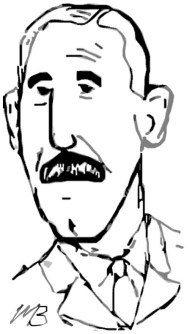
Lieutenant Colonel J.R. Kirkpatrick
55th (New Brunswick and P.E.I.) Battalion
Some of the advantages of a machine gun are, that while equal to that of sixty men that it occupies only about a yard of space, and owing to its size can readily be concealed. It can be easily and rapidly moved from one position to another by a few men; it can be and has been handled with deadly effect by two men; it is capable of firing from 350 to 600 rounds per minute, and an object on which a machine gun is successfully trained cannot fail to be totally annihilated in a very short space of time.
(Lt. Col. Kirkpatrick, Daily Gleaner, 21 Jul 1915, 5)
Born on 18 December 1863 in Debec Junction, New Brunswick, James Renfrew Kirkpatrick was a farmer and long-time militiaman. He had served for nearly thirty years in the 67th Carleton Light Infantry. As commanding officer of regiment, he was one of many senior militia officers at Valcartier in August 1914 hoping for a posting to one of the overseas battalions. He sailed with First Contingent to England but was struck off strength as a surplus officer in December 1914.
 World War Graphic History