Lt. Col. Jamieson

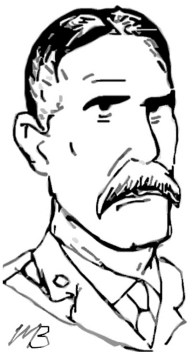
Lieutenant Colonel Fred Jamieson
260th Battalion, Siberian Expeditionary Force
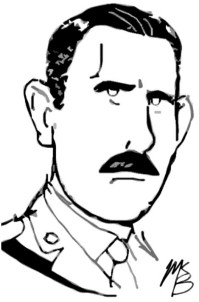
Jamieson

I do not think that the war will end in any way but as the Allies wish. It is impossible for it to end otherwise but to accomplish this end it will require the assistance of all available men between the ages of eighteen and forty. With the magnificent army of men that have gone to the front there are needed the additional half million …

It isn’t really boasting when I say that nearly every good idea since 1925 has come from the Conservatives.

(Northern Tribune, 20 June 1935, 1)

Born on 18 May 1875 in North Gower Township, Ontario, Frederick Charles Jamieson was commanding officer of the 19th Alberta Dragoons and veteran of the Boer War. He moved to Edmonton in 1895 and started a law firm with Alexander Rutherford, who became the first premier of Alberta. In August 1914, Jamieson led the 19th Dragoons to Valcartier and took command of the 1st Divisional Calvary Squadron.
Continue reading

2nd Infantry Battalion

2nd (Central Ontario) Battalion
1st Canadian Division

2nd BN 1 A

David Watson was the first 2nd Battalion CO, from September 1914 to August 1915, when he was promoted to command the 5th Infantry Brigade.

2nd Swift

Albert E. Swift commanded the 2nd Battalion until November 1916, about when he learned that his wife had been killed by runaway horses in Quebec. Swift was appointed to command the 14th Infantry Brigade.

2nd Yates

Wilton Yates briefly command the 2nd Battalion until December 1916. While on a training course, Yates suffered severe head injuries when he was in an accident with an overturned bus.

2nd Clark

Robert Percy Clark transferred to the 2nd from command of the 14th Battalion. He relinquished command in May 1917.

2nd McLaughlin

Lorne McLaughlin commanded the 2nd Battalion from May 1917 until 30 August 1918, when he suffered a gunshot wound to the leg. He resumed command from October until the end of the war.

2nd Vanderwater

Roscoe Vanderwater temporary took over the 2nd when McLaughlin was wounded for the month of September 1918.

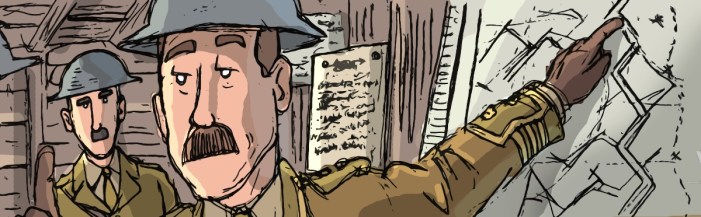
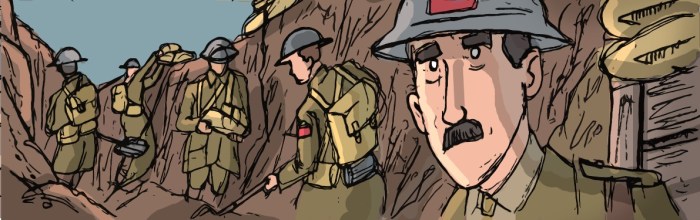
Lt. Col. Yates

Lieutenant Colonel Wilton Yates
2nd (Iron Second) Battalion
Yates

When he was badly wounded in World War I, he was the first to have successful plastic surgery on his face. It was very noticeable of course when he returned to Swift Current. At one time, as he himself relates, he was consigned to an insane asylum “but never reached it owing to my own machinations.” When wounded he was put in the morgue as dead; was saved by a nurse’s aide and given six months to live.

(Jim Greenblat, Those Were the Days in Swift Current, 1971, 32)

A native of England, Wilton Milwarde Yates was born on 17 October 1879. After being wounded in the Boer War, he immigrated to Canada and became a rancher at Swift Current. He enlisted in Lieutenant Colonel Harry Cowan’s 32nd Battalion in December 1914 and was attached to the 2nd Battalion once overseas.

Continue reading

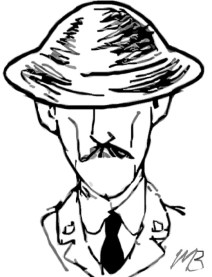
Lt. Col. Swift

Lieutenant Colonel “Dolly” Swift, D.S.O.
2nd and 259th (Canadian Rifles) Battalions

Swift

The Vics took the first three games and looked like certain winners, but Stocking and Watson kept their team together and are mainly responsible for enabling Swift and Scott to tie the score and then get one ahead. Swift rallied his home and made a steady forward rush, when Grant lifted the puck, which struck “Dolly” Swift under the ear and knocked him out. This involved another fifteen minute delay.

(Toronto Globe, 31 Jan 1898, 8)

Albert Edward “Dolly” Swift was a Boer War veteran and professional soldier with twenty-years’ experience in the permanent militia. Born in Quebec City on 30 January 1866, Swift had also been an amateur hockey player in his youth. He played one season with the Montreal Victorias and thirteen with the Quebec Hockey Club during the 1880s and 90s.

Continue reading