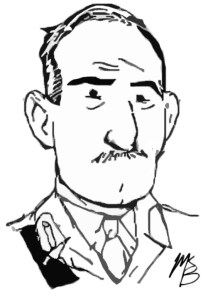
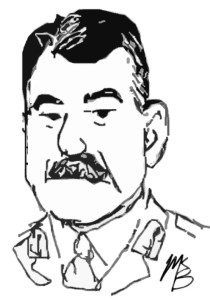
Maj-Gen. R.H. Keefler

Major-General Holley Keefler
6th Infantry Brigade
3rd Canadian Division
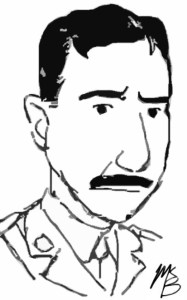
Brigadier Keefler appreciating the need for quick and determined action and also appreciating the effect on morale the loss of their Commander would have on the troops of the brigade, took immediate command of the situation and directed the complete operation from the brigade level. Under heavy artillery and small arms fire, he personally visited the assaulting battalions, encouraging and directing the officers and other ranks and making tactical decisions on the spot. 

(D.S.O. citation, 17 Nov 1944)

Born in Weston, Ontario on 12 September 1912, Ralph Holley Keefler was a graduate of the University of Toronto and employee of Bell Telephone in Montreal. The son of a lieutenant-colonel, he joined the militia in 1925 and transferred to the artillery two years later. By 1938, he had qualified as a lieutenant-colonel and organized the first anti-aircraft battery in Canada. With the outbreak of war, he served as staff officer and later brigade major with the 2nd Artillery Division.
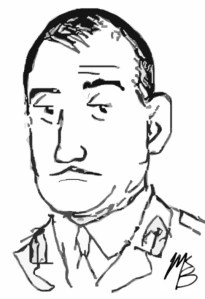
Continue reading

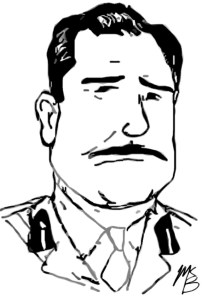
Lt-Gen. E.W. Sansom

Lieutenant-General E.W. Sansom
3rd & 5th Canadian Divisions
II Canadian Corps

We’ve all seen those supposedly terrifying pictures of grim German soldiers. We can beat those unsmiling automatons. We are going to lick them with cheerful young Canadians, quick thinking lads who know how to take it. The accent is on youth.

(Quoted in Star Weekly, 18 Oct 1941, 28)

Born on 18 December 1890 in New Brunswick, Ernest William Sansom was a First World War veteran and professional army officer. Serving in the Canadian Machine Gun Corps, and earning the D.S.O., he commanded the 2nd Battalion for the final month of the war and then the 1st Battalion until demobilization in 1919. He joined the Permanent Force in 1920 and by the start of the Second World War was director of military training.

Continue reading

Maj-Gen. J.H. Roberts

Major-General Ham Roberts
1st Infantry Brigade
2nd Canadian Division

I consider Dieppe was well worthwhile, as we learned a lot about what not to do. Out later successful landings in North Africa, Italy, etc. could scarcely have been carried out without it. Had we been allowed to have two old battleships or cruisers, Dieppe might have been a very different story.

(Quoted in Brantford Expositor, 17 Dec 1962, 1)

Born in Pipestone, Manitoba on 21 December 1891, John Hamilton Roberts was an RMC graduate, First World War veteran, and long-serving artillery officer. He was commissioned with the Royal Canadian Horse Artillery in August 1915 and went to France two months later. He earned the Military Cross and was wounded in March 1918. After the outbreak of the Second World War, he was appointed commanding officer of 1st Field Regiment, RCA.

Continue reading

Maj-Gen. C.B. Price

Major-General C. Basil Price
3rd Infantry Brigade
3rd Canadian Division

In this ideological struggle we must call upon our physical forces. We must build up our armed forces and industrial potential, we must be prepared for sacrifices, such as high taxes and austerity, if we are to prevent another world conflict.

(Quoted in Montreal Gazette, 10 Nov 1949, 13)

Born on 12 December 1889 in Montreal, Charles Basil Price was a decorated First World War veteran, Canadian Legion spokesman, diary farmer, and former commanding officer of the Royal Montreal Regiment. A member of the Victoria Rifles since 1905, he enlisted with the 14th Battalion in September 1914. While on patrol at St. Julien in May 1915, he earned the Distinguished Conduct Medal for rescuing a comrade: “Company Sgt Major Price went out and shooting the two Germans who had wounded him brought in the man, undoubtedly saving life. His conduct all through the action was of the most meritorious and self-sacrificing kind.”

Continue reading

Maj-Gen. R.F.L. Keller

Major-General Rod Keller
Princess Patricia’s Canadian Light Infantry
1st Infantry Brigade

3rd Canadian Division

You don’t know who’s going to be killed next or who’s going to be promoted. Everybody’s got to be ready to move up at least two places. Every private has got to be ready to become a corporal on five minutes’ notice, every corporal a sergeant-major, every sergeant-major a captain, every lieutenant a major.

(Keller in Winnipeg Tribune, 24 June 1943, 7)

Born in Gloucestershire, England on 2 October 1900, Rodney Frederick Leopold Keller, immigrated to Kelowna, British Columbia as a child. He graduated from RMC in 1920 and took a commission with the PPCLI. As a prewar captain with the Permeant Force, he went overseas as a brigade major with the general staff. In June 1941, he was appointed to replace Lieutenant-Colonel J.N. Edgar in command of the regiment. The next month he was promoted again to brigadier of the 1st Canadian Infantry Brigade.

Continue reading