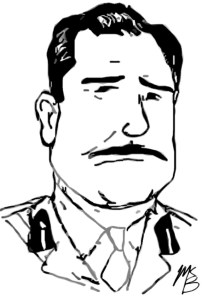
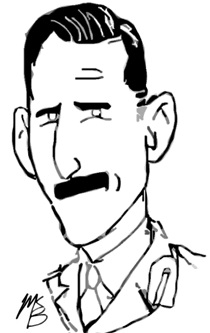
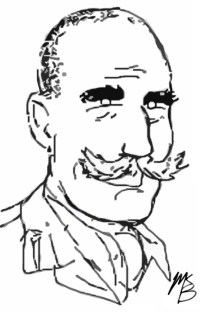
Lt-Col. L.T. Lowther

Lieutenant-Colonel L.T. Lowther
Prince Edward Island Light Horse
1st Infantry Brigade
West Nova Scotia Regiment
I think right now we are going through the most critical part of the war. What is needed most is equipment and money. Every plant in this country should be working night and day without holidays. It is not simply urgent that they do so; it is life and death. In my opinion, there isn’t anything that Canadians can do that they shouldn’t do, and do so quickly.

(Telegraph-Journal, 7 Jun 1941, 1)

Born in Prince Edward Island on 11 June 1896, Lewis Trueman Lowther was a First World War veteran, school principal, and commanding officer of the Prince Edward Island Light Horse since 1936. He enlisted with the 85th Battalion as a private in 1915 and served in France as a sergeant. After being commissioned as a lieutenant in England he returned to the front, where he was wounded in September 1918.
Continue reading

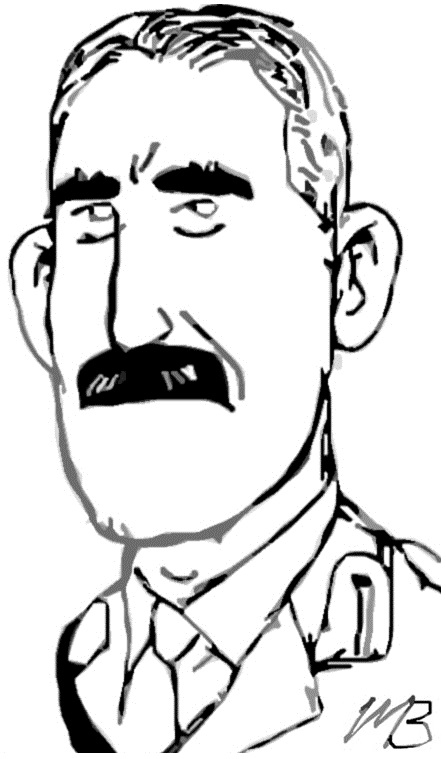
Brig. J.A. Calder

Brigadier J. Allan Calder
Royal Montreal Regiment
Saskatoon Light Infantry
1st Infantry Brigade

If I had known then what I know now, I would have refused the order. Of course, refusing an order is a “no-win” proposition, because it can never be proved what would have happened if the order had been carried out.

(Calder interview, quoted in Dancocks, D-Day Dodgers, 390)

Born in Montreal in 1908, James Allan Calder joined the Canadian Officer Training while a student at McGill University and was commissioned with the Royal Montreal Regiment in 1930. He went overseas as a battalion adjutant in December 1939 and took command in April 1941, succeeding Lieutenant-Colonel G. Victor Whitehead. In January 1943, Calder was promoted to colonel with the Canadian Reinforcement Depot in Italy. He reverted to lieutenant-colonel a year later when finally appointed to a battlefield command.

Continue reading

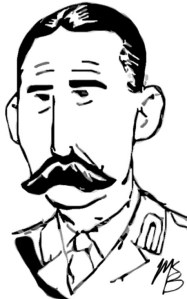
Maj-Gen. C. Vokes

Major-General Chris Vokes
Princess Patricia’s Canadian Light Infantry
2nd Infantry Brigade
1st Canadian Division
VokesC

My idea of command was everybody should know what I looked like, to start with. I thought then, and came to conclude I was I was absolutely right, it is essential for soldiers to know the face and the appearance of their commanding officer. So that they would know what I looked like, I ordered a parade of all hands … By that time, the soldiers would have seen what I looked like, and heard me, and they would be able thereafter not only to identify me but to identify with me.

(Vokes, My Story, 68)

In his public persona and performance, Christopher Vokes encouraged a notorious reputation as a forceful, profane, womanizing, hard-drinking ruthless soldier. Born in Armagh, Ireland on 13 April 1904, Vokes graduated RMC in 1925 before being commissioned with the Royal Canadian Engineers. He attended McGill University and the staff college at Camberley, England. Following mobilization in 1939, he became general staff officer with 1st Canadian Infantry Division and later assumed temporary command of the PPCLI in October 1941.

Continue reading

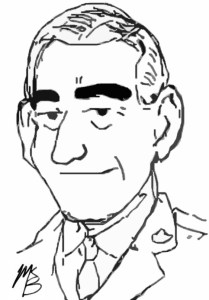
Maj-Gen. R.F.L. Keller

Major-General Rod Keller
Princess Patricia’s Canadian Light Infantry
1st Infantry Brigade

3rd Canadian Division

You don’t know who’s going to be killed next or who’s going to be promoted. Everybody’s got to be ready to move up at least two places. Every private has got to be ready to become a corporal on five minutes’ notice, every corporal a sergeant-major, every sergeant-major a captain, every lieutenant a major.

(Keller in Winnipeg Tribune, 24 June 1943, 7)

Born in Gloucestershire, England on 2 October 1900, Rodney Frederick Leopold Keller, immigrated to Kelowna, British Columbia as a child. He graduated from RMC in 1920 and took a commission with the PPCLI. As a prewar captain with the Permeant Force, he went overseas as a brigade major with the general staff. In June 1941, he was appointed to replace Lieutenant-Colonel J.N. Edgar in command of the regiment. The next month he was promoted again to brigadier of the 1st Canadian Infantry Brigade.

Continue reading

The Favourite Son

Major General Garnet Hughes
1st Infantry Brigade
HughesG

I was importuned, threatened and bullied. I was told that Garnet Hughes would get the 1st Division, that there was a combination in England and Canada for him, that neither I, nor any man could beat; that his father wanted him to get the position and that God help the man who fell out with his father.

(Currie to E.O. McGillicuddy, c. 1925)

 Garnet Burk Hughes was the son of Militia Minister Sir Sam Hughes. Born in Toronto on 22 April 1880, he was a graduate of the Royal Military College of Canada and a railway engineer. In 1913, he formed the 50th Regiment (Gordon Highlanders) with Arthur Currie. Although Hughes and Currie volunteered together in August 1914 on good terms, their friendship would not survive the war.

Continue reading

The Queen’s Own

Major General Malcolm Mercer †
3rd Infantry DivisionMercer

It is now fully believed here that General Mercer is dead.

Nothing whatever has been heard of him since and it is now considered almost certain that his body lies in the shell torn area where the former front trenches were, but are now practically obliterated.

(Montreal Daily Mail, 6 June 1916, 1)

Malcolm Smith Mercer was the highest ranked Canadian officer killed in the First World War. He was born on 17 September 1859 in Etobicoke, Canada West. While a student at the University of Toronto, he joined the Queen’s Own Rifles in 1881. He became commanding officer of the Regiment in 1911 and was posted to the 1st Infantry Brigade when the First Contingent assembled at Valcartier in August 1914.

Continue reading