Major-General Chris Vokes
Princess Patricia’s Canadian Light Infantry
2nd Infantry Brigade
1st Canadian Division
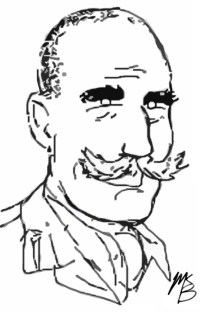
My idea of command was everybody should know what I looked like, to start with. I thought then, and came to conclude I was I was absolutely right, it is essential for soldiers to know the face and the appearance of their commanding officer. So that they would know what I looked like, I ordered a parade of all hands … By that time, the soldiers would have seen what I looked like, and heard me, and they would be able thereafter not only to identify me but to identify with me.
(Vokes, My Story, 68)
In his public persona and performance, Christopher Vokes encouraged a notorious reputation as a forceful, profane, womanizing, hard-drinking ruthless soldier. Born in Armagh, Ireland on 13 April 1904, Vokes graduated RMC in 1925 before being commissioned with the Royal Canadian Engineers. He attended McGill University and the staff college at Camberley, England. Following mobilization in 1939, he became general staff officer with 1st Canadian Infantry Division and later assumed temporary command of the PPCLI in October 1941.
 World War Graphic History