The Surveyor

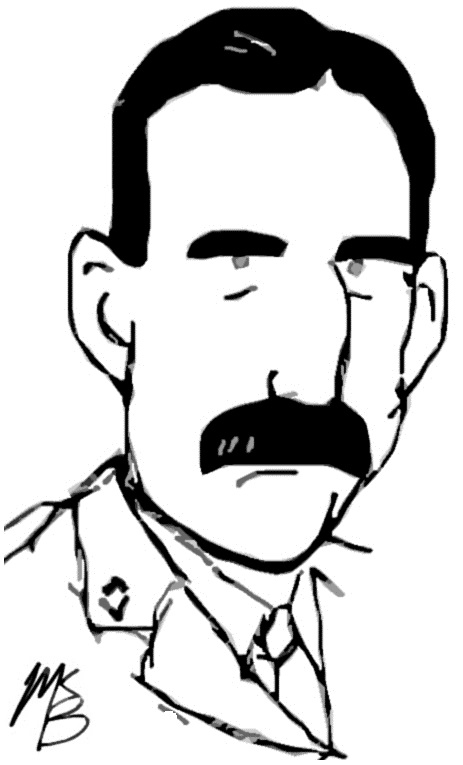
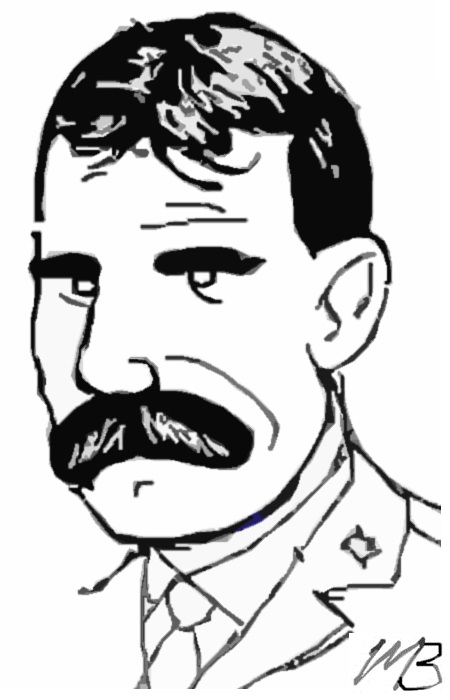
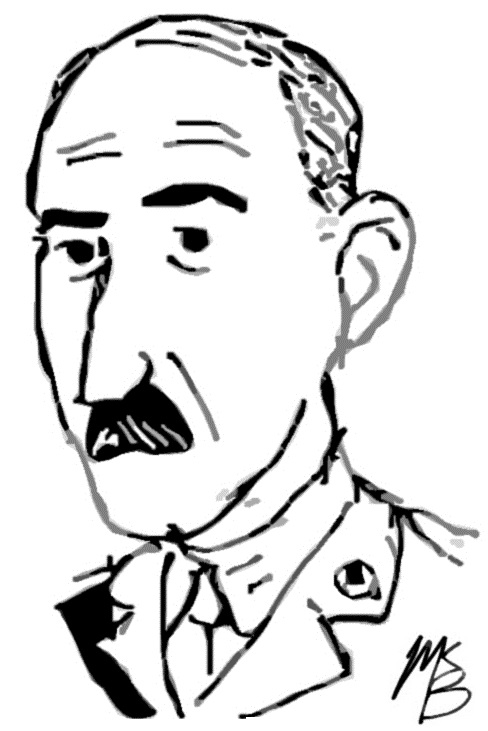
Lieutenant Colonel Albert C. Garner, D.S.O.
195th (City of Regina) BattalionGarner
The military record of Colonel Garner is a long and gallant one. During the Boer war he served as special scout in Lord Strathcona’s Horse in
1900 and 1901 and was severely wounded. He was honored by “special
mention in dispatches” in the London Gazette, February, 1901, and was
awarded the Queen’s medal and four clasps, the medal being presented
by His Majesty the King, Edward VII, on the 10th of February, 1901.

(Saskatchewan and its People, 1924)

Born on 6 September 1878 in Warwickshire England, Albert Coleman Garner immigrated to Canada with his family in 1888. He fought with Lord Strathcona’s Horse during the Boer War. After returning from South Africa, he joined the 16th Light Horse and the elite Corps of Guides. Before the First World War, he was a land surveyor and civil engineer in Saskatchewan.

Continue reading

The Meteorologist

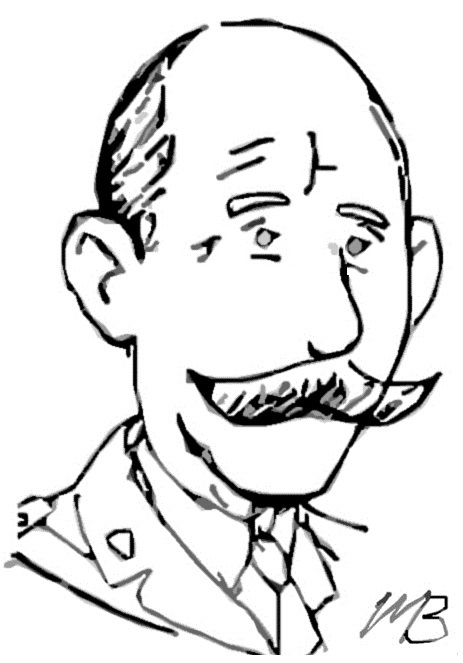
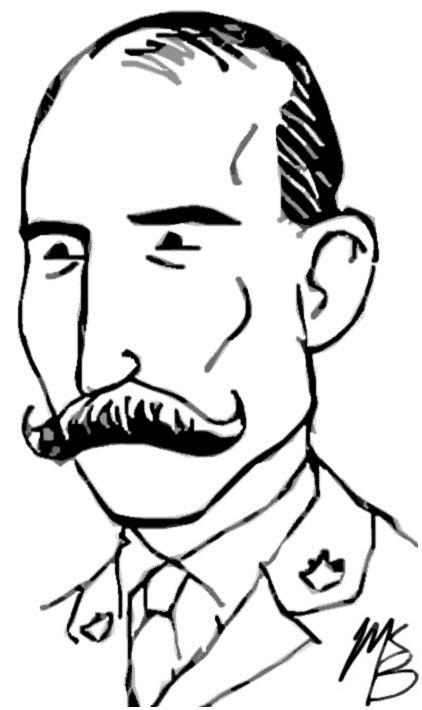
Lieutenant Colonel William D. Allan, D.S.O. †
3rd (Toronto Regiment) BattalionWDAllan

Since going into the trenches he was three times wounded, and mentioned in dispatches for many acts of signal bravery. The people of Canada still vividly recall the story of heroism when he went with another soldier into No Man’s Land under heavy fire to carry in a wounded comrade. The man was struck by a bullet and killed as they were carrying him to shelter. For this and other conspicuous acts of bravery he was awarded the D.S.O.

(Toronto Globe, 3 Oct 1916, 4)

William Donald Allan was a meteorologist and seventeen year member of the Queen’s Own Rifles. He was born in Toronto on 25 November 1879. Allan served as a company captain with the 3rd Battalion during the second battle of Ypres. After Robert Rennie was promoted to command the 4th Brigade, Allan took charge of the 3rd on 10 November 1915.

Continue reading

The Redeemed

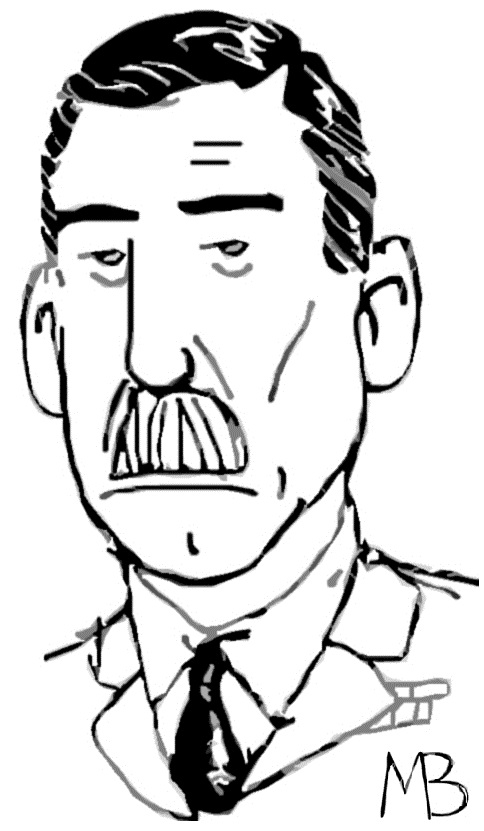
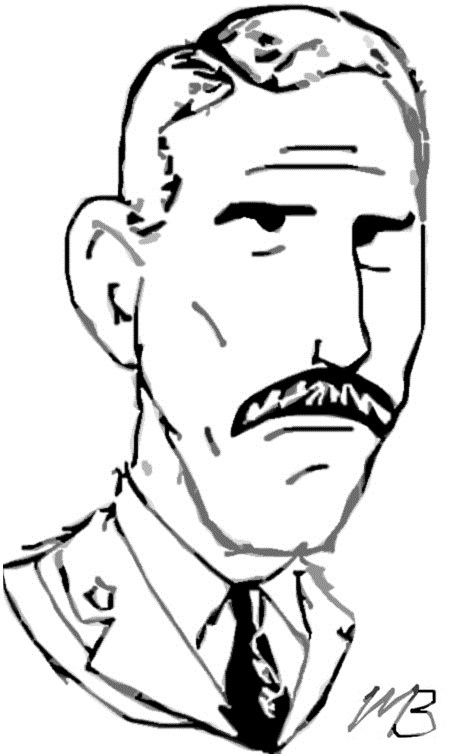
Lieutenant Colonel C. C. Harbottle, D.S.O
75th (Mississauga) BattalionHarbottle

This deplorable affair has ruined him absolutely, and his character has been taken from him forever. His family and mother are heart-broken. For two years, since these things began, he has lived in a hell of torture, and whatever term he has to do he will be more than amply punished.

(Defence counsel Mr. Robinette, Toronto Globe, 9 May 1908, 4)

Colin Clark Harbottle assumed command of the 75th Battalion on 16 April 1917. He proved himself a dedicated leader through the last year and a half of the war and won the Distinguished Service Order for his “fine example of personal gallantry and determination.” Ten years, earlier Harbottle had been a disgraced fugitive from justice and convicted criminal.

Continue reading

The Incompetent

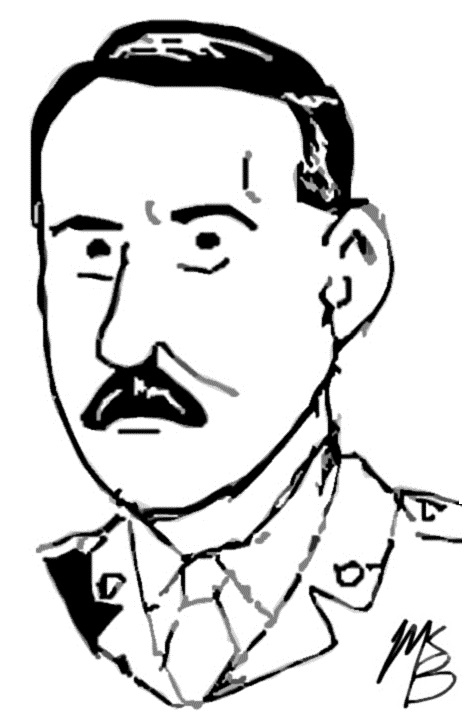
Lieutenant Colonel G. A. LeCain
25th (Nova Scotia Rifles) BattalionLeCain

As I was merely a private at the time I do not know what really transpired; but we never saw the colonel at all that night.

The Germans, however, failed to get into our trenches; and up to this day the 25th can with perfect truth declare that they never failed in the critical hour, for if we did not always have competent officers at the head of the battalion we certainly had them in our companies..

(Lieut. Lewis, Over the Top with the 25th, 1918)

George Augustus LeCain, a fruit farmer and militiaman with twenty-five years in the 69th Regiment, was authorized to raise the 25th Battalion from Nova Scotia in October 1914. He was born on 21 September 1862 in Round Hill, Annapolis County. The 25th Battalion deployed to France In September 1915 as part of the 5th Infantry Brigade, 2nd Canadian Division. Within weeks, the battalion leadership would be overhauled for the alleged incompetence and cowardice of several senior officers.

Continue reading

The Capitalist

Brigadier General Robert P. Clark, D.S.O. M.C.
14th (Royal Montreal Regiment) & 2nd BattalionsRPClark

This Christmas, I believe, will be your last in France. That the next may find you Home again, safe and happy, and with your loved ones, is my most earnest wish. The war is drawing to a close. Your many trials and privations will soon be forgotten. The horrors of this war will soon become to you a memory, dimmed by happier things to come. But the glory of this war, though some day a memory too, can never fade.

(Gen. Clark to The Listening Post, 2 Nov 1918)

Robert Percy Clark was a Vancouver businessman, investor, real estate agent and capitalist. He was born in London, England on 17 April 1874. He worked on the London Stock Exchange and volunteered to fight in the Boer War. He later immigrated to British Columbia, where he pursued various gold mining enterprises. He served in the 5th and 50th Regiments under Arthur Currie. As part of the First Contingent of the Canadian Expeditionary Force, Clark became staff-officer to Currie with the 2nd Brigade.

Continue reading

The Expendable

Lieutenant Colonel F. A. deL. Gascoigne, D.S.O.
60th (Victoria Rifles of Canada) BattalionGascoigne

My own future is uncertain, but I can only hope that some day, we shall be together again, and I would ask for nothing better than to have you all back under my command but whatever comes, I shall never forget the many happy and glorious days I have spent with the old 60th Battalion.

(Gascoigne’s Farewell Address, 60th Bn. War Diary, 29 Apr 1917, 8)

A native of England, Frederick Arthur DeLong Gascoigne was born on 2 April 1866. After immigrating to Canada, he worked for the Canadian Pacific Railway in Quebec. In 1886, he enlisted as a private with the 3rd (Victoria Rifles) Regiment. After nearly thirty-years’ service in the militia he became commanding officer in 1914. Although illness prevented him from joining the First Contingent, in April 1915 Gascoigne was authorized to raise the 60th Battalion from Quebec.

Continue reading

The One-Armed

Lieutenant Colonel D. F. Campbell, D.S.O., M.P.
2/7th Battalion, Duke of Wellington’s RegimentDFCampbell

I seldom press myself upon the House, and I will only to do so to-night for two or three minutes. I am actually one of only two soldiers left here to-night.

The thing is to get on with the War and banish everything that retards the progress of the War. I have had occasion several times to make criticisms of a military character during this War, but I have never done so in this House.

(Hansard, 10 Jan 1916, 1420)

Duncan Frederick Campbell was born on 28 April 1876 in in Simcoe, Ontario. After graduating from the University of Toronto in 1898, he received a commission to the Lancashire Fusiliers. Awarded the Distinguished Service Order for gallant service in the Boer War, Campbell retired from the Territorial Force in 1910. Following an unsuccessful political bid in the December 1910 British election, Campbell was elected Conservative Member of the British Parliament for North Ayrshire in a by-election one year later.

Continue reading

The Mountie

Lieutenant Colonel W. C. Bryan
191st (Bryan’s Buffalos) BattalionBryan

The province of Alberta owing to its cosmopolitan population is hard to police, alien settlements being scattered all over it. These people, banded together as they are, and in a good many instances retaining the customs and mode of life they lived in their own countries before coming to Canada, are not as yet educating themselves with regard to the laws of this country, it is impossible to obtain evidence from them, and they are too prone to look upon any policeman as an enemy instead of a friend.

(W. C. Bryan, APP Annual Report, 1921)

Willoughby Charles Bryan was a western cowpuncher whose adventures took him from Buffalo Bill’s Wild West and the Mexican army of Porfirio Díaz to the Texas Rangers and the Northwest Mounted Police. A native of Nottingham, England, Bryan was born on 17 December 1866 and immigrated to Manitoba in 1883.

Continue reading

The Old-Fashioned

Lieutenant Colonel F. V. Wedderburn
115th (Wedderburn’s Warriors) BattalionWedderburn

On the other hand the tactics of his enemy, Col Wedderburn, were considered by military experts at the front as decidedly clever. A less practical and inexperienced man could not have given Col. McLean the fight he did.

It was evident that Col. Wedderburn had laid his plans well, but the fact that he had burned Moncton and that if victorious he might mete out the same treatment to St. John and the other surrounding towns, field the hearts of the defending soldiers with one determination—to win or die.

(St. John Daily Sun, 8 Jul 1905)

Frederick Vernon Wedderburn was a New Brunswick barrister and militiaman born in St. John on 16 April 1861. After graduating with a law degree from the University of New York in 1882, he joined the 8th Princess Louise Hussars.

Continue reading

The Despised

Lieutenant Colonel D. H. MacLaren
157th (Simcoe Foresters) BattalionMacLaren

Mater spoke of the responsibilities of the senior officer for the breaking up of the battalion. She is quite right Col Mac is to blame for most of it. His selection as O.C. of a battalion of the calibre that one was, was unfortunate to say the least. He had no personality and inspired dislike instead of loyalty to him. He was disliked by the officers and despised by the men. However perhaps I can say more about it another time.

(Lieut. Leslie Frost, 157th Bn. to Parents, 15 Jan 1917)

David Henry MacLaren was a militiaman with over thirty years’ experience  in the 42nd and 35th Regiments. He was born on 13 December 1863 in Barrie, Canada West. In November 1915, the fifty-two year old pharmacist was selected to raise the 157th Battalion from Simcoe County. Future Ontario Premier, Leslie Frost (1895—1973) enlisted as a captain under MacLaren’s command.

Continue reading