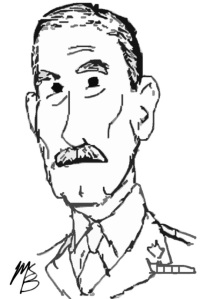
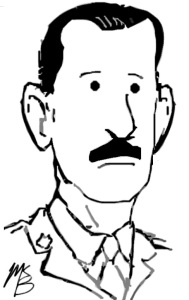
Lt-Col. P. Sauvé

Lieutenant-Colonel Paul Sauvé
Fusiliers Mont-Royal
Sauve

I realize that my absence may cause certain inconveniences. But as the war wears its way to the end—and it is the general conviction it will be this year—we much all of us realize the enormous task which awaits the government after the war.

(Montreal Gazette, 29 Jul Oct 1944, 9)

Born on 23 March 1907 in Saint-Benoît, Quebec, Joseph-Mignault-Paul Sauvé was a Université de Montréal graduate, lawyer, member of the Quebec Legislative Assembly since 1930. He represented Deux-Montagnes, succeeding his father, the former Quebec Conservative Party leader and senator. Defeated in 1935, he returned the next year as part of the newly formed Union Nationale Party of Maurice Duplessis and served as assembly president. Re-elected in the November 1939 election and speculated to be a potential new leader of the party, he instead would turn to military duties with Fusiliers Mont-Royal.

Continue reading

Lt-Col. H-N. Langlois

Lieutenant-Colonel H-N. Langlois
Fusiliers Mont-Royal
Langlois

In his speech Lt-Col J.G. Gauvreau mentioned the long and hard career of Lt-Col H.N. Langlois, ED, 23 years with the unit, who worked his way up from the rank of Pte to Lt-Col commanding Les Fusiliers Mont Royal.

(War diary, 18 Feb 1944)

Born in Connecticut in 1905, Henri-Noël Langlois had joined Les Fusiliers Mont-Royal as a private in 1921. He would be soon commissioned and served as adjutant after mobilization for active service in September 1939. He returned to Canada to take a staff officer course at RMC and rejoined the Fusillers after the Dieppe Raid as second-in-command under commanding officer Lieutenant-Colonel Guy Gauvreau.

Continue reading

Brig. J.G. Gauvreau

Brigadier Guy Gauvreau
Fusiliers Mont-Royal
6th Infantry Brigade
Gauvreau

Nous vengerons enfin tous nos amis qui sont restés sur lese plages de Dieppe. La tache sera dure parfois mais soyez tous assurés que vos efforts ne seront pas sans recompenses.

Les nouvelles de tous les fronts sont bonne, l’avenir s’annonce plus encourageante que jamais; seulement, il faut tous y mettre la main si l’on veut voir la fin de cette guerre.

(Gauvreau, “Ordre du Jour,” war diary, 8 Jul 1944)

Born on 12 May 1915 in Montreal, Joseph Guy Gauvreau was road secretary for the Montreal Royals, the professional baseball club partly owned by his father and vice-president Colonel Romeo Gauvreau. He graduated from McGill University in June 1939 and mobilized as a lieutenant with Les Fusiliers Mont-Royal a few months later. He served in Iceland and in England as aide-de-camp to general Bernard Montgomery. Having missed the Dieppe Raid, he was recalled from home leave in September 1942 to take over the battalion from Lieutenant-Colonel Dollard Ménard who had been five-times wounded in the battle.

Continue reading

Lt-Col. D. Ménard

Lieutenant-Colonel Dollard Ménard
Fusiliers Mont-Royal
Régiment de Hull
13th Infantry Brigade
Menard

We couldn’t walk back, we couldn’t get forward, we couldn’t go in the sides, so were dead, really. We were condemned … In war there are no winners. Wars have produced nothing but misery. I hate war.

(Ménard quoted In Montreal Gazette, 3 Nov 1979, 4)

Born on 7 March 1913 in Quebec, Dollard Ménard graduated from RMC in 1932 and took a commissioned in the Royal 22nd Regiment. On exchange with the British Army during the Waziristan campaign in 1939, he returned to Canada for the formation of the 2nd Division. While attached to 8th Brigade headquarters overseas, he replaced Lieutenant-Colonel Paul Grenier of Les Fusiliers Mont-Royal in April 1942. On taking over, Ménard worked to improve unit discipline and training which had suffered under his predecessor. Four months, he led the battalion into action during the Dieppe Raid on 19 August 1942.

Continue reading

Lt-Col. P. Grenier

Lieutenant-Colonel Paul Grenier
Fusiliers Mont-Royal
Grenier

The weak link in this Bde is the Fus M.R. I do not believe that Grenier has the military knowledge and professional ability to produce a good and well-trained Bn. He has commanded the Bn for over 5 years and is nearly 50 years old. He should really be replaced by a better and younger man.

(Gen. Montgomery, “Notes on Inf. Bdes of Canadian Corps,” Jan 1942)

Born on 23 January 1893 in Montreal, Paul Grenier was grandson of a former mayor of the city and commanding officer of Les Fusiliers Mont-Royal since March 1938. He had joined the 150th Battalion as a lieutenant and served in France with the 42nd Battalion then the 22nd Battalion until severely wounded at Passchendaele. A militia officer with the Fusiliers Mont-Royal since 1919, he steadily rose through the ranks by seniority and led the battalion to Iceland in June 1940.

Continue reading

Lt-Col. V. Stott

Lieutenant-Colonel Vern Stott
South Saskatchewan Regiment
Stott

The excellent fighting qualities of the South Saskatchewan Regiment under Lieutenant Colonel Stott’s command have repeatedly demonstrated the influence of this officer’s high sense of duty and superb leadership in battle.

(D.S.O. citation, 13 Mar 1945)

Born on 27 May 1912 in Vancouver, Vernon Stott worked as sales representative for the Barber-Ellis paper company in British Columbia and Alberta. He volunteered with the Calgary Highlanders in 1940 and within three years rose to second-in-command. Although Brigadier W.J. Megill expressed little confidence in Lieutenant-Colonel Don MacLauchlan, he was impressed with Stott’s potential as a leader. During the battalion’s first action in Normandy, Stott relieved a “highly nervous” MacLauchlan until he was wounded himself by mortar shelling on 25 July.

Continue reading

Maj. G.B. Buchanan

Major Buck Buchanan
South Saskatchewan Regiment
BuchananGE

They were very convinced Nazis and felt that Hitler could do no wrong and that the disasters which had hit the German army were the result of politics. They thought the Jews and communists were responsible for everything.

(quoted in Leader-Post, 18 Nov 1944, 1)

Born on 13 March 1910 in Medicine Hat, Alberta, George Bruce Buchanan was postal clerk when enlisted as a private in the South Saskatchewan Regiment on mobilization in September 1939. He received a commission the summer before the SSR went overseas in December 1940. He served as captain adjutant under Lieutenant-Colonel Cecil Merritt during the Dieppe Raid of 19 August 1942 and, as he described, “I was one of the few men who made it back to England that day.”

Continue reading

Brig. F.A. Clift

Brigadier Fred Clift
South Saskatchewan Regiment
6th Infantry Brigade
Clift

It is believed that his wounds are not grave, but deep regret was expressed by every soldier who knew him, because Clift is not merely a master of organization but also a great fair-minded fellow who is a born leader.

(J.M.A. Cook, Star-Phoenix, 14 Oct 1944, 5)

Born on 17 May 1908 in Melfort, Saskatchewan, Frederick Alexander Clift was a school teacher and commissioned officer with the Saskatoon Light Infantry since 1936. After a year overseas, he returned to Canada be a machine gun instructor. He rejoined the SLI as second-in-command but was then appointed commanding officer of the South Saskatchewan Regiment in October 1942. “Col. Clift proved to be no exception to the list of outstanding C.O.s the regiment had been favoured with,” the regimental history declared. “He firmly believed that a battalion was only as good as its officers and for this reason the officers trained even harder than the men.”

Continue reading

Lt-Col. H.T. Kempton

Lieutenant-Colonel H.T. Kempton
South Saskatchewan Regiment
Kempton

So again passed another of the original officers of the regiment into higher army service. He, like Lt.-Col. Wright, seemed to be a very part of the flesh and blood of the unit. He was keenly disappointed on not going into “action” with the men with whom he had trained from the beginning.

(Maj. G.B. Buchanan, The March of the Prairie Men, chap. 4)

Born on 1 January 1895 in Barking, Essex, England, Harold Thomas Kempton owned a bookstore in Weyburn, Saskatchewan with his brother since 1912. He served in the Royal Air Force during the First World War and joined the Weyburn Regiment afterward. By the outbreak of the Second World War, Kempton was a major in the amalgamated South Saskatchewan Regiment. He led the advance party overseas in August 1940 before the rest of the battalion followed in December.

Continue reading

Lt-Col. C.C.I. Merritt

Lieutenant-Colonel Cecil Merritt
South Saskatchewan Regiment
Merritt

My war lasted six hours. There are plenty of Canadians my age who went all the way from the landings in Sicily to the very end … It was an enforced idleness. It cannot be escalated into virtue.

(Quoted in Ottawa Citizen, 3 Sept 1966, 66)

Born on 8 November 1908 in Vancouver, British Columbia Charles Cecil Ingersoll Merritt was an RMC graduate, football player, and barrister. Since 1929, he was a commissioned officer in the Seaforth Highlanders, the regiment his father had belonged to before being killed at Second Ypres in April 1915. Merritt went overseas as a major, attended staff college, and served on the general staff of the 3rd Division. In March 1942, he was appointed new commanding officer of the South Saskatchewan Regiment, which would land at Dieppe over four months later.

Continue reading