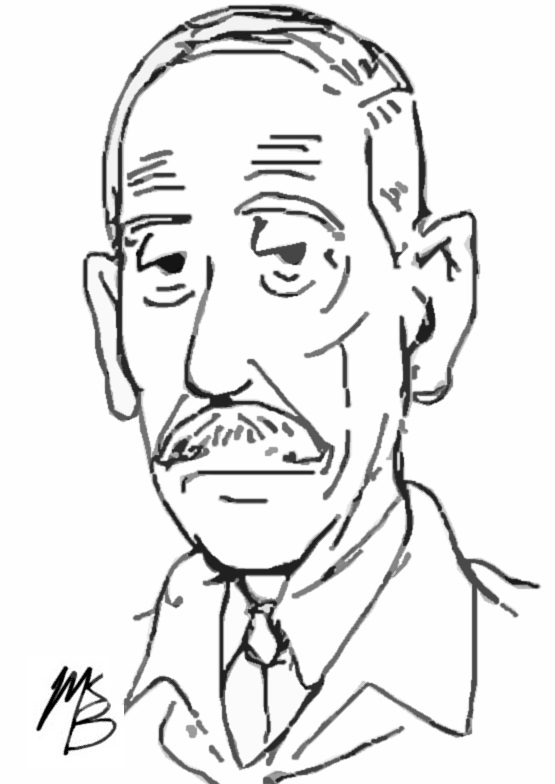
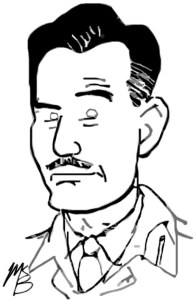
Brig. C.C. Mann

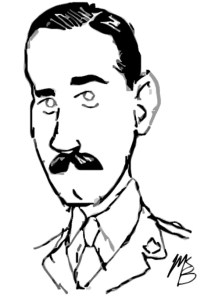
Brigadier Churchill Mann
8th Reconnaissance Regiment (14th Hussars)
7th Infantry Brigade
Mann

It was like watching a demonstration of tracer firing punctuated with the flash and crash of guns from both sides and although it was a thrilling and spectacular display, it filled us with foreboding as we all realized that the chance of our effecting surprise was greatly diminished.

(Mann, “Notes on Dieppe,” 1942)

Born on 6 September 1904 in Nutley, New Jersey and raised in Toronto, Clarence Churchill Mann was an RMC graduate, horseman and captain in the Royal Canadian Dragoons. He was attached to the headquarters staff of 1st Division and acted an instructor at the first Canadian staff college in England before being appointed commanding officer the newly formed 8th Reconnaissance Battalion in March 1941.

Continue reading

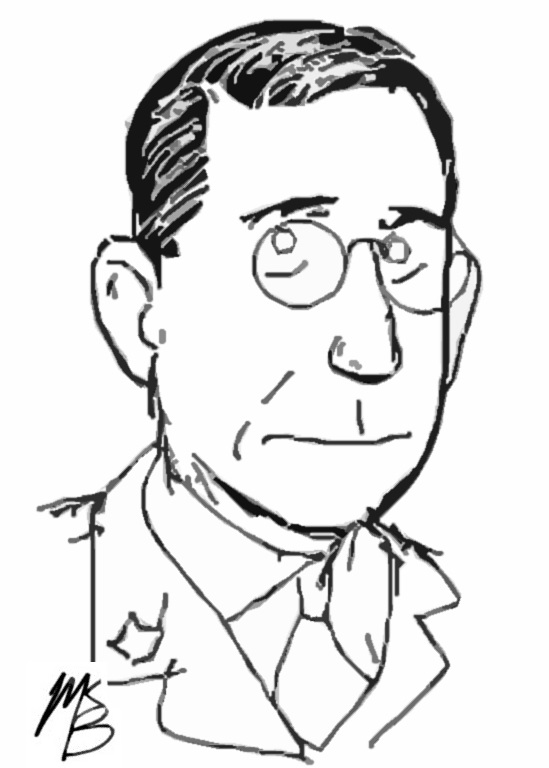
Lt-Col. J.R. Hopkins

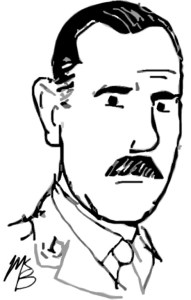
Lieutenant-Colonel J.R. Hopkins
14th Canadian Hussars

It was when I was an observer and we were being attacked by a German aircraft. My piloted manoeuvred us into a position where I could use my rear gun. The German plane burst into flames and we saw a man fall out with his clothes all burning … I was very pleased it was him and not us.

(Times Colonist, 14 Feb 1976, 47)

Born on 26 October 1886 in London, England, John Richard Hopkins was a Saskatchewan lawyer and decorated veteran of the Royal Flying Corps. A law student in Swift Current before the First World War, he had enlisted with the Royal Canadian Dragoons in September 1914, took a commission with the 18th Royal Scots in 1915 and transferred to the air force in 1916. As an observer and pilot he earned the Distinguished Flying Cross.

Continue reading

Lt-Col. E.G. Johnson

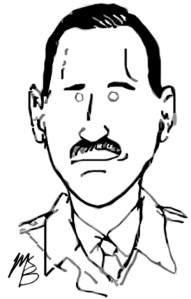
Lieutenant-Colonel E.G. Johnson
Toronto Scottish Regiment
JohnsonEG

Black Mac went by the manual. He firmly believed in spit and polish, square bashing, long route marches, unarmed combat, arduous training schemes—in short, in all the idiotic system of army life which strives to exclude every comfort and turn human beings into robots. So we polished our brass, blancoed our web, rose at ungodly hours for inspections by lantern-light, marched like the Duke of Marlborough’s unhappy sods, dug slit trenches and filled them up again, and slept many a night on the cold moors.

(Bert Whyte, Adventures of a Canadian Communist, 199)

Born in Toronto on 30 June 1909, Ernest George Johnson was manager of a photo engraving factory and a prewar member of the Toronto Scottish Regiment. He mobilized as a lieutenant, went overseas as a captain in December 1939, and succeeded Lieutenant-Colonel D.K. Tow as commanding officer in March 1943. The regiment deployed to France in July 1944 as machine gun and mortar support for the 2nd Division.

Continue reading

Lt-Col. D.K. Tow

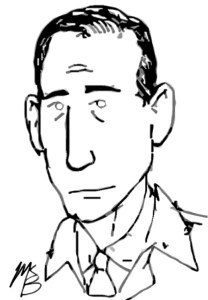
Lieutenant-Colonel D.K. Tow
Toronto Scottish Regiment
Tow

New occupant of the general manager’s office at 75-year-old Toronto General Trusts Corp. is Donald Koser Tow, 50. His corner office faces on two other Toronto institutions whose roots also extend well back into the nineteenth century–the Toronto Stock Exchange to the west, the Toronto Telegram to he south.

(National Post, 12 Apr 1958, 6)

Born in Toronto on 4 July 1907, Donald Koser Tow held a commerce degree from the University of Toronto and worked for the Canada Trust Company in Windsor and Toronto. He had belonged to both the Essex Scottish Regiment and the Toronto Scottish Regiment. The went overseas with the latter in December 1939 and then became as deputy assistant adjutant-general with Canadian Military Headquarters.

Continue reading

Brig. G.S.N. Gostling

Brigadier Guy Gostling Roy
Toronto Scottish Regiment
10th & 6th Infantry Brigade

We must look to the future. Already we have hovercraft which travel over land and water riding on a cushion of air; rocket harness for individual propulsion of foot soldiers over obstacles; reconnaissance “scopes” that see targets in the darkness; improved management and control techniques.

 All these things call for modernization of the armed forces set-up. Canada with its small armed forces is in an ideal position to do thus.

 (quoted in Toronto Star, 8 March 1967, 6)

Born on 13 August 1901 in Dorset, England, Guy Standish Noakes Gostling was a Toronto corporate executive, University of Toronto graduate, and in his youth a champion wrestler and tennis player. He moved to Canada in 1922, and worked in Winnipeg, where he joined the Grenadier regiment. He mobilized with the Royal Regiment of Canada in Toronto, serving overseas in Iceland and England.

Continue reading

Lt-Col. W.G.T. Roach

Lieutenant-Colonel Gordon T. Roach
Toronto Scottish Regiment
Roach

He immediately in complete darkness reorganised the remnants into a half battery and had the wounded evacuated and was ready to start by zero [hour]. Throughout the operations following he displayed great gallantry in handling his guns at all times, setting a splendid example to all ranks.” Roach was wounded a month later.

(M.C. citation, 1918)

Born in Toronto on 30 December 1896, Willard Gordon Thomas Roach had volunteered with the 95th Battalion in 1915, been commissioned with the 216th Battalion in 1916, reinforced the 4th Canadian Mounted Rifles in France in 1917, and earned the M.C. at the Drocourt-Queant Line in 1918 after enemy  bombardment on the assembly area before the attack.

Continue reading

Lt-Col. J.H. Christie

Lieutenant-Colonel J.H. Christie
Toronto Scottish Regiment
Christie

For conspicuous gallantry and devotion to duty during a raid in the enemy’s trenches. He handled the covering party with marked ability, and was largely responsible for the success of the raid. Later, he assisted in bringing in a wounded man under very heavy fire.

(M.C. citation, 1917)

Born in Cape Breton, Nova Scotia on 23 June 1892, John Herbert Christie worked for a Toronto investment firm and served in the First World War. He had reverted from lieutenant to sergeant to go overseas, earned another commission with the 73rd Battalion (The Black Watch), and received the Military Cross for heroism at Vimy Ridge.

Continue reading

Lt-Col. C.C. Thompson

Lieutenant-Colonel C.C. Thompson
Toronto Scottish Regiment
ThompsonCC

This might be the wrong time or place to mention it, but Chris Thompson is a bachelor, the only unmarried commander in the Toronto area. It’s not the wrong time to mention that he now passes up a pension from the last war to risk his neck in this one. He thinks this one will be fun, too.

(Toronto Star, 24 October 1939, 4)

Born on 7 March 1894 in Toronto, Christopher Craig Thompson was a University of Toronto graduate, bond broker, First World War veteran, and commanding officer of the Toronto Scottish since February 1939. He served as a lieutenant with the 124th Battalion and was wounded at Passchendaele. “If they ever offer prizes for military Jack-of-all-trades,” the Toronto Star wrote on the outbreak of war in 1939, “Chris Thompson … ought to win one.” Continue reading

Lt-Col. C.F.L. Roy

Lieutenant-Colonel Laurent Roy
Fusiliers Mont-Royal
Roy

Our second in command Major C. F. L. Roy was found in the skin of a merchant selling a typewriter to two war correspondents. Now we know he is the man to occupy the position of Mess President for the officers mess. Tow we can buy two new typewriters for our secretary.

(War diary, 25 May 1945)

Born on 30 December 1915 in Sherbrooke, Quebec, Charles Francis Laurent Roy worked for the Canada Starch company and graduated from the Joliette Seminary. Since 1935 he had been a commissioned officer in the Régiment de Joliette, which mobilized in 1942 for home service as part of the Atlantic Command in New Brunswick and Newfoundland. In January 1945, the regiment went overseas to England where it was broken-up for reinforcements. Roy as attached to the Fusiliers Mont-Royal as second-in-command during the final phase of the Northwest Europe campaign.

Continue reading

Lt-Col. J.A. Dextraze

Lieutenant-Colonel Jimmy Dextraze
Fusiliers Mont-Royal
Dextraze

I love my province. I love my country. I don’t see Canada without the province of Quebec—or without Alberta or British Columbia. I went to combat to keep my freedom, to keep all we have as a country. As a Quebecois I also fought for Quebec when I went to combat … It sounds corny talking this way, you know, but maybe I’m a corny man. I’m a down-to-earth fellow.

(Quoted in Montreal Gazette, 14 Apr 1980, 10)

Born on 15 August 1919 in Montreal, Jacques Alfred Dextraze worked for a rubber company when he volunteered with the Les Fusiliers Mont-Royal in 1940. By 1942, he had been recommended for a commission and completed officer training at Brockville. He went overseas with a reinforcement draft after the losses the Fusiliers had suffered at Dieppe. By the time the battalion deployed to France in early July 1944, Dextraze had been promoted to major and “D” company commander. For “personal daring and determination,” leading his company in a hand-to-hand fight on 1 August, he earned the D.S.O.

Continue reading