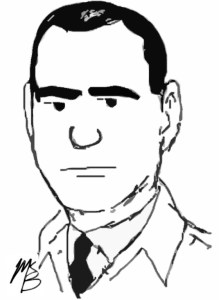
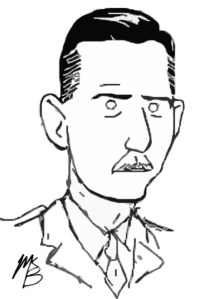
Lt-Col. K.R. Mitchell

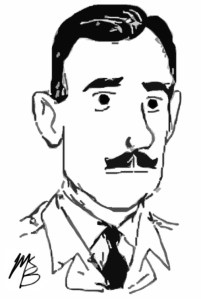
Lieutenant-Colonel Karl Mitchell
North Nova Scotia Highlanders

If I have to work on this side of the Atlantic, I don’t know of any place I’d rather be than here (Brockville). O.T.C.’s have the most important mission in the army in Canada–preparing future officers who are going to lead the Canadian Army into battle.

(Kingston Whig-Standard, 31 Jul 1943, 2)

Born on 9 March 1894 in Dartmouth, Nova Scotia, Karl Reginald Mitchell was a Truro pharmacist and First World War veteran. He had joined the Princess Louise Fusiliers in 1910 and went overseas on a reinforcement draft in 1916. He joined the 27th Battalion in France, where he was twice wounded. He ended the war as a corporal. By the Second World War, he served the North Nova Scotia Highlanders at the rank of major.

Continue reading

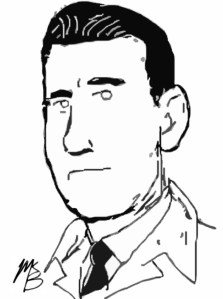
Brig. H.W. Murdock

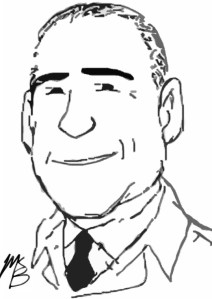
Brigadier H.W. Murdock
North Nova Scotia Highlanders
18th Infantry Brigade

Lance-Corporal Horatio W. Murdock was in charge of a Lewis gun which he used with great skill and deadly execution. When his platoon was putting outposts on a railway embankment strongly held by the enemy, he advanced with his Lewis gun at close range, giving covering fire and holding the enemy back, inflicting heavy casualties on him. By his courage and skill he enabled the post to be established with small

(The 85th in France, 170)

Born on 4 April 1895 in Amherst, Nova Scotia, Horatio Ward Murdock was former head of the Canadian Infantry Association and commanding officer of the Cumberland Highlanders from 1930 to 1936. He had enlisted with the 193rd Battalion in March 1916 and two years later reverted from sergeant to corporal to join the 85th Battalion in France. He earned the Good Conduct Badge and was training to be an officer when the war ended.

Continue reading

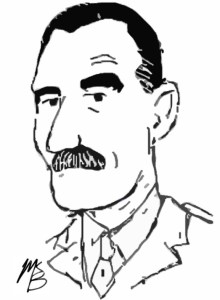
Lt-Col. A.G. McLellan

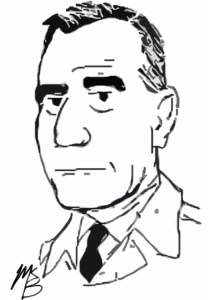
Lieutenant-Colonel Arnold McLellan
North Nova Scotia Highlanders

Breath sounds are clear all over chest, no adventitious sounds, but mor distant and weaker over and about scar … Complain of shortness of breath, slight on exertion, also pain at times in wound.

(Medical History of an Invalid, 30 Jul 1919)

Born on 20 April 1892 in Amherst, Nova Scotia, Arnold Guy McLellan was president of a gold mine company and commanding officer of the North Nova Scotia Highlanders since 1936. He had enlisted with the 193rd Battalion in March 1916 and two years later reverted from corporal to private to join the 85th Battalion in France. He was invalided from a through-and-through bullet to the chest in September 1918, which required a long recovery.

Continue reading

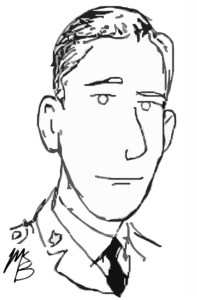
Lt-Col. N.M. Gemmell

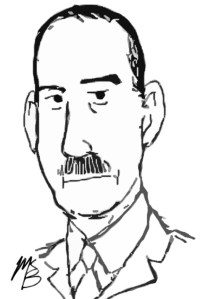
Lieutenant-Colonel Neil Gemmell
Stormont, Dundas and Glengarry Highlanders

Major Gemmell personally led his men and. fought shoulder to shoulder with them from one slit trench to another … Undoubtedly it was due to Major Gemmell’s remarkable qualities of leadership, inspiring actions and personal courage that his much depleted force attained its objective.

(Croix de Guerre citation quoted in War diary, 23 Apr 1945)

Born on 27 April 1910 in Peterborough, Ontario, Neil Morrison Gemmell was a junior officer with the Stormont, Dundas and Glengarry Highlanders when it mobilized in June 1940. He was promoted to major in September 1943 and served as “B” Company commander on D-Day and in Normandy. He became second-in-command after Caen in July and succeeded Lieutenant-Colonel Roger Rowley in March 1945.

Continue reading

Lt-Col. R. Rowley

Lieutenant-Colonel Roger Rowley
Stormont, Dundas and Glengarry Highlanders

They kept coming in and God—if they lasted twenty-four hours, they were lucky. They just came in, went out on the line, and zap—they were either wounded or killed. They were nice guys, but they weren’t much use to me wounded or dead.

(Quoted in Denis Whitaker, Tug of War, 224)

Born on 12 June 1914 in Ottawa, Ontario, Roger Rowley graduated from Dalhousie University and worked as a bond trader in the nation’s capital. Commissioned with the Cameron Highlanders of Ottawa since 1933, he served with the unit on garrison duty in Iceland in 1940 before proceeding to England in 1941. Following a series of promotions, Rowley became lieutenant-colonel of a training wing but reverted back to major to be second-in-command of the Cameron Highlanders when the machine gun battalion deployed to Normandy.

Continue reading

Lt-Col. G.H. Christiansen

Lieutenant-Colonel G.H. Christiansen
Stormont, Dundas and Glengarry Highlanders

A fairly tall and heavily built offr who has a quiet and pleasant manner and good military bearing. He has a rather slow manner of speech and does not give the impression of a fast thinker. He appears intelligent and capable of doing a job if given plenty of time. He is slow in reaching a decision but is quite determined once he has reached it. Motivation appears to be good.

(Officer Survey and Classification Board report, 2 Jan 1945)

Born on 5 May 1899 in Arnprior, Ontario, Goddard Henry Christiansen was a high school teacher in Kingston and commissioned officer with Princess of Wales Own Regiment since 1932. As an eighteen-year-old, he had enlisted with the 69th Battery in December 1917 and served in France with the Canadian Field Artillery in the final hundred days of the First World War. By the early 1930s, he worked as a machine shop teacher and football coach at Kingston Collegiate and Vocational Institute.

Continue reading

Lt-Col. M.S. Dunn

Lieutenant-Colonel M.S. Dunn
Stormont, Dundas and Glengarry Highlanders

A soldier is just as much a citizen as any other person. He must be a good citizen first. He can’t be a good soldier otherwise. I feel that every person in the Canadian Army has a definite responsibility toward the community where he is stationed. He must not be merely an onlooker.

(Kingston Whig-Standard, 4 Aug 1955)

Born in 1905 in Old Chelsea, Quebec, Michael Stephen Dunn graduated from the University of Ottawa and was a school teacher and vice principal in Cornwall, Ontario. Originally second-in-command of the Stormont, Dundas and Glengarry Highlanders, Dunn reverted to captain to go overseas with the 1st Division headquarters staff in December 1939. Following appointments with Canadian Military Headquarters in London, he was promoted to lieutenant-colonel and deputy assistant adjutant-general.

Continue reading

Lt-Col. R.T.E. Hicks-Lyne

Lieutenant-Colonel R.T.E. Hicks-Lyne
Prince of Wales Rangers
Stormont, Dundas and Glengarry Highlanders
HickLyne

Throughout the whole operation, while in command of his company, he displayed marked courage and initiative in handling his men. During the operation north of Cambrai, on September 30th, he personally led his company in the attack until severely wounded. His fine example and leadership were largely responsible for the good work done by his company in pushing on to their objective.”

(M.C. citation, 30 Jul 1919)

Born on 7 July 1892 in Kingston-On-Thames, Surrey, England, Richard Temple Easles Hicks-Lyne was Peterborough, Ontario bank manager and commanding officer of the Prince of Wales Rangers since 1938. First commissioned with the 166th Battalion in January 1916, he served in France with the 75th Battalion and earned the Military Cross. He was invalided due to a gunshot wound at Canal du Nord at the end of September 1918.

Continue reading

Lt-Col. W.J. Franklin

Lieutenant-Colonel W. John Franklin
Stormont, Dundas and Glengarry Highlanders
Franklin

Hon. Mr. Aseltine: … Lieutenant-Colonel Franklin served his country with distinction in the two World Wars and proved an able administrator in the difficult position which he filled here for so many years. He is a fine gentleman, possessed of what it takes to get along with people, and as a result his retirement prompts all of us to express our appreciation of and personal regard for him.

 Hon. Mr. Roebuck: Why did you throw him out, then?

(Senate Debates, 30 Mar 1960, 472)

Born on 20 June 1893 in Pendleton, Ontario, William John Franklin was commanding officer of the Stormont, Dundas and Glengarry Highlanders from 1932 to 1934, having served with the militia since 1909. At the stary of the First World War, he served on St. Lawerence canal guard duty before being commissioned with the 154th Battalion. He served in France with the 2nd Battalion, earning a promotion to captain and the Military Cross. He was invalided home due to a gunshot wound at Canal du Nord in September 1918.

Continue reading

Lt-Col. Gillie & Maj. Shaver

Lieutenant-Colonel G.D. Gillie
&
Major J.H. Shaver
Stormont, Dundas and Glengarry Highlanders

After repulsing a counter-attack, he made a most difficult reconnaissance in order to establish an offensive flank, during which he captured three of the enemy. He then entered a and held an enemy trench with a small party for ten hours, defeating two enemy bombing parties. His utter disregard for personal safety was a splendid example to his men.

(Military Cross citation, 26 July 1917)

Born on 17 May 1890 in Cornwall, Ontario, George Douglas Gillie worked for the Department of National Revenue as senior customs official. In March 1916, he enlisted with the 154th Battalion as a lieutenant and joined the 21st Battalion by the end of the year. In April 1917, he transferred to the Royal Flying Corps as an observer and earned the Military Cross in the skies above Vimy Ridge. He relinquished his commission as a flying officer in 1919 and returned home for demobilization.

Continue reading