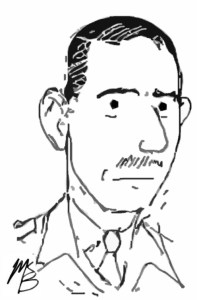
Lt-Col. M.C. Grison

Lieutenant-Colonel M.C. Grison
Régiment de Hull
It is important that Canadians should have an appreciation of the physical magnitude of their country, It is more important, too, if we are to overcome tendencies to sectionalism, that Canadians as individuals and groups should get to know and understand one another.

(Victoria Daily Times, 7 Apr 1943)

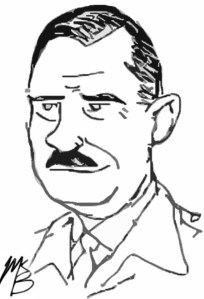
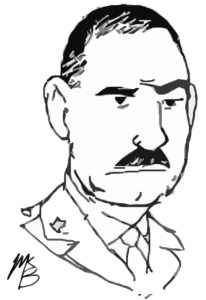
Born in Ottawa on 11 September 1899, Marcel Charles Grison was a graduate of the University of Ottawa and owner of a moving and storage company. Commissioned with le Régiment de Hull since 1923, he had been appointed commanding officer in July 1939. The battalion mobilized in 1941 but was assigned to home defence duty.
Continue reading

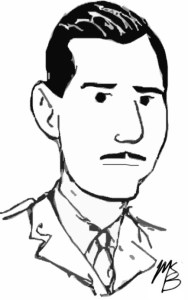
Lt-Col. C.M. MacMillan

Lieutenant-Colonel C.M. MacMillan
Canadian Fusiliers (City of London)

A smart clean-cut off[ice]r, who doe not look his age of 40 years, alert, of good personality, fairly aggressive, is intelligent, capable, responsible and conscientious.

Reports are scanty in this officer’s file but those available show his work to be satisfactory; a good CO, has commanded his bn successfully under difficult circumstances.

(Officer Survey and Classification Board, 15 Dec 1944)

Born in Scotland on 9 May 1904, Charles Malcolm MacMillan was a militia officer with the Canadian Fusiliers since 1927. He was promoted to major in 1940 and became second-in-command in February 1942. Before the battalion landed on the island of Kiska, believed to be occupied by Japanese forces, MacMillan remarked, “Some of the boys were pretty tense and we all figured we were in for a full-scale scrap. But every man from the commanding officer down to the privates was ready to go.”

Continue reading

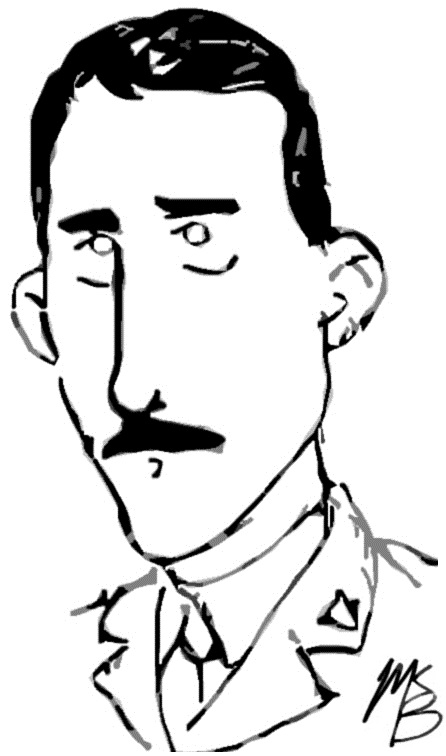
Brig. R.H. Beattie

Brigadier R.H. Beattie
Canadian Fusiliers (City of London)
13th & 14th Infantry Brigades

Whilst leading his company he was held up by an enemy machine-gun post. He, with a section, outflanked the post and then personally with great courage rushed it, shooting one of the enemy, taking prisoner another, and capturing a gun.

(M.C. citation, 3 Oct 1918)

Born on 30 September 1895 in London, Ontario, Russell Hilton Beattie was a decorated First World War veteran and militia officer. He went overseas as a lieutenant in the 135th Battalion and transferred to the 20th Battalion in France in February 1918. He was wounded in action during the Hundred Days’ Offensive but earned the Military Cross for conspicuous gallantry. After mobilization in September 1939, he served as chief recruiting officer for No. 1 Military District Southwestern Ontario) and barracks commandant in Windsor before taking a senior officers’ course at RMC.

Continue reading

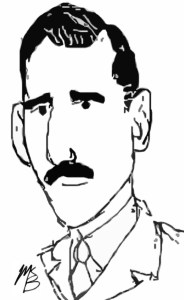
Lt-Col. R.E. Bricker

Lieutenant-Colonel R.E. Bricker
Canadian Fusiliers (City of London)
Midland Regiment (Northumberland and Durham)

Of medium height and build, neat clean-cut appearance and smart mil bearing. This offr is a forceful, aggressive, conscientious and vigorous type with a good fighting heart. Appears somewhat intolerant and rather abrupt.

(Officer Survey and Classification Board, 26 Feb 1945)

Born on 27 August 1901 in Glen Allen, Ontario, Rance Ephriam Bricker was a militia officer with Scots Fusiliers of Canada since 1924. In 1940, he transferred to the Highland Light Infantry and served in England as second-in-command. During his inspection tour of the battalion in February 1942, General Bernard Montgomery found Bricker lacked the necessary character and drive. He was soon replaced and sent back to Canada as a prisoner-of-war escort.

Continue reading

Lt-Col. D.B. Holman

Lieutenant-Colonel D.B. Holman
Rocky Mountain Rangers

Throughout the operation he displayed great coolness under shell fire and bombing and by his energy and devotion to duty set a fine example to his men.

(M.C. citation, 1 Feb 1919)

Born on 4 June 1896 in Saint John, New Brunswick, Douglas Black Holman was a decorated First World War veteran and staff member for the Soldier Settlement Board at Salmon Arm, British Columbia. He had enlisted with the 6th Canadian Mounted Rifles in March 1915 and served in France as part of the 5th CMR and the 3rd Canadian Division Signal Company. He received a commission in the Canadian Engineers and earned the Military Cross for conspicuous gallantry in September 1918.

Continue reading

Lt-Col. C.A. Scott

Lieutenant-Colonel C.A. Scott
Winnipeg Light Infantry

Maj. Scott is a smart, alert offr, who seems to have considerable ability and who has a orderly, logical mind. He has had a long record of efficient service both on staff and in Regt duty in Canada … It is recommended that he continue in employment as long as he is desired or until he is replaced by a battle casualty.

(Officer Survey and Classification Board report, 1 Mar 1945)

Born in Ottawa on 30 April 1903, Cuthbert Aiden Scott was a lawyer and member of Cameron Highlanders of Ottawa since 1925. Promoted to major in 1936, he volunteered with the unit when it mobilized as a machine gun battalion in July 1940. Following later administrative duties with National Defence Headquarters, Scott was appointed second-in-command of the Lanark and Renfrew Regiment in May 1942.

Continue reading

Lt-Col. H.F. Cotton

Lieutenant-Colonel Harry F. Cotton
Winnipeg Light Infantry

The Jap is not the great fighting machine we have been led to believe. He’ll battle like a madman if he outnumbers us, but this stuff about the little brown men throwing themselves on our bayonet points is just so much eye-wash.

(quoted in Vancouver Sun, 22 Nov 1944, 3)

Born in Vancouver in 1910, Henry Ferguson Cotton was a graduate of RMC and a Permanent Force officer since 1931. He served on exchange with the British Army in 1934 and was stationed in Winnipeg with the PPCLI at the start of the Second World War. He served as brigade major of the 7th Infantry Brigade in 1940 and overseas with the PPCLI until he was recalled in April 1942 to take command of the newly mobilized Winnipeg Light Infantry.

Continue reading

Lt-Col. J.A. Wilson

Lieutenant-Colonel J.A. Wilson
Winnipeg Grenadiers

The dead silence of that island in the half-light and the absolute lack of any sign of life as the men went ashore made everyone think the Japs had pulled inland and were waiting to trap us on the beach.

(Quoted in Times Colonist, 27 Jan 1944, 8)

Born in 1896, raised in Calgary, and educated in Scotland, James Anderson-Wilson was a First World War veteran of the Royal Air Force and a manager for the Hudson’s Bay Company in Winnipeg. A prewar militia officer with the Royal Winnipeg Rifles, he served as second-in-command overseas until being recalled to Canada in April 1942. He took command of the reformed and rebuilt 1st Battalion, Winnipeg Grenadiers, which had been destroyed at the Battle of Hong Kong five months before.

Continue reading

Maj. J.A. Hebb

Major John A. Hebb
West Nova Scotia Regiment

The Churchill visit was undoubtedly more than a matter of courtesy … This suggests that he completely recognizes Canada’s status as a world power as well as her unique position as a link with the United States on the one hand and Britain and France on the other. It is quite conceivable too that one of his motives was to draw the attention of the world to Canada’s present importance.

(quoted in National Post, 26 Jan 1952, 7)

Born in Hebbville, Nova Scotia on 19 August 1910, John Alexander Hebb was an graduate of University of King’s College and instructor at King’s College School in Windsor. An officer in the Lunenburg Regiment since 1927 and member of the COTC at university he mobilized with the West Nova Scotia Regiment on the outbreak of war in 1939.

Continue reading

Lt. Col. W.O. Morris

Lieutenant Colonel W.O. Morris
215th & 234th (Peel) BattalionMorris

The local cabal against Morris has resulted in the necessity for a change in the command of the 215th Battalion. Morris’ only fault was in trying to jack up, very moderately, a slack Battalion.

(Maj-Gen. Logie to Gen. Hodgins, 9 Dec 1916)

Born in Fort Battleford on 24 May 1885, just as the Northwest Rebellion ended, William Otter Morris had been named after the Canadian commander at the Battle of Cut Knife, Colonel William Dillon Otter. A secretary in civilian life and a prewar member of the 9th Mississauga Horse, he served on the headquarters staff of Major-General W.A. Logie before appointment to senior major in the 170th Battalion in January 1916.

Continue reading