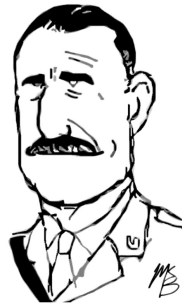
The Brown Brothers

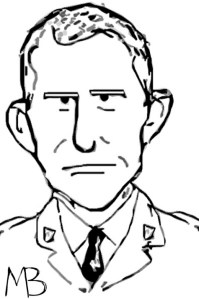
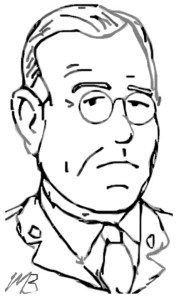
Lieutenant Colonel B. H. Brown
220th (12th York Rangers) Battalion
BHBrown

Lieut.-Col. B. H. Brown of the 220th (York County) Battalion played the role of Santa Claus last evening when the two battalions in question celebrated Christmas.

(Toronto Globe, 22 Dec 1916, 6)

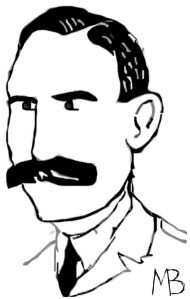
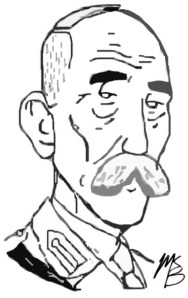
Benjamin Hinchcliffe Brown was the son of retired Colonel F. M. Brown, a leading Orangeman, long-time member of the 12th (York Rangers) Regiment and veteran of the Riel Rebellion. A member of Loyal Orange Lodge No. 142, B. H. Brown was born on 15 October 1878 in Toronto. He worked as a printer and publisher with his brother, Francis Frederick Middleton Brown, who was born on 20 August 1885, and named in honour of their father’s commanding general in the 1885 Rebellion.
Continue reading

The Complaisant

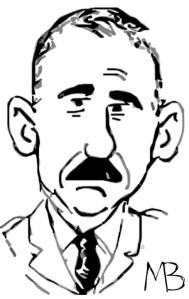
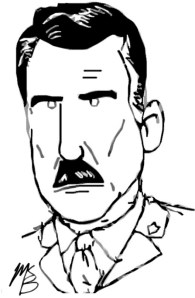
Lieutenant Colonel L. H. Archambault
41st (Canadien-Français) BattalionArchambault

The 41st, under Col. Archambault, had more than its share of desertions. The Colonel naturally was uncommunicative, but it was learned on fairly good authority that 150 men drooped away utterly…

(Toronto Daily News, 23 Oct 1915)

Born on 10 October 1879 in Montreal, Louis Henri Archambault was a lawyer, militia officer and Inspector of Cadets. He had served with the 64th Regiment for nearly twenty years. In early 1915, he transferred from the 22nd Battalion to raise the second French Canadian unit from Quebec, the 41st.

Continue reading

The Clear Grit

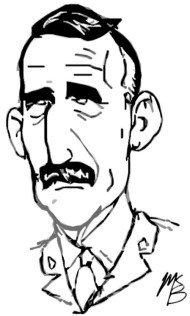
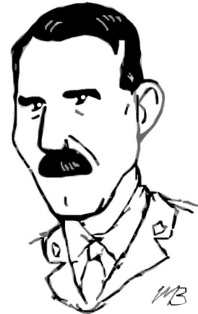
Major General Robert Rennie, M.V.O.
3rd (Toronto Regiment) BattalionRennie

As a candidate, I seek election not on my personal record so much, but on that of those who were associated with me in the great war. I am now more a civilian than a soldier, but—and please let there be no frills about this—if war should threaten again, I am ready to offer my services.

I stand on a Liberal platform because I am a Liberal and always have been. I believe in the great principles of Liberalism…

(Rennie’s speech, Toronto Globe, 21 Nov 1921, 1)

Robert Rennie was a Toronto seed merchant and thirty-four year member of the Queen’s Own Rifles. He joined as a rifleman in 1880 and rose to become lieutenant colonel by 1914. Born on 15 December 1862 in Markham, Canada West, Rennie was an expert marksman, respected businessman and prominent sportsman, with a specialty in curling.

Continue reading

A Coroner, a Doctor and a Mailman

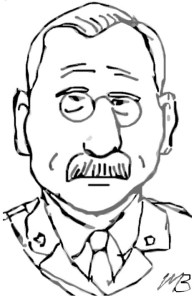
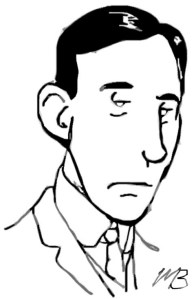
Lieutenant Colonel Dr. Robert G. C. Kelly
&
Lieutenant Colonel Dr. Thomas P. BradleyTPBradley &
Major W. W. MacVicarMacVicar149th (Lambton’s) Battalion

He had previously been in good health with heart in normal condition, and medical opinion was that his death was probably caused by fatigue and strain in connection with organization of 149th Battalion.

(Lt.-Col. Kelly, Circumstances of Death, 1915)

Born on Christmas Day 1869, Dr. Robert George Campbell Kelly was a physician and associate coroner in Lambton County, Ontario. As commanding officer of the 27th (St. Clair Borderers) Regiment, he offered to raise an overseas battalion from his home county in November 1915. He had belonged to the militia since 1885.

Continue reading

The Broken-Hearted

Lieutenant Colonel J. W. Arnott
151st (Central Alberta) BattalionArnott

Song for the 151st

But bloodier yet will the field be,
Till, ‘twill quench his insatiable thirst,
And there will be glory at last for the boys,
Of the Hundred and Fifty First

Oh, into the thick of the fight
We’re straining each moment to go
As Bill’s match, his plans to ignite
With those of his servitor, foe;
When their air castles lie in ruins
And their subjects from bondage have burst,
Then we’ll come back home,— those who are left of us,
Of the Hundred and Fifty First

(Wetaskiwin Times, 12 Oct 1916, 3)

John Wilson Arnott was a gentleman militia officer and graduate of military instruction at Toronto and Kingston. Born on 9 December 1860 in Northumberland County, Canada West, Arnott had long belonged to the 49th Hastings Rifles before he moved west in 1912.

Continue reading

The Overlooked

Lieutenant Colonel Adam Weir   Weir&
Major Andy M. MoffatMoffat160th (Bruce) Battalion

But still in England? Mustering as much good grace as possible we have finally given up all hope and desire to read the future. It is the third X mas in khaki for most of us, each having left a little farther up the beach of army life. Shall we continue? We cannot possibly go much further without slipping over the edge into life in France.

(Editorial, “Bruce in Khaki,” 1 Jan 1918, 98)

Adam Weir was a manufacturer in Port Credit and a twenty-four year member of the 32nd (Bruce) Regiment. He was born on 21 November 1863 in Aberfoyle, Canada West. In December 1915, Wier was appointed to raise the 160th Battalion from Bruce County. Well respected as a militiaman and civic leader, Weir, a local newspaper observed, “is regarded as a most capable officer, and is remembered here for his fine soldiering abilities.”

Continue reading

The Undeterred

Lieutenant Colonel Donald Sutherland, D.S.O.
52nd, 71st, 74th, & 160th Battalions
Sutherland

A man that can fight, a fighter who’s fought,
A man to whom danger to self counts for naught,
A man all the way with a conduct sheet clean,
As a man and a soldier our Colonel’s beloved.
A man; Colonel Sutherland, that’s whom I mean.

(Lieut. L. Young, 71st Bn. “Our Colonel,” Bruce in Khaki, 12 Oct 1917, 2)

Born on 3 December 1879, Donald Matheson Sutherland was a Norwich County physician, militia officer in the 24th Grey Horse and member of Loyal Orange Lodge No. 999. In September 1914, he enlisted as a captain with the 1st Battalion. Wounded during the second battle of Ypres on 24 April 1915, he was invalided to Canada. After raising the 71st Battalion from Woodstock, he again embarked for England in April 1916.

Continue reading

The Irish Champion

Lieutenant Colonel Harry Trihey
199th (Duchess of Connaught’s Own Irish Rangers) BattalionTrihey

Moreover the confidence of those interested in the Regiment is absolutely in Colonel Trihey, Should his perhaps too hasty action result in his being deprived of its command and prevent his leading it to the front, the reward of the sacrifices he has made and is willing to continue to make, will be that he will be held up to the public as having deliberately deceived and misled these men.

(Doherty to Borden, 9 Feb 1917)

Henry Judah Trihey was an amateur hockey player for the Montreal Shamrocks between 1897 and 1901. Regarded as one of the best forwards of his time, Trihey won two Stanley Cups with the team and played a crucial role in defending the championship during three challenge games. He was born on 25 December 1877 in Berlin, Ontario. After his hockey career, he became a barrister in Montreal.

Continue reading

The Minister

Lieutenant Colonel C. C. Ballantyne
245th (Canadian Grenadier Guards) BattalionBallantyne

Mr. HUGHES: The hon. gentleman on his return from overseas, was one of the most wrathy men I ever met.

Mr. BALLANTYNE: Disappointed.

Mr. MCMASTER: The remarks of the ex-Minister of Militia may be very interesting, but I would ask him to speak a little louder, so that we all may get the benefit of them.

Mr. HUGHES: I was saying that the present Minister of the Marine and Fisheries, on his return from England was—I will not say the maddest man, but one of the most intensely disappointed men that it has ever been my privilege to meet.

(Debates, 10 Apr 1918, 597)

Born on 9 August 1867, Charles Colquhoun Ballantyne was a Montreal industrialist and millionaire through marriage. He raised the 245th Battalion in late 1916 and departed for England with less than three-hundred volunteers in May 1917. After the breakup of his unit, Ballantyne became one of the hundreds of unemployed senior officers in London.

Continue reading

The Animal Lover

Lieutenant Colonel R. C. Andros, D.S.O.
1st Canadian Mounted RiflesAndros

His nervous condition is only fair he has been in trenches steadily for 33 months and is tired physically and mentally. Treatment in this country will not improve this man’s condition. The Board therefore recommends – Invaliding to Canada.

(Medical Board Report, I.D.O.E. Hospital, 1 June 1918)

Born on 7 February 1871 in Port Hope, Ontario, Ralph Craven Andros was a former North West Mounted Policeman and member of the 20th Border Horse Hussars. After his tour of duty in the NWMP, Andros moved to Montana and built a horse ranch near Fort Benton. He retired in 1910 and moved to British Columbia. In November 1914, he enlisted with the 1st Canadian Mounted Rifles.

Continue reading