The Sportsman

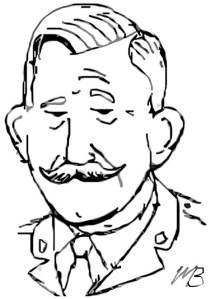
Lieutenant Colonel Dick Greer
180th (Sportsmen) Battalion
Greer

But the English and Canadians and Australians fight in a different way. They make a sport of fighting.

The German soldier has no sport. He is a machine; he is rigidly in his place. He can’t understand the idea that fighting is sport to the British. That long line of men charging, laughing and kicking a football along ahead terrifies him.

(Greer to Fosdick Commission, Toronto Globe, 18 June 1917, 9)

As president of the Sportsmen’s Patriotic Association, Richard Haliburton Greer proposed to raise a battalion of athletes from Toronto. Born on 19 October 1878 in Toronto, Greer was an Ontario Crown attorney and one of the city’s leading sportsmen. In his youth, Greer played amateur and semi-professional baseball. As a member of the University of Toronto ball club in the late 1890s, he was regarded as “one of the best short-stops in Canada.” In the 1898 UofT yearbook, Greer cited as his chief ambition in life: “To play the game.”

Continue reading

The Principal

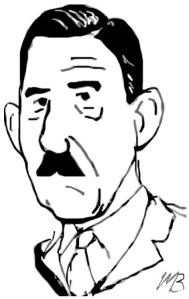
Lieutenant Colonel E. W. Hagarty
201st (Toronto Light Infantry) Battalion

Hagarty

I saw a mock funeral to day up to the 201 Batt they are being split up tomorrow, their Col. lost his job as they have less than 600 men. They dug a grave and buried a dummy representing their Col. They hated him, he was a whiskey soak, so on top of the grave they put a cross, a whiskey bottle, cig or some branches for flowers. Some reporters took a picture of it so likely it will be in the papers.

(L. E. Johns, 161th Bn. to Mother, 20 Sept 1916.)

Edward William Hagarty was principal of Harbord Street Collegiate from 1906 to 1928 and  member of Orange Order Lodge No. 344. He was born on 7 September 1862 in Brantford, Canada West. He served four years with the Queen’s Own Rifles while an undergraduate student at the University of Toronto. An influential figure in the cadet movement for twenty-five years, Hagarty was selected to raise the 201st Toronto Light Infantry in January 1916.

Continue reading

The Commandant

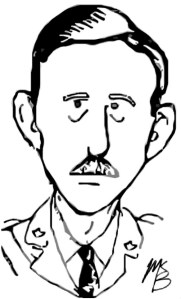
Lieutenant Colonel F. F. Clarke, D.S.O.
127th (12th York Rangers) BattalionClarke

“We hold the record for railway building in France. We had a very difficult piece to build, because it was in full view of the German lines in daylight for about 1½ miles across a valley.

When the air cleared on Thursday the Germans saw the railway track from their observation balloon and started to shell it, and, after sending over about 200 shells, they broke a rail, which was repaired in a few-minutes. This line can only be used at night, without light or noise

(F. F. Clarke, Railway Age Gazette, 1918, 404)

Frederick Fieldhouse Clarke was an engineer and surveyor in northern Ontario. Born on 22 August 1878 in Hamilton, Clarke had moved north during the mining rush around Cobalt. He served for three years with the Royal Canadian Regiment and nearly twenty with the 12th York Rangers. Through his work with northern railway development, Clarke helped to found the town of Kapuskasing in 1911

Continue reading

The Home Guard

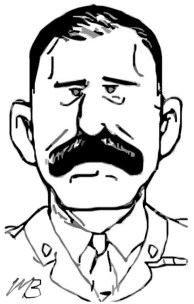
Lieutenant Colonel W. T. Stewart
84th (Toronto Depot) BattalionWTStewart

…the genial silver-haired Irishman who commands the regiment, and who is the originator of the Home Guard movement of Canada, a movement that to-day has over 160,000 men in its train. The chief characteristic of this commander is that when he wants anything he gets it.

(Brantford Expositor, Dec 1915, 16)

Born on 14 February 1871 in Killarney, Ireland, William Thomas Stewart was a twenty-five year member of the Canadian militia, serving in the 13th (Hamilton), the 66th (Princess Louise) and 100th (Royal Canadians) Regiments. One month after the outbreak of the First World War, Stewart began organizing the Home Guards from Toronto.

Continue reading

The King’s Own

Lieutenant Colonel F. C. McCordick
35th Battalion & 15th Bn., King’s Own Yorkshire Light InfantryMcCordick

My dear Col. McCordick,

If you haven’t already heard, you will be surprised to get this letter from m⁠e⁠—in Germany. It happened at that awful slaughter⁠—rhe 3rd battle of Ypres, & even now when I think of it all, I doubt my reality of existence…

Hope all is well with you & 35th. Good luck & best regards to all.

(Lt. A. Watson Sime to McCordick, 3 July 1916)

Born on 2 June 1873 in St. Catharines, Ontario, Frank Case McCordick was a leather manufacturer and member of the 19th Regiment. In early 1915, he took command of the 35th  Battalion from Lieutenant Colonel Charles Frederick Bick who transferred to the 37th. Many of McCordick’s volunteers belonged to Toronto’s militia units, the Royal Grenadiers, the Queen’s Own Rifles, the 48th Highlanders, the 12th York Rangers, and the 109th Regiment.

Continue reading

The Scion

Lieutenant Colonel Reg Pellatt
83rd (Queen’s Own Rifles of Canada) BattalionPellatt

Esprit de corps is love of Regiment, and should permeate throughout all ranks. It is born of the knowledge that, when in the Queen’s Own, a man is a member of one of the oldest and finest regiments in the Canadian Militia, and a Regiment which, whenever Canada has called, has answered that call, living up to its splendid motto IN PACE PARATUS (In peace prepared) in the truest sense of the word.

(R. Pellatt, A Guide to Riflemen, 1924, 22)

Born on 30 June 1885 in Toronto, Reginald Pellatt was the son of Major General Sir Henry Mill Pellatt (1859—1939), commanding officer of the Queen’s Own Rifles of Canada. An influential financier and forty-year member of the QOR, the elder Pellatt had completed his famous estate of Casa Loma in 1913.

Continue reading

The Cavalryman

Lieutenant Colonel Sam Beckett †
75th (Mississauga) BattalionSBeckett

Col. Beckett ranked with the few most prominent and able military officers which Toronto and even Canada has produced in the present struggle abroad. That he was efficient and an authority on military tactics, particularly cavalry manoeuvers was attested when he was chosen one of the few officers who left here commanding battalions to take his regiment to France. He had innumerable friends in Toronto.

(Toronto World, 5 March 1917, 1)

Lieutenant Colonel Samuel Gustavus Beckett of the 75th Battalion was killed in action during a March 1917 trench raid near Vimy Ridge. Born on 2 December 1869 in Toronto, Beckett was a partner in an architect firm with fellow Lt. Colonel W. C. V. Chadwick of the 124th Battalion. A student of military history and expert on the cavalry tactics of American Confederate General Stonewall Jackson, Beckett had been involved in the Canadian militia since 1893. At the outbreak of the war, he was commanding officer of the 9th Mississauga Horse.

Continue reading