The Shame Monger

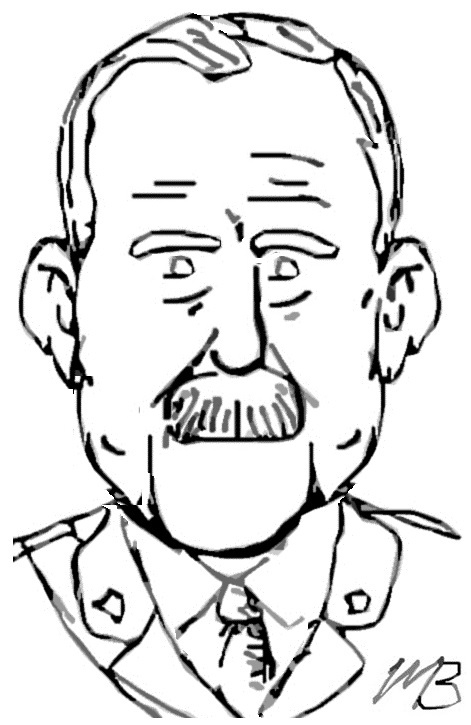
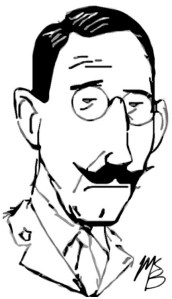
Lieutenant Colonel George C. Royce
255th (Queen’s Own Rifles of Canada) Battalion  Royce_G
GIVE US HIS NAME
Nearly everyone knows of ONE MAN who should be in khaki to-day. We ask you to give us his name so we can call upon him and give him this opportunity to join an Overseas Battalion—

Doing this does not imply any slur upon the man you name…
That man whose name you give us may be just waiting for this chance…
Take this duty seriously. Do not send us unsuitable or “spite” names…

(255th Advertisement, Toronto Globe, 30 Nov 1916, 5)

Authorized in late 1916, the 255th Battalion was to provide reinforcements for the 3rd Battalion fighting on the frontlines France. The commanding officer, Lieutenant Colonel George Cooper Royce quickly realized the dire recruitment situation in Toronto. Having already provided multiple battalions, and with many more units still trying to enlist men, the Ontario capital had nearly exhausted its reserve of suitable soldiers.
Continue reading

The Old Timer & The Whippersnapper

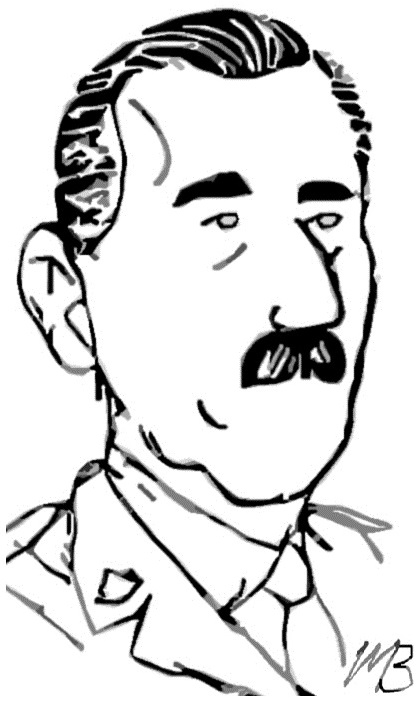
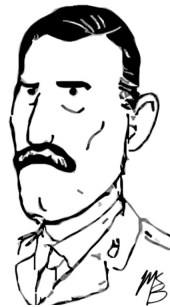
Lieutenant Colonel Wellington Wallace
234th (Peel) BattalionWallace&
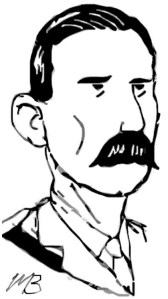
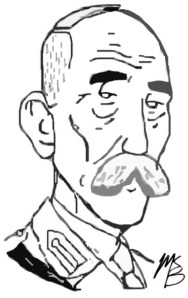
Lieutenant Colonel W.O. Morris
215th & 234th (Peel) BattalionMorris

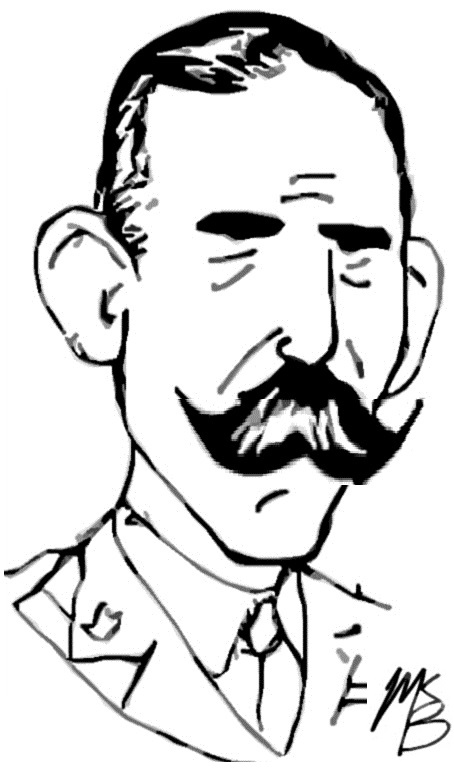
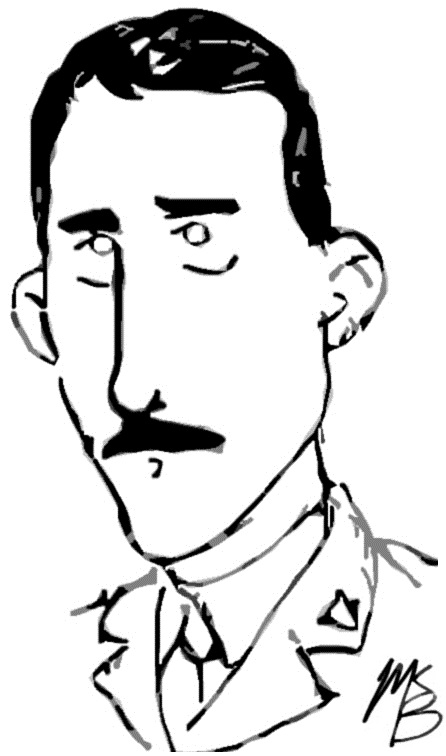
Born in 1854 in Tipperary, Ireland, Wellington Wallace immigrated to Canada in 1878. He was a bank manager, militiaman and veteran of the Northwest Rebellion. He fought with the Queen’s Own Rifles against Cree Chief Poundmaker at the battle of Cut Knife on 2 May 1885. The son of a North West Mounted Police Inspector, William Otter Morris was born in Fort Battleford on 24 May 1885 and named after the Canadian commander at Cut Knife, Colonel William Dillon Otter. The thirty-year old Wallace and the two day old Morris were both present in Battleford when Poundmaker and the Cree surrendered on 26 May 1885. Over thirty years later, Morris succeed Wallace as commander of the 234th Battalion.

Continue reading

The Prisoner

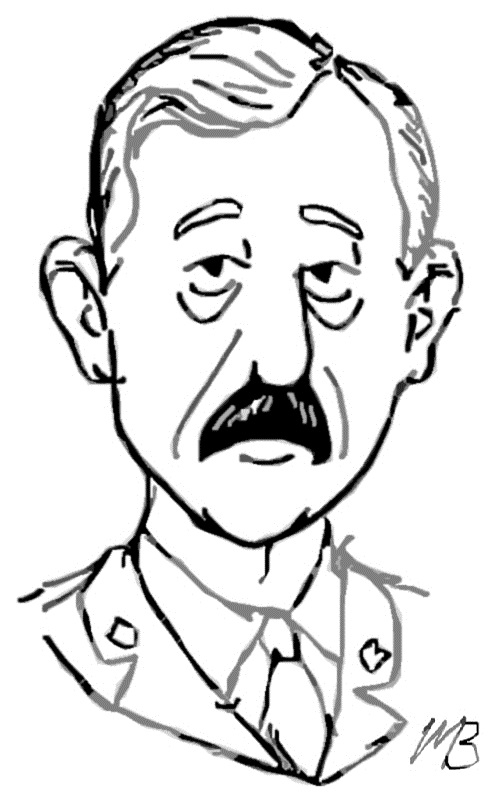
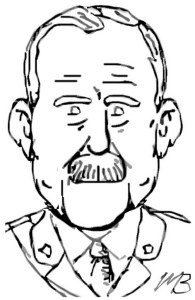
Major A. J. E. Kirkpatrick
3rd (Toronto Regiment) BattalionAJEKirkpatrick

With ammunition gone, bleeding and bent,
With hunger, thirst, and weariness near spent,
With foes in crowds on every side to hem
Them in, to capture these, God pity them.

Their day was done, their suffering still to come.
They were to know the full and total sum,
Wearily marching to captivity,
How long? God knows! An eternity

(A. E. Kirkpatrick, Toronto Globe, 22 Apr 1931, 4)

A native of Toronto, Arthur James Ernest Kirkpatrick was born on 29 April 1876. He was a graduate of Upper Canada College, twenty-one year member of the Queen’s Own Rifles and married to the daughter of prominent Liberal Party leader William Mulock. Kirkpatrick fought at Second Ypres as second-in-command of the 3rd Battalion under Lieutenant Colonel Robert Rennie.

Continue reading

The Legacy

Lieutenant Colonel G. T. Denison †
2nd Division Cyclist CompanyDenison

Lieut.-Col. Denison’s death is a great personal loss to me as an old friend. It must be a splendid satisfaction to his family to know he upheld the traditions of the first military family in Canada. As to the loss to Col. Denison, I can only say that when I left him this morning he was bearing his grief like a Christian gentleman and a soldier.

(Crown Attorney Seymour Corley, Toronto Star, 15 May 1917, 2)

On 8 May 1917, George Taylor Denison IV was killed in action at the battle of Fresnoy. His father, Toronto police magistrate Colonel George Taylor Denison III (1839—1925) was a long-time Conservative militia leader, imperialist activist and patriarch of one of the city’s most influential Loyalist families. When the death of Denison was announced during a session of his father’s police court, the elder judge sat motionless before quietly exiting to his chambers. He was later heard to remark, that his son “would wish no better death than to die for his country.”

Continue reading

The Cadet Instructor

Lieutenant Colonel R. K. Barker
95th (Toronto) Battalion Barker

Man looks unwell.

Complains of weakness, loss of weight, loss of sleep, loss of nervous control. Accounts for this by loss of food and sleep.

(“Medical History of an Invalid,” 7 November 1923)

Rybert Kent Barker was a military instructor in Toronto and veteran of the Boer War. Born on 21 September 1869 in Kingston, Ontario, he had served with the Queen’s Own Rifles from 1880 to 1910 and commanded “C” company in South Africa. Prior to being appointed commander of the 95th Battalion, he was a cadet drill instructor with the 2nd Military Division.

Continue reading

The Little Fellow

Lieutenant Colonel Frank Burton
216th (Toronto Bantams) BattalionBurton

The Bantam Battalion is no mere novelty, but will prove to be a real fighting unit, and the bantam’s motto might well be, Multum in Parvo [Much in Little], for they are every inch soldiers in breadth as well as height, and Gulliver would find them very tough Lilliputians to handle.

(Toronto Globe, 25 Feb 1916, 6)

Frank Lindsay Burton was born on 12 February 1876 in in Barrie, Ontario. After graduating from Upper Canada College he joined the 35th Simcoe Foresters. When he moved to Toronto, he served as a militia officer with the 9th Mississauga Horse. In 1915, he enlisted as a senior major with Lieutenant Colonel Sam Beckett’s 75th Battalion.

Continue reading

The Grenadier

Lieutenant Colonel W. B. Kingsmill, D.S.O.
123rd (Royal Grenadiers) BattalionKingsmill

Feeling very confident that the Battalion will carry on in the future as it has done in the past, I wish one and all, A Happy New Year, and trust that it will please God to see our task completed, and that we will be back in Canada with those we Love in the not far distant future.

(Kingsmill, 123rd War Diary, 1 Jan 1918, 51)

Born in Toronto on 6 May 1876, Walter Bernard Kingsmill was a graduate of the Royal Military College and Osgoode Hall. He joined the 10th Royal Grenadiers in 1898 and became commanding officer of the militia regiment. In November 1915, he received authorization to raise the 123rd Battalion from Toronto.

Continue reading

The Brown Brothers

Lieutenant Colonel B. H. Brown
220th (12th York Rangers) Battalion
BHBrown

Lieut.-Col. B. H. Brown of the 220th (York County) Battalion played the role of Santa Claus last evening when the two battalions in question celebrated Christmas.

(Toronto Globe, 22 Dec 1916, 6)

Benjamin Hinchcliffe Brown was the son of retired Colonel F. M. Brown, a leading Orangeman, long-time member of the 12th (York Rangers) Regiment and veteran of the Riel Rebellion. A member of Loyal Orange Lodge No. 142, B. H. Brown was born on 15 October 1878 in Toronto. He worked as a printer and publisher with his brother, Francis Frederick Middleton Brown, who was born on 20 August 1885, and named in honour of their father’s commanding general in the 1885 Rebellion.

Continue reading

The Clear Grit

Major General Robert Rennie, M.V.O.
3rd (Toronto Regiment) BattalionRennie

As a candidate, I seek election not on my personal record so much, but on that of those who were associated with me in the great war. I am now more a civilian than a soldier, but—and please let there be no frills about this—if war should threaten again, I am ready to offer my services.

I stand on a Liberal platform because I am a Liberal and always have been. I believe in the great principles of Liberalism…

(Rennie’s speech, Toronto Globe, 21 Nov 1921, 1)

Robert Rennie was a Toronto seed merchant and thirty-four year member of the Queen’s Own Rifles. He joined as a rifleman in 1880 and rose to become lieutenant colonel by 1914. Born on 15 December 1862 in Markham, Canada West, Rennie was an expert marksman, respected businessman and prominent sportsman, with a specialty in curling.

Continue reading

The Private

This site normally profiles majors, colonels and generals—but for Remembrance Day, I focus on a private soldier, my great-great uncle, H. J. Barrett.

Private Harry John Barrett
204th and 3rd (Toronto) BattalionsHJBarrett

Whist in the act of firing his Lewis Machine Gun during Military operations in the vicinity of UPTON WOOD, Private Barrett was shot by a bullet from the rifle of an enemy sniper and instantly killed.

(H. J. Barrett, Circumstances of Death, 30 Aug 1918)

Harry John Barrett was born in Peterborough, England on 31 March 1900. He immigrated to Canada with his family in 1907 and worked as a labourer in Toronto. Despite being only one month over sixteen, Harry enlisted in the CEF on 26 April 1916. Claiming to be eighteen years old , he joined the 204th Beavers commanded by Parkdale MPP, Lieutenant Colonel William Herbert Price. Harry’s older brother, George William Barrett, had signed up earlier in April with the 208th Irish Fusiliers, commanded by Lieutenant Colonel Thomas Lennox, another Ontario MPP.

Continue reading