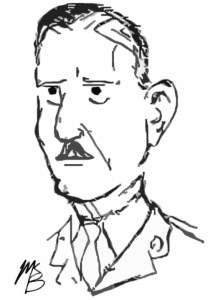
Lt-Col. T.B. Nash

Lieutenant-Colonel Darby Nash
29th Armoured Regiment (South Alberta Regiment)
Westerners have more initiative than easterners and it shows up on the battlefield.

(Edmonton Bulletin, 19 Jan 1946)

Born in Montreal on 23 December 1909, Thomas Boyd “Darby” Nash was a land inspector for the National Trust Company in Edmonton. A prewar member of the 19th Dragoons, he mobilized for active service with the South Alberta Regiment in 1940 and went overseas in August 1942. During the Falaise campaign, he served as HQ Squadron commander until August 1944, when he took over “B” Squadron from Major R.A. Bradburn, who had been appointed to command the Algonquin Regiment.
Continue reading

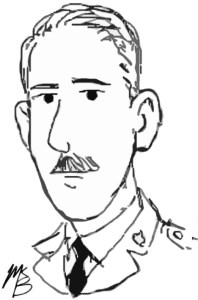
Maj. M.H. Wright

Major M.H. Wright
29th Armoured Regiment (South Alberta Regiment)

During the operations October 21st to October 27th 1917. For bravery, endurance and control of the men during six days of very hard fighting. His work was invaluable. Ge continually visited all the forward posts, even during the most intense phases of the enemy bombardment, cheering the men and steadying them to resist the enemy counter attack which was to follow.

(M.M. citation, 30 Nov 1917)

Born on 1 November 1896 in Ottawa, Ontario, Marston Howard Wright was a First World War veteran and commanding officer of the 19th Alberta Dragoons. He had enlisted with the 202nd in Battalion March 1916 and reverted from corporal to private to join the 50th Battalion in France. He earned the Military Medal and took a commission in August 1918. The next month he suffered severe wounds to the legs at Cambrai and was struck off strength in 1919.

Continue reading

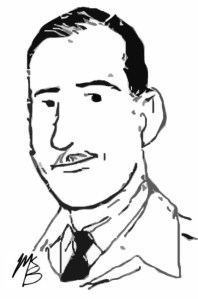
Lt-Col. G.D. Wotherspoon

Lieutenant-Colonel Swatty Wotherspoon
29th Armoured Regiment (South Alberta Regiment)

There are many of us here tonight who wouldn’t be here if it wasn’t for Swatty (Gen. Wotherspoon). He was respected because he didn’t make mistakes that cost people’s lives.

(Col. Coffin, Edmonton Journal, 5 Aug 1980, 22)

Born in Port Hope, Ontario on 12 January 1909, Gordon Dorward de Salaberry Wotherspoon was a graduate of RMC and Osgoode Hall. A lawyer in civilian life, he also belonged to the Governor General’s Horse Guards, which went overseas as the 3rd Armoured Regiment in late 1941. While the Horse Guards prepared to deploy to Italy, Wotherspoon was promoted to command the 29th Armoured Regiment (South Alberta Regiment) in May 1943.

Continue reading

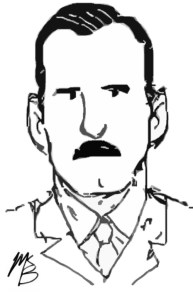
Lt-Col. W.P. Bristowe

Lieutenant-Colonel Bill Bristowe
29th Armoured Regiment (South Alberta Regiment)

At the time I saw him Capt Haney was sober. Only once in the five months that he has been under my command as he, in any way, appeared the worse for liquor which was approximately the 10th of August. Then he was a little outrageously gay, on which occasion I warned him of the danger of drinking anything to excess in this climate.

(testimony in GCM of Capt. Haney, 29 Sep 1943)

Born in Weybridge, Surrey, England on 17 July 1894, William Paterson Bristowe was a First World War veteran of the British Army. He had attended Sandhurst Royal Military College and took a commission with the 2nd Battalion, King’s Royal Rifle Corps in 1914. He was three-times wounded in action and ended the war as acting commanding officer of the battalion. He joined the Royal Tank Corps as a major in 1920 and immigrated to British Columbia in 1926.

Continue reading

Lt-Cols. Elder & Carvosso

Lieutenant-Colonel G.G. Elder
&
Lieutenant-Colonel James Carvosso
South Alberta Regiment

Everyone wants to be an officer … They forget—or rather they don’t know that all the commissions in the PPCLI were given to the ranks in the last war. That’s how I got my commission.

(Carvosso quoted in Vancouver Province, 29 Sep 1939, 13)

Born on 16 June 1891 in Darfort, Kent, England, James Husband Carvosso was a long serving PPCLI officer and decorated First World War veteran. Fives-times wounded in action on the Western Front, he earned the Military Cross at Vimy Ridge and the M.C. Bar at Mons. “Although severely wounded, “the citation read for his action at Vimy, “he continued to command his Company until he fainted from loss of blood. His gallant example has the most inspiring effect on his men.”

Continue reading