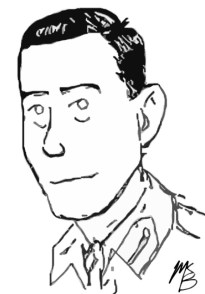
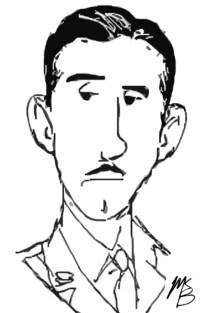
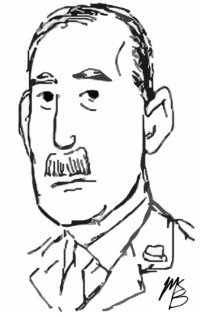
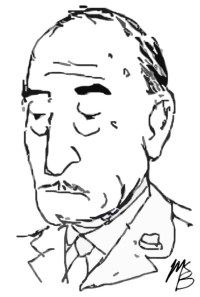
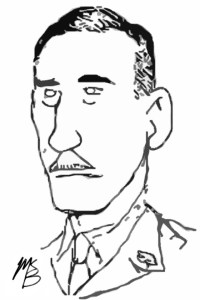
Lt-Col. H.P. Bell-Irving

Lieutenant-Colonel H.P. Bell-Irving
Seaforth Highlanders of Canada
Loyal Edmonton Regiment
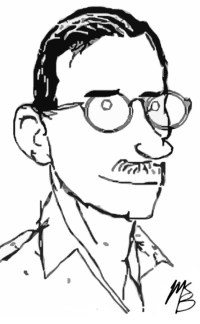
Bell Irving

In the attack of the Seaforths of Canada on Agira, July 28, 1943, Major Bell-Irving, officer commanding “A” company was ordered to gain and hold the sharp ridge on the right which was held by the enemy in strength …The courage and determination with which this offer pressed forward completely disregarding his own safety was an inspiration and contributed to the success of the battalion attack.

(D.S.O. citation, Vancouver Sun, 15 Oct 1943, 16)

Born in Vancouver on 21 January 1913, Henry Pybus “Budge” Bell-Irving came from a prominent military family and was son of a Royal Canadian Navy commander. Having joined the Seaforth Highlanders in the early 1930s, he left the University of British Columbia to go overseas with the regiment in December 1939. With an award of the Distinguished Service Order for heroism in Sicily, Bell-Irving became second-in-command after the promotion of Major J.D. Forin to take over the battalion.

Continue reading

Lt-Col. S.W. Thomson

Lieutenant-Colonel Syd Thomson
Seaforth Highlanders of Canada
Royal Highlanders (The Black Watch)

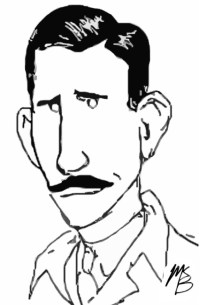
Thomson

I went to investigate and naturally, but stupidly, drew my revolver as I approached the vehicle with a couple of chaps. The stupid part being that the revolver marked me as an officer. Several shots were fired from the side of the road and I got one on the inside fleshy part of my right thigh which just missed providing me with the voice of a tenor. Fortunately the bullet went clear through … I could not drop my shorts for an examination, however by putting a hand up one leg I was reasonably satisfied that I was not to become a eunuch.

(S.W. Thomson, “Wounded in Sicily,” 109)

Born in Salmon Arm, British Columbia on 14 November 1914, Sydney Wilford Thomson was son of the town mayor and worked odd jobs during the Great Depression. Having joined the Rocky Mountain Rangers in the 1930s, he mobilized with the outbreak of war and went overseas with the Seaforth Highlanders as a lieutenant. He landed in Sicily as a company commander on 10 July 1943.

Continue reading

Lt-Col. A.J. Creighton

Lieutenant-Colonel Jim Creighton
Seaforth Highlanders of Canada
Creighton

Some of the boys who had been wounded before or during the attack on Oronta and who had not met Col. Creighton since he was a company commander were anxious to learn all about him. The Seaforths have been the most fortunate regiment in the matter of leadership. With the appointment of Col. Hoffmeister to the command of the brigade, we felt the loss of his personal leadership intimately.

(Maj. Roy Durand in The Province, 17 Jun 1944, 46)

Born in Dartmouth, Nova Scotia on 26 April 1903, Allen James Creighton graduated from RMC, served with the Canadian Engineers, and completed an engineering degree from McGill before settling in British Columbia in 1926. He was the son of Lieutenant-Colonel Frank Albro Creighton, who was killed in 1916 in command of the 1st Battalion. A lumberman and militia officer with the Seaforth Highlanders, Creighton went overseas with the regiment in December 1939.

Continue reading

Lt-Col. J.D. Forin

Lieutenant-Colonel J. Douglas Forin
Seaforth Highlanders of Canada
Forin

The Germans we are fighting are young, husky and well-trained, obstinate in defence but like all Germans, a frightened, screaming, panic-filled lot when routed from their holes and forced into the open …

News in the world is good. Italy has gone—irrevocably. How this breed fancied themselves world conquerors is beyond explanation.

(Forin letter to parents, in Vancouver Sun, 24 Aug 1943, 13)

Born in Nelson, British Columbia on 11 October 1900, John Douglas Forin was a Vancouver lawyer and graduate of Queen’s University and Columbia. A prewar member of the Seaforth Highlanders, he became second-in-command in England and took over temporarily in August 1942 after Lieutenant-Colonel J.M.S. Tait went home medically unfit. He passed command over to Lieutenant-Colonel Bert Hoffmeister in October and reverted to second-in-command.

Continue reading

Maj-Gen. B.M. Hoffmeister

Major-General Bert Hoffmeister
Seaforth Highlanders of Canada
2nd Infantry Brigade

5th Armoured Division
Hoffmeister

I’ll never forget one of my most embarrassing moments, having given my usual spiel, and having told them how important it was to keep right up close to the shell bursts, that the first shell bursts were all forward and there was absolutely no danger. In keeping up, you got to the German positions before they got their heads up, it reduced casualties and so on … when one round landed behind us. We were all flat on the ground, of course … but every soldier in that company looked around at me as if to say, “OK wise guy, what have you got to say about this?”

(Hoffmeister quoted in Delaney, The Soldiers’ General, 124)

Widely regarded as Canada’s most successful and respected general in the Second World War, Bertram Meryl Hoffmeister commanded a battalion, a brigade, and a division from the landings at Sicily, through the Italian campaign until the final battles in Northwest Europe. Born in Vancouver on 15 May 1907, he was a lumber sales manager and member of the Seaforth Highlanders of Canada since 1927. He mobilized as a captain in September 1939 and three years later assumed command of the regiment he would lead into battle.

Continue reading

Lt-Col. J.M.S. Tait

Lieutenant-Colonel Ian Tait
Seaforth Highlanders of Canada
Tait

His predecessor, Lieutenant-Colonel J.M.S. Tait, who reportedly liked to adorn himself with Patton-like pistol holsters, had been neither liked nor respected by the soldiers of the unit, the nickname “Hollywood” attesting to their cynicism regarding his abilities and sincerity.

(Delaney, The Soldier’s General, 43)

Born in Vancouver on 1 December 1903, John “Ian” Moore Spottiswood Tait was the son of Lieutenant-Colonel J.S. Tait who commanded the 29th Battalion in late 1916. As a child he attended school in England while his father was on the Western Front. He returned to Vancouver in the early 1920s and joined militia. He went overseas with the Seaforth Highlanders in December 1939, and took command two years later.

Continue reading

Lt-Col. C.C. Ferrie

Lieutenant-Colonel C.C. Ferrie
Seaforth Highlanders of Canada
Ferrie

Our sergeants, as the Vimy Dinner night approached, looked for ways and means to put on their annual dinner. Rationing was in effect, as were strict regulations against the purchase of poultry and meats. They scurried around the countryside and located a farmer who would sell a young pig, at a price. It had to be very “hush, hush” … however, and could not be slaughtered on the premises.

The pig was collected in the vehicle. Then the fun began.

(Ferrie quoted in Roy, The Seaforth Highlanders, 79)

Born in Halifax, Nova Scotia on 18 January 1895, Colin Campbell Ferrie enlisted with the 196th (Wester Universities) Battalion in April 1916, gained a commission one year later in England and joined the 72nd (Seaforth Highlanders) Battalion in France. He was wounded at Amiens on 11 August 1918 at the start of the Hundred Days campaign.

Continue reading

Lt-Cols. Leslie & Stevenson

Lieutenant-Colonel T.S. Leslie
Leslie
&
Lieutenant-Colonel J.B. Stevenson
Seaforth Highlanders of Canada
Stevenson

Soldiering is not a life-long occupation for any man, and when the time comes for the Seaforths to go back to civil life, they are going to be fitter and better men for their time in the army, if anything we can do will make them so.

(Stevenson in Vancouver Sun, 10 Nov 1939, 13)

Born in Glasgow, Scotland on 16 November 1882, Thomas Soga Leslie had been commissioned with the 231st Battalion and joined the 72nd (Seaforth Highlanders) Battalion as a reinforcement officer in France in May 1917. He suffered a gunshot wound to the arm in September 1918. Twenty years later he became commanding officer of the Seaforth Highlanders of Canada. Too old for overseas service, he relinquished command on 1 September 1939 to another fellow First World War veteran, John Bryden Stevenson

Continue reading