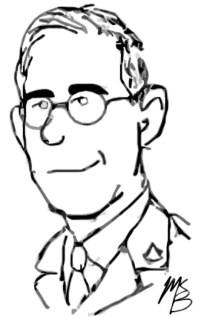
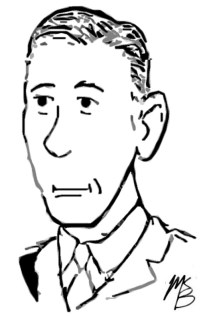
Lt-Col. R.M. Lendrum

Lieutenant-Colonel Dick Lendrum
Canadian Scottish Regiment
Royal Regiment of Canada
Lendrum

In order to keep abreast of every development Lieutenant Colonel Lendrum positioned himself well forward and from Rolde onward was exposed to enemy sniping, bazooka and automatic weapon fire. With no consideration for his own safety this gallant commander directed every phase of the operation so coolly and competently that his entire force was infused with his infectious confidence and never had any misgivings to the successful outcome of the venture.

(D.S.O. citation, 23 April 1942)

Born in Victoria, British Columbia on 22 January 1911, Richard McNaughton Lendrum was a University of British Columbia graduate, teacher, and assistant principal. In September 1939, he took a leave of absence from teaching to mobilize with the Canadian Scottish Regiment, which he had belonged to since 1933. He landed with the regiment at Juno Beach on D-Day and served as a company commander during the heavy fighting in Normandy.
Continue reading

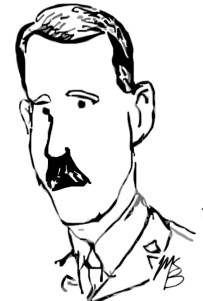
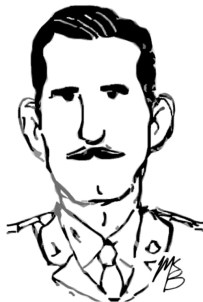
Maj. R.G. Young

Major Ralph Young
Royal Regiment of Canada

It has been a wonderful experience for me to have had the honour of commanding the Bn these past few weeks, and particularly those memorable days in Dieppe, which to me appear extremely important in the history of the Regt, marking as it does our initial battle in this war and its successful—though hard, and sometimes bitter—days, which seem to conclude a particular phase in this vast operation.

(Young to Lt-Col. E.H. Jones, 7 Sept 1944)

Born in Toronto on 9 July 1910, Ralph Grasett Young, was a commissioned officer with the 10th Royal Grenadier since 1934, redesignated the Royal Regiment of Canada in 1936. Just over one month after the regiment landed in France, on 14 July 1944, Young assumed command from Lieutenant-Colonel Jack Anderson, who had been accidently wounded. Later that day, the regiment suffered a destructive accidental bombing by Allied planes.

Continue reading

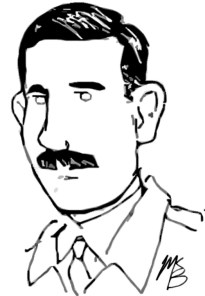
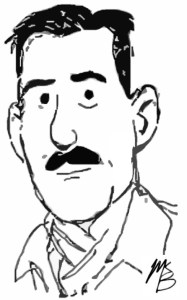
Lt-Col. J.C.H. Anderson

Lieutenant-Colonel Jack Anderson
Royal Regiment of Canada
AndersonJCH

In spite of his own wound and under most intense fire which struck down many men as the beach was reached, Capt. Anderson organized the landing of all unwound personnel and a three-inch mortar with its ammunition. This officer displayed high qualities of leadership coolness and determination under most difficult circumstances.

(M.C. citation, Oct 1942)

Born in Toronto on 10 October 1909, John Charles Holtby Anderson was a bond house executive and since 1931 was a commissioned officer with the Toronto Regiment, redesignated the Royal Regiment of Canada in 1936. He served as captain of a landing craft during the Dieppe Raid of 19 August 1942. Under heavy enemy fire as the troops came ashore, Anderson manned a Bren gun even as he sustained shrapnel wounds to the head.

Continue reading

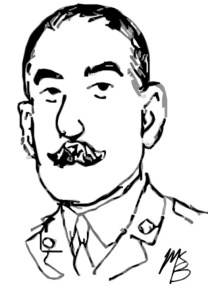
Lt-Col. A.M. Young

Lieutenant-Colonel A.M. Young
Royal Regiment of Canada

I have been pleased with your conduct during the last two very trying weeks, and can only say—keep it up. I don’t think it will be long now, and if you can maintain the spirit and esprit-de-corps that we have now–there is no doubt as to what will happen when we meet the enemy.

(Young address, War Diary, 23 Jun 1944)

Born in Toronto on 9 May 1905, Austin Moore Young was a businessman and insurance agent.  In 1929, he qualified as a lieutenant in the Toronto Regiment, which became the Royal Regiment of Canada in 1936. Having completed a senior officer’s course, Young became second-in-command in September 1943. By the end of the year, he had succeeded Lieutenant-Colonel F.S. Wilder. For the next six months the regiment trained for the anticipated invasion of France and Young temporarily took over the 4th Infantry Brigade during absences of the brigadier.

Continue reading

Lt-Col. F.S. Wilder

Lieutenant-Colonel F. Stuart Wilder
Royal Regiment of Canada
Wilder

I consider this an extremely bad case, and there appears to be good ground for thinking a prosecution for perjury might be successful … I consider Mr. Wilder to be a clever, calculating and consummate liar. He has deliberately lied in as brazen a manner as I have ever come across.

—Sir Reginald Sharpe, Divorce Court Commissioner

(Evening Standard, 25 May 1955, 10)

Born on 23 May 1910 in Kingston, Ontario, Franklin Stuart Wilder was a Queen’s University graduate, science teacher, and chemist. In 1940, he was appointed to head gas warfare training on the general staff of National Defence Headquarters. Overseas Wilder commanded No. 6 Wing, Canadian Training School until appointed to succeed Lieutenant-Colonel F.L. Nicholls of the Royal Regiment of Canada in August 1943.

Continue reading

Lt-Col. A.H. Fraser

Lieutenant-Colonel Art Fraser
Royal Regiment of Canada
Fraser

The raid was costly in that many lives were lost, but the lessons learned at Dieppe were essential for the future undertakings of the Allied forces. The invasion of North Africa might have been a dismal failure along with future invasions without the knowledge gleaned at Dieppe.

(Ottawa Citizen, 26 Feb 1943, 15)

Born in Victoria, British Columbia in April 1907, Arthur Hayward Fraser enlisted with the Canadian Scottish in 1922, received a commission in 1928, and transferred to the Permanent Force with the PPCLI in 1931. During the early phase of the Second World War, he served on the general staff of the 2nd Canadian Division and became brigade major of the 4th Infantry Brigade prior to the Dieppe Raid of 19 August 1942.

Continue reading

Lt-Col. D.E. Catto

Lieutenant-Colonel Doug Catto
Royal Regiment of Canada
Catto

Colonel Catto did not overcome the shock of Dieppe. On his first action he lost his whole regiment in two hours. He saw that it was over, that there was nothing more to win. Still, he became the front fighter of his regiment. He was captured at the furthest forward position. I characterize this affair as the last knightly encounter with the enemy on the field of battle.

— Hauptmann Richard Schnosenberg

(Quoted in Whitaker, Dieppe: Tragedy to Triumph, 270)

Born in Toronto on 13 April 1899, Douglas Ellisson Catto was a First World War artillery gunner, University of Toronto graduate, and architect. As second-in-command of the Royal Regiment of Canada, he succeeded Lieutenant-Colonel G. Hedley Basher in July 1942. The next month, Catto led the regiment ashore in the failed Dieppe Raid of 19 August 1942. In initial reports after the battle the colonel was listed as missing and presumed killed in action.

Continue reading

Lt-Col. G.H. Basher

Lieutenant-Colonel G. Hedley Basher
Royal Regiment of Canada

[Courage] it’s something you’ve got or you have not got, but often good leadership will overcome the slightest sign of weakness among men. On the other hand, of course, cowardice on the part of one man is liable to spread its evil through the whole group. You won’t hear anything about cowardice from our lads. They can take it. I’ve looked them over and I know.

(Basher, Toronto Star, 25 Oct 1939, 11)

Born in Cornwall, England on 28 December 1891, George Hedley Basher was a Toronto police officer and governor of the notorious Don Jail from 1919 to 1931. Having immigrated to Canada in 1913, he joined the 3rd Battalion (Queen’s Own Rifles) the next year and received a commission in the British Army by early 1915. He served with the Duke of Cornwall’s Light Infantry in Egypt and Salonika, and with the King’s Own Yorkshire Light Infantry at the Somme. The 24-year-old major was then appointed governor of a military prison in England and by the end of the war headed all British military prisons in the field.

Continue reading

Lt-Col. F.L. Nicholls

Lieutenant-Colonel Fred Nicholls
Royal Regiment of Canada
Carleton and York Regiment

Lt Col Nicholls is a figure of mystery. No record of what unit he came from could be found, he effectively commanded the CYR for only three months, was then away sick for a period … He is described by survivors as a nice fellow, but beyond that no one interviewed could recall anything about him.

(Tooley, Invicta dissertation, 324)

Born on 8 June 1906 in Whitstable, England, Frederick Leslie Nicholls was a Bell Telephone Company engineer and member of the Royal Regiment of Canada since 1926. He had received a commission in 1931. He was stationed with the regiment in Iceland, attended the War Staff College at Camberley, and became the regiment’s second-in-command after the Dieppe Raid. He then served as brigade major of the 6th Infantry Brigade from November 1942 until his appointment to command the Royal Regiment on 22 January 1943, succeeding Lieutenant-Colonel A.H. Fraser.

Continue reading