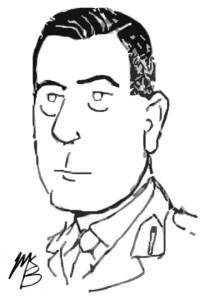
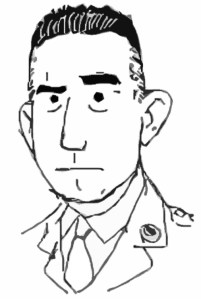
Lt-Col. C.A. Baerman

Lieutenant-Colonel C.A. Baerman
7th Reconnaissance Regiment (17th Hussars)
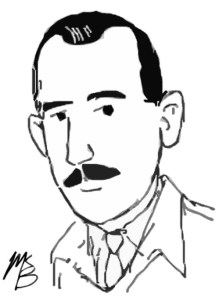
As far as the regiment is concerned, I think I can justly claim that it has done a very fine job. That dash up the coast alone is an achievement of which any unit might well have been proud … I had taken over command in October, and in November we received our first rest–four days in Ghent. Then we took charge of the Nijmegen bridges, where we did a lot of damage to the Germans with the colossal fire power we had at hand.

(Montreal Star, 3 Sep 1945, 3)

Born on 21 March 1910 in Lambhill, Scotland, Charles Alexander Baerman, was a broker in Montreal. He had enlisted as a trooper in the 17th Duke of York’s Royal Canadian Hussars and served as sergeant-major since 1937. He received a commission in February 1940 and would be promoted again to captain by the time the now redesignated 7th Reconnaissance Regiment embarked for the United Kingdom in August 1941. He was promoted again to major the next year.
Continue reading

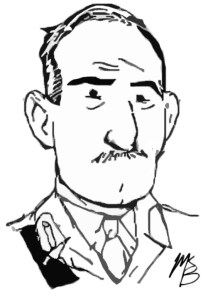
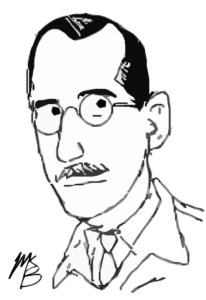
Lt-Col. T.C. Lewis

Lieutenant-Colonel T.C. Lewis
32nd Reconnaissance Regiment (RMR)
7th Reconnaissance Regiment (17th Hussars)

Colonel Lewis was absolutely outstanding as a commander, and, had he lived, would have undoubtedly have proved one of Canada’s foremost military leaders … His name will always have a high place in the annals of both Regiments which he commanded, as well as in the hearts of all who served with him.

(Gen. C.B. Price, Montreal Star, 7 Nov 1944, 3)

Born in Montreal on 9 February 1911, Thomas Cripps Lewis was a Sun Life insurance statistician and junior officer in the Royal Montreal Regiment (RMR). He had joined in 1925, rose to regimental sergeant major and was commissioned a lieutenant before it embarked for the United Kingdom with the 1st Division in December 1939. When he returned to Canada for instructional purposes at RMC, he had risen to the rank of major. He returned overseas in May 1943 and took command of the RMR, now redesignated from a machine gun battalion to the 32nd Reconnaissance Regiment.

Continue reading

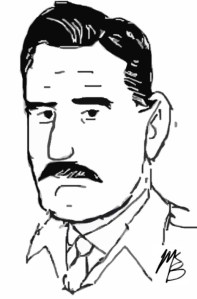
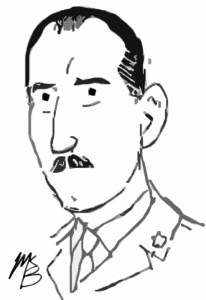
Lt-Col. V.W. Hugman

Lieutenant-Colonel V.W. Hugman
7th Reconnaissance Regiment (17th Hussars)

 The Col., an old 17th man, took over control of the unit over two years ago, in this country. He was always regarded as a keen strategist, and highly esteemed by men of the regiment. Security forbids the mention of his new post, but, as he said when he left, “No matter where I am I will always think of the Regiment–I could always count on it in any emergency—a great unit to command.”

(“C” Squadron Freebooter, 25 Mar 1944)

Born in Quebec on 7 January 1907, Victor Wellesley Hugman was a tennis player, horseman, and graduate of McGill University. He had joined the 17th Duke of York’s Royal Canadian Hussars in 1926 and rose to the rank of major. With the promotions of Lieutenant-Colonel C.B. Price and Major C.F. Smith in late 1939, Hugman was named second-in-command. Although the Hussars mobilized in May 1940, Hugman was assigned to staff duties with the 5th Infantry Brigade and later the Canadian Armoured Corps.

Continue reading

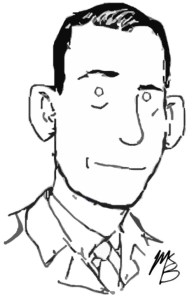
Lt-Col. C.F. Smith

Lieutenant-Colonel C.F. Smith
7th Reconnaissance Regiment (17th Hussars)
31st (Alberta) Reconnaissance Regiment

I believe I have received from you that loyalty which all C.O.s desire most earnestly and is expressed by the following words, “I don’t give a damn for your loyalty when you think I am right, but I do want it when you think I am wrong,” and to me your actions have proved that beyond words.

(War diary, 7 Mar 1942)

Born in Quebec on 5 August 1902, Clarence Fisher Smith was a senior militia officer with the 17th Duke of York’s Royal Canadian Hussars. He succeeded Brigadier C.B. Price when he was appointed to command the 3rd Infantry Brigade in November 1939. “I suppose his outstanding characteristic is his loyalty to his subordinates no less than to his superiors,” Price said of his successor, “and it is that same loyalty that I ask you give him.”

Continue reading

Maj-Gen. C.B. Price

Major-General C. Basil Price
3rd Infantry Brigade
3rd Canadian Division

In this ideological struggle we must call upon our physical forces. We must build up our armed forces and industrial potential, we must be prepared for sacrifices, such as high taxes and austerity, if we are to prevent another world conflict.

(Quoted in Montreal Gazette, 10 Nov 1949, 13)

Born on 12 December 1889 in Montreal, Charles Basil Price was a decorated First World War veteran, Canadian Legion spokesman, diary farmer, and former commanding officer of the Royal Montreal Regiment. A member of the Victoria Rifles since 1905, he enlisted with the 14th Battalion in September 1914. While on patrol at St. Julien in May 1915, he earned the Distinguished Conduct Medal for rescuing a comrade: “Company Sgt Major Price went out and shooting the two Germans who had wounded him brought in the man, undoubtedly saving life. His conduct all through the action was of the most meritorious and self-sacrificing kind.”

Continue reading

Lt-Col. F.A. Sparks

Lieutenant-Colonel F. Arthur Sparks
North Nova Scotia Highlanders

Finally the battalion started to run out of lieutenants. In the end we only had one left. This guy had to be shuffled from company to company; he was killed by a blast of machine-gun fire on the [Oct] 15th. Almost every company commander that went into that Breskens battle became a casualty—not wounded, killed.

(Quoted in Whitaker, Tug of War, 298)

Born on 14 June 1912 in Woodstock, Ontario, Frederick Arthur Sparks work for the textile mill Newlands & Co. in Galt and belonged to the Oxford Rifles militia regiment. He mobilized with the Highland Light Infantry  and went into action on D-Day as a company commander. Having been made second-in-command in July 1944, he transferred to the North Nova Scotia Highlanders after the replacement of Lieutenant-Colonel C.C. Petch with Lieutenant-Colonel D.F. Forbes at the beginning of August.

Continue reading

Lt-Col. D.F. Forbes

Lieutenant-Colonel D.F. Forbes
North Nova Scotia Highlanders

We are down here to study Anglo-American tactics in the field in the field in the hope of learning their methods and to take this knowledge back to our boys in England. But right now our biggest trouble consists of being bored stiff for lack of something to do.

(Quoted in Montreal Star, 18 Jan 1943, 2)

Born on 24 October 1906 in Tatamagouche, Nova Scotia, Donald Frederick Forbes belonged to the Colchester and Hants Regiment from 1921 to 1937 and then served as adjutant with the Cape Breton Highlanders. He transferred to the North Nova Scotia Highlanders in 1941 and served as second-in-command during the Normandy campaign. For refusal an order he viewed as a waste of his men, Lieutenant-Colonel Charles Petch was fired and Forbes took over on 3 August 1944.  

Continue reading

Lt-Col. K.R. Mitchell

Lieutenant-Colonel Karl Mitchell
North Nova Scotia Highlanders

If I have to work on this side of the Atlantic, I don’t know of any place I’d rather be than here (Brockville). O.T.C.’s have the most important mission in the army in Canada–preparing future officers who are going to lead the Canadian Army into battle.

(Kingston Whig-Standard, 31 Jul 1943, 2)

Born on 9 March 1894 in Dartmouth, Nova Scotia, Karl Reginald Mitchell was a Truro pharmacist and First World War veteran. He had joined the Princess Louise Fusiliers in 1910 and went overseas on a reinforcement draft in 1916. He joined the 27th Battalion in France, where he was twice wounded. He ended the war as a corporal. By the Second World War, he served the North Nova Scotia Highlanders at the rank of major.

Continue reading

Brig. H.W. Murdock

Brigadier H.W. Murdock
North Nova Scotia Highlanders
18th Infantry Brigade

Lance-Corporal Horatio W. Murdock was in charge of a Lewis gun which he used with great skill and deadly execution. When his platoon was putting outposts on a railway embankment strongly held by the enemy, he advanced with his Lewis gun at close range, giving covering fire and holding the enemy back, inflicting heavy casualties on him. By his courage and skill he enabled the post to be established with small

(The 85th in France, 170)

Born on 4 April 1895 in Amherst, Nova Scotia, Horatio Ward Murdock was former head of the Canadian Infantry Association and commanding officer of the Cumberland Highlanders from 1930 to 1936. He had enlisted with the 193rd Battalion in March 1916 and two years later reverted from sergeant to corporal to join the 85th Battalion in France. He earned the Good Conduct Badge and was training to be an officer when the war ended.

Continue reading

Lt-Col. A.G. McLellan

Lieutenant-Colonel Arnold McLellan
North Nova Scotia Highlanders

Breath sounds are clear all over chest, no adventitious sounds, but mor distant and weaker over and about scar … Complain of shortness of breath, slight on exertion, also pain at times in wound.

(Medical History of an Invalid, 30 Jul 1919)

Born on 20 April 1892 in Amherst, Nova Scotia, Arnold Guy McLellan was president of a gold mine company and commanding officer of the North Nova Scotia Highlanders since 1936. He had enlisted with the 193rd Battalion in March 1916 and two years later reverted from corporal to private to join the 85th Battalion in France. He was invalided from a through-and-through bullet to the chest in September 1918, which required a long recovery.

Continue reading