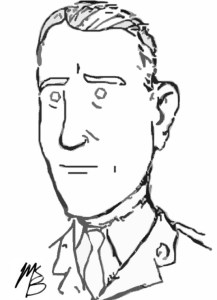
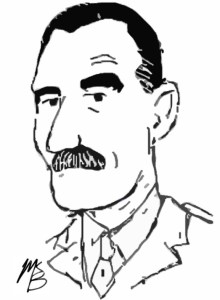
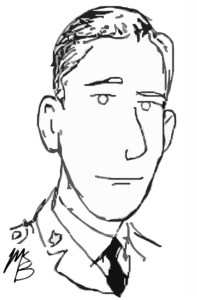
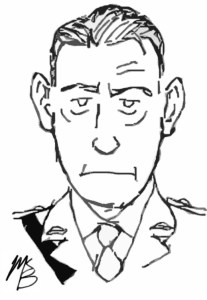
Lt-Col. H.E. Molson

Lieutenant-Colonel H.E. Molson
B.C. Regiment (Duke of Connaught’s Own)
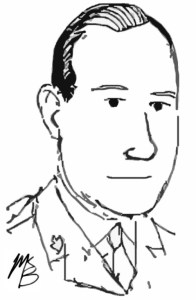
In making up and despatching the party for return to Canada, Major Molson was a constant source of irritation and trouble. I have spoken to this officer and in my opinion he is the type who feels he is above the observance of any laws or regulations. In my opinion this officer can never be responsibly employed in any Military Office under the Crown.

(Lt-Col. A.W. Beaumont, adverse report, 7 Jul 1940)

Born on 31 May 1893 in Montreal and raised in England, Harold Elsdale Molson was a barrister, civil servant, and big game hunter. He took a commission in the British Army after graduating from Cambridge in 1914. He served with the King’s Royal Rifle Corps in France where he was wounded in July 1915. He practiced law for two years in England before moving to Vancouver in 1921. He joined the British Columbia Regiment in 1930 and became commanding officer eight years later.
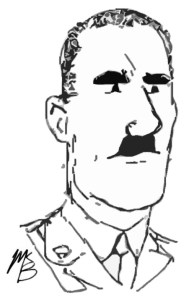
Continue reading

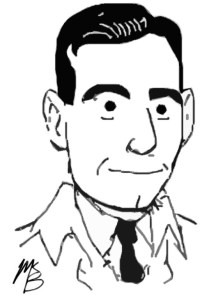
Lt-Col. J.L.R. Sutcliffe

Lieutenant-Colonel J.L.R. Sutcliffe
Winnipeg Grenadiers

I spoke to Sutcliffe. He seemed tired, discouraged and distressed saying his men were exhausted, as indeed they and everyone else were … I told him he could have six hours rest and that his Battalion must be ready after that to take its place again in the line. It did so and put up a grand show in the final days.

(Brig. A Peffers quoted in Lindsay Oliver, The Battle for Hong Kong, 121)

Born on 29 August 1898 in Yorkshire, England, John Louis Robert Sutcliffe was a Manitoba civil servant and First World War veteran. He had enlisted with the 6th Battalion in September 1914 and went to France as a trooper with the Royal Canadian Dragoons in June 1915. He took an Imperial Army commission with Worcestershire Regiment in November 1916 and ended the war fighting in the Caucasus and the Near East. He rejoined the Canadian militia on his return home and was second-in-command of the 1st Battalion, Winnipeg Grenadiers on mobilization in September 1939.

Continue reading

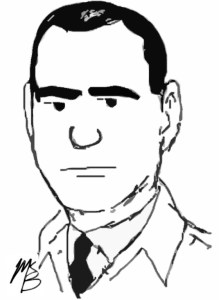
Lt-Col. W.J. Home

Lieutenant-Colonel W.J. Home
Royal Rifles of Canada

[Home] and his men were bearing the brunt of the fighting and knew from first hand knowledge the strength and armament of the forces against them. The Higher Command had consistently shown an inability to grasp the realities of the situation and to pursue tactics which might have prolonged the struggle but could not have altered the final result.

(Brig. J.H. Price to G.W.L. Nicholson, 27 Jan 1948)

Born on 6 April 1897 in Quebec City, William James Home was a Permanent Force officer of the Royal Canadian Regiment and decorated First World War veteran. He mobilized with the 8th Royal Rifles in August 1915, took a commission with the RCR in February 1915 and was promoted to captain overseas. He earned the Military Cross for gallantry during the Battle of the Scarpe in August 1918: “When almost, surrounded by an enemy counter-attack he dashed forward at the head of a party, shooting four enemy himself, causing considerable casualties and checking, their attack. His courage and initiative saved an awkward situation.”

Continue reading

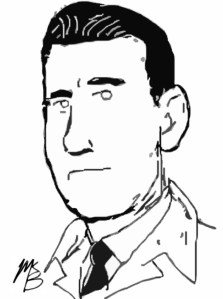
Lt-Col. C.A. Greenleaf

Lieutenant-Colonel Curt Greenleaf
22nd Armoured Regiment (Canadian Grenadier Guards)

The more Mr. Colonel drank, the redder, the braver and the more insolent he became. After 30 or 40 minutes Greenleaf was raining “machine gun fire” on the neighbouring tables. “Ta-ta-ta-ta—I hate you—Ta-ta-ta-ta—We’ll shoot you all, we’ll destroy you,” Mr. Colonel howled across the hall, squeezing the imaginary trigger.

(Izvestia quoted in “Current Digest of the Soviet Press,” 1965, 21)

Born in Montreal in 1916, Curtis Alden Greenleaf gave up a new job as a banker when he joined the Canadian Grenadier Guards in September 1939. He secured a commission when the unit mobilized for active service in June 1940. He went overseas with an advance party in May 1942 and became adjutant a year later. He was the only original officer to serve throughout the Northwest Europe campaign and earned the Military Cross for “personal courage and unshakable determination.” When Major E.A.C. Amy took over from the wounded Lieutenant-Colonel H.A. Smith in February 1945, Greenleaf rose to second-in-command.  

Continue reading

Lt-Col. E.A.C. Amy

Lieutenant-Colonel Ned Amy
22nd Armoured Regiment (Canadian Grenadier Guards)

Ned and I were still writing frequent letters and in one memorable letter he proposed marriage. Since he wrote the letter while lying under his tank, I assumed that he may have been feeling depressed and might later regret his proposal; so I decided to ignore the offer. Ned was very amazed, as he was deadly serious.

(Jean Amy quoted in John Gardam, Canadians in War and Peacekeeping, 92)

Born on 28 March 1918 in Newcastle, New Brunswick, Edward Alfred Charles Amy joined the Canadian Armoured Crops following graduation from RMC in 1939, even through he was initially told he was too short for the army. He served in Sicily and Italy as a squadron commander with the 14th Armoured Regiment and earned the Military Cross at Moro River. In early 1944, Brigadier R.A. Wyman of 1st Armoured Brigade and other veteran officers from the Italian campaign including Amy and Major H.A. Smith of 11th Armoured Regiment returned to England in preparation for the invasion of France.

Continue reading

Lt-Col. H.A. Smith

Lieutenant-Colonel Snuffy Smith
22nd Armoured Regiment (Canadian Grenadier Guards)

I guess we were told the order of battle and where the enemy were and so on but when you get into these things they get so hit and miss and the confusion reigns supreme. You can tell people where to go and so on [but] then when somebody starts to shoot and then they forget about something and do something else. Looking back it always seemed it was more chance than good fortune that things happened.

(Smith interview, 1981)

Born on 21 January 1920 in Dauphin, Manitoba, Hershell Allister Smith joined the Armoured Corps following graduation from RMC in December 1939. Six months later he transferred to the 11th Armoured (Ontario) Regiment. Following training in England, he served a combat tour in North Africa with the 17th/21st Lancers for two months in early 1943. He took command of “C” Squadron in the Ontario Tanks at the end of the Sicily campaign and earned the Military Cross at Ortona in December 1943.

Continue reading

Lt-Col. W.W. Halpenny

Lieutenant-Colonel Bill Halpenny
22nd Armoured Regiment (Canadian Grenadier Guards)

We as manufacturers should not look at them (trade unionists) as the gestapo. We should become leaders. The labor man needs a little leadership. He needs a square deal … We’re better to have our laws and contracts lenient toward them. It’s when you stary to curb them we’ll find the type of though that isn’t Canadian.

(Windsor Star, 29 May 1947, 6)

Born in Winnipeg on 14 November 1909, William Walton Halpenny first joined the Fort Garry Horse as a cadet officer in 1927. With the outbreak of the Second World War, he was selected for a tank training course in England. He rejoined the Fort Garries, soon to be converted to the 10th Armoured Regiment, and went back overseas in 1942. In November, he was promoted to lieutenant-colonel of the Canadian Armoured Corps reinforcement unit and by September 1943 had been appointed new commanding officer of the 22nd Armoured Regiment (Canadian Grenadier Guards).

Continue reading

Maj. H.C. Griffith

Major Griff Griffith
22nd Armoured Regiment (Canadian Grenadier Guards)

At this time the tank man’s black beret became our official head-dress and “Griff” was determined that the Grenadiers would wear it properly. Each morning he would issue the command – “Check berets!” … It was a small thing but it established the discipline and concern for correctness that became the hallmark of the Guards. He knew that the time would come when the battle was on, and we were in a tight corner, when discipline would save the Regiment from disaster.

(Robert E. Osborne, Pax in Bello, 52)

Born in Quebec City on 3 September 1896, Henry Crawford Griffith was an accountant and First World War veteran. He had enlisted with the 60th Battalion and went to France as a sergeant before suffering a gunshot wound at the battle of Mont Sorrell in June 1916. He was commissioned in 1918 and returned to the field with the 87th Battalion. He joined the militia after the war, serving as adjutant with the Canadian Grenadier Guards.

Continue reading

Lt-Col. M.F. Peiler

Lieutenant-Colonel M.F. Peiler
22nd Armoured Regiment (Canadian Grenadier Guards)

In the days of the last war, we just didn’t know the amount of instruction necessary. The present method is way ahead of anything we ever knew. In those days it was just a case of getting into the air and finding the rest out for yourself.

(Toronto Star, 17 Nov 1940, 11)

Born in Montreal on 4 January 1897, Maurice Fisher Peiler was an engineer and First World War veteran. He joined the Canadian Officers’ Training Corps at McGill University in 1915. He took a commission with the Victoria Rifles and served as a signalling instructor in Canada until being seconded to the Royal Flying Corps in 1917. He was shot down by the Red Baron’s squadron over enemy line in May 1918 and taken prisoner. After the war he joined the Royal Canadian Air Force but soon transferred to the Canadian Grenadier Guards.

Continue reading

Lt-Col. G.T. Baylay

Lieutenant-Colonel G.T. Baylay
21st Armoured Regiment (The Governor General’s Foot Guards)

… a cheery soul of artistic temperament who, being gifted with magnificent good nature, quickly became one of the most popular men of the class. His famous drawings were the mainstay of the “artists fatigue” and of the class during many a dull lecture.

(RMC Review, 1936, 28)

Born in Peel, Ontario on 13 June 1913, George Taylor Baylay was a graduate of RMC where he had a reputation of an entertaining cartoonist. He joined the Governor General’s Foot Guards as a lieutenant on unit mobilization in 1940. He rose from platoon leader, intelligence officer to adjutant to squadron commander to second-in-command, serving throughout the Normandy campaign. He succeeded Lieutenant-Colonel E.M. Smith in September 1945, recurving a promotion to lieutenant-colonel himself soon thereafter.  

Continue reading