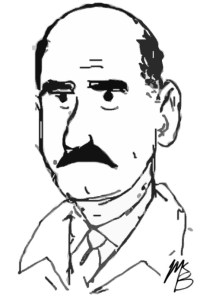
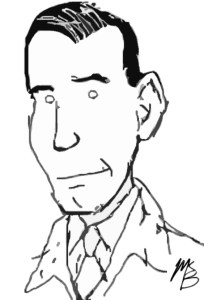
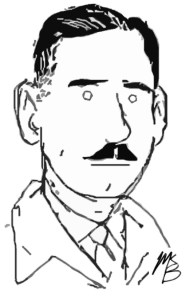
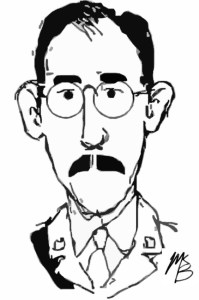
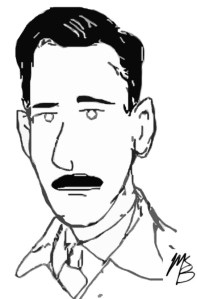
Maj. M.H. Wright

Major M.H. Wright
29th Armoured Regiment (South Alberta Regiment)
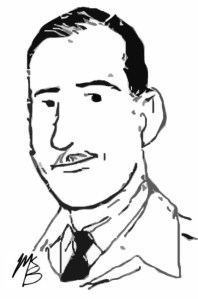
During the operations October 21st to October 27th 1917. For bravery, endurance and control of the men during six days of very hard fighting. His work was invaluable. Ge continually visited all the forward posts, even during the most intense phases of the enemy bombardment, cheering the men and steadying them to resist the enemy counter attack which was to follow.

(M.M. citation, 30 Nov 1917)

Born on 1 November 1896 in Ottawa, Ontario, Marston Howard Wright was a First World War veteran and commanding officer of the 19th Alberta Dragoons. He had enlisted with the 202nd in Battalion March 1916 and reverted from corporal to private to join the 50th Battalion in France. He earned the Military Medal and took a commission in August 1918. The next month he suffered severe wounds to the legs at Cambrai and was struck off strength in 1919.
Continue reading

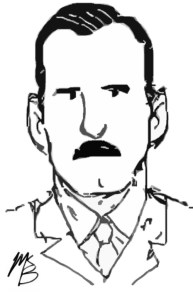
Lt-Col. G.D. Wotherspoon

Lieutenant-Colonel Swatty Wotherspoon
29th Armoured Regiment (South Alberta Regiment)

There are many of us here tonight who wouldn’t be here if it wasn’t for Swatty (Gen. Wotherspoon). He was respected because he didn’t make mistakes that cost people’s lives.

(Col. Coffin, Edmonton Journal, 5 Aug 1980, 22)

Born in Port Hope, Ontario on 12 January 1909, Gordon Dorward de Salaberry Wotherspoon was a graduate of RMC and Osgoode Hall. A lawyer in civilian life, he also belonged to the Governor General’s Horse Guards, which went overseas as the 3rd Armoured Regiment in late 1941. While the Horse Guards prepared to deploy to Italy, Wotherspoon was promoted to command the 29th Armoured Regiment (South Alberta Regiment) in May 1943.

Continue reading

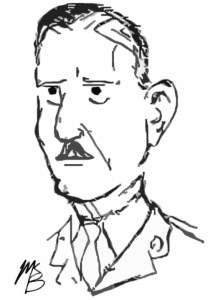
Lt-Col. W.P. Bristowe

Lieutenant-Colonel Bill Bristowe
29th Armoured Regiment (South Alberta Regiment)

At the time I saw him Capt Haney was sober. Only once in the five months that he has been under my command as he, in any way, appeared the worse for liquor which was approximately the 10th of August. Then he was a little outrageously gay, on which occasion I warned him of the danger of drinking anything to excess in this climate.

(testimony in GCM of Capt. Haney, 29 Sep 1943)

Born in Weybridge, Surrey, England on 17 July 1894, William Paterson Bristowe was a First World War veteran of the British Army. He had attended Sandhurst Royal Military College and took a commission with the 2nd Battalion, King’s Royal Rifle Corps in 1914. He was three-times wounded in action and ended the war as acting commanding officer of the battalion. He joined the Royal Tank Corps as a major in 1920 and immigrated to British Columbia in 1926.

Continue reading

Lt-Cols. Elder & Carvosso

Lieutenant-Colonel G.G. Elder
&
Lieutenant-Colonel James Carvosso
South Alberta Regiment

Everyone wants to be an officer … They forget—or rather they don’t know that all the commissions in the PPCLI were given to the ranks in the last war. That’s how I got my commission.

(Carvosso quoted in Vancouver Province, 29 Sep 1939, 13)

Born on 16 June 1891 in Darfort, Kent, England, James Husband Carvosso was a long serving PPCLI officer and decorated First World War veteran. Fives-times wounded in action on the Western Front, he earned the Military Cross at Vimy Ridge and the M.C. Bar at Mons. “Although severely wounded, “the citation read for his action at Vimy, “he continued to command his Company until he fainted from loss of blood. His gallant example has the most inspiring effect on his men.”

Continue reading

Lt-Col. A.F. Coffin

Lieutenant-Colonel Bert Coffin
Argyll and Sutherland Highlanders of Canada

His calm manner and complete disregard for personal safety set a splendid example for all ranks of his battalion. There can be no doubt that this officer has been a major factor in the consistent success of both regiments with which he served. His leadership and bravery under fire has been an inspiration to all ranks under his command.

(D.S.O. citation, 1948)

Born on 16 March 1910 in Stirling, Alberta, Albert Frank Coffin was a Medicine Hat pharmacist. He volunteered with the South Alberta Regiment in 1940, which converted armour in February 1942 and was then re-designated the 29th Armoured Reconnaissance Regiment a year later. He served as second-in-command throughout the Normandy campaign under Lieutenant-Colonel G.D. Wotherspoon and led the regiment in several operations in Northwest Europe.

Continue reading

Lt-Col. F.E. Wigle

Lieutenant-Colonel Fred Wigle
Argyll and Sutherland Highlanders of Canada

Colonel Wigle had only been with the Battalion two and a half months, but in that short period of time had taken the Argylls through some of the bitterest fighting of the war. He had distinguished himself through his coolness, courage and methodical, hard work. In the ten weeks he spent as C.O. of the Argylls he had been awarded the Order of the British Empire and the Distinguished service Order, a rare honour, indeed, over such a short period of time. Every member of the unit was deeply shocked at the news of the death.

(War diary, 14 Apr 1945)

Born on 11 July 1913 in Hamilton, Ontario, Frederick Ernest Wigle was graduate of McGill University, a football player, coach and a sales executive. He grandfather, Colonel Ernest Wigle had commanded the 18th Battalion during the First World War. Wigle volunteered with the Canadian Armoured Corps in May 1941 and was commissioned in the 6th Duke of Connaught’s Royal Canadian Hussars. He went overseas as captain and staff officer in the 5th Armoured Division in November 1941. Following promotions and staff postings in England, he joined the 4th Armoured Division as chief of staff in August 1944 during the Normandy campaign.

Continue reading

Lt-Col. J.D. Stewart

Lieutenant-Colonel Dave Stewart
Argyll and Sutherland Highlanders of Canada

I was concerned when I got into battle that I would be able to stand it. I was; it didn’t bother me too much, and I was able to stand it very well. There was a rule that in action, steel helmets had to be worn. I adhered to it, except for myself where I figured that the psychological effect of my going around with the shells flying and my wearing a soft hat, would be great for morale, and it was.

(Quoted in Robert L. Fraser, Black Yesterdays)

Born on 21 August 1909 in Georgetown, Prince Edward Island, John David Stewart was a businessman and member of the Prince Edward Island Highlanders since 1928. On mobilization in 1939, he transferred to the North Nova Scotia Highlanders, went overseas as major and company commander in July 1941. and became second-in-command a year later. On September 1943 he was appointed commanding officer of the Argyll and Sutherland Highlanders of Canada, succeeding Major A.J. Hay who had taken the battalion overseas two months earlier.

Continue reading

Lt-Col. I.M.R. Sinclair

Lieutenant-Colonel Ian Sinclair
Argyll and Sutherland Highlanders of Canada

I thought my nerves might give if I ever ran into an affair of that sort, but something seemed to change in me and I saw without any particular sensation things happen, which in my previous state of mind would have driven me mad. One of my men actually did go crazy this morning after we got out. Every battalion in the division suffered about as much and the whole is pretty wrecked.

(Sinclair to mother, 28 Apr 1915)

Born in Toronto on 16 June 1891, Ian MacIntosh Roe Sinclair was a decorated First World War veteran, four times wounded in action, twice mentioned in dispatches and awarded the Distinguished Service Order and the Military Cross. He had sailed for England as a subaltern with the 13th Battalion in October 1914. Almost five years later, he returned to Canada at the head of that battalion. He became temporary commanding officer during the fighting at Canal du Nord in September/October 1918, and then again from February 1919 until demobilization.

Continue reading

Lt-Col. T.W. Greenfield

Lieutenant-Colonel T.W. Greenfield
Argyll and Sutherland Highlanders of Canada

Boxing is a grand sport. It builds men up to withstand terrific punishment without flinching.

(North Bay Nugget, 22 Jan 1942, 8)

Born in Worcestershire, England on 27 August 1892, Thomas William Greenfield assumed command of Argyll and Sutherland Highlanders of Canada in October 1938. A First World War veteran, he had enlisted with the 49th Battalion out of Edmonton, earned a commission overseas and rejoined the battalion in France in November 1917. He was severely wounded at Cambrai a year later.

Continue reading

Lt-Col. J.F.R. Akenhurst

Lieutenant-Colonel Jack Akenhurst
2nd Regiment, Special Service Force
1st Regiment, Special Service Force
Algonquin Regiment

It hardly seems possible that I should be back with the old unit and in the thick of things less than 36 hours after leaving the former haunt at 3 CITR. It has been quite strenuous too since my arrival but we are still winning.

(Akehurst to wife, quoted in Joyce, The True story of the 1st Special Service Force, 276)

Born on 24 February 1908 in Kamloops, British Columbia, John Fenton Richardson Akehurst was chief mining engineer in northern Ontario. He was commissioned with the Algonquin Regiment in July 1940. Two years later he transferred to the newly formed joint American-Canadian First Special Service Force (FSSF), nicknamed The Devil’s Brigade. “I felt old at thirty-four, and was told I should have been rejected at that age except from my experience in cold climate,” he recalled, “… In fact, I was asked how tall, how heavy, how old, and to each I was a reject. But when asked where did I come from, I said ‘Kirkland Lake, Ontario,’ and I was in. It certainly made me curious and I felt the Force was not formed for any tropical venture.”

Continue reading