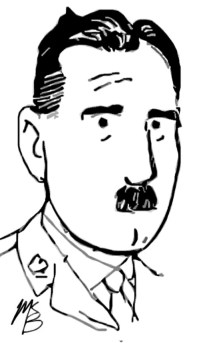
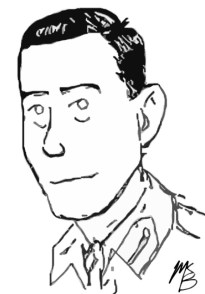
Lt-Col. E.W. Day

Lieutenant-Colonel Ted Day
Loyal Edmonton Regiment
Day

I discussed Pte Crock’s difficulties with him at which time he told me that his nerves absolutely on edge and that he could not go forward to his Coy. position. I told him that I did not consider his reasons sound and said, “I am ordering you to join your Company if you do not go you will be guilty of an offence.” Pte Crock said, “I can’t do it Sir, I must refuse.” I then placed him under arrest.

(Day at FGCM of Pte. Crock, 12 Mar 1944)

Born in Toronto on 29 August 1901, Egerton Winnett (Ted) Day grew up in Daysland, Alberta where his father was founder and mayor. Having belonged to the Canadian Officers Training Corps at the University of Alberta, he joined the 19th Alberta Dragoons in 1924. He joined the Edmonton Regiment as a captain on mobilization in September 1939 and became second-in-command in the United Kingdom in December 1942.

Continue reading

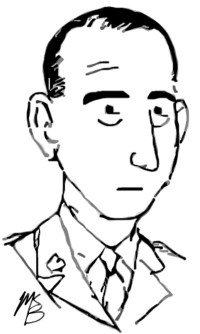
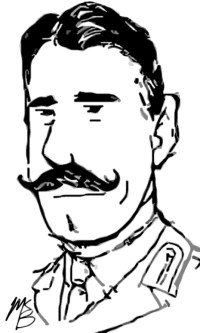
Brig. J.C. Jefferson

Brigadier Jim Jefferson
Loyal Edmonton Regiment
10th Infantry Brigade

Jefferson

Jim Jefferson was not the “brass hat” type of Commander, and we can say that the men of his Regiment were really devoted to him, to the extent that they knew he would not send them into any kind of action that he would not take on himself. This feeling of confidence was frequently borne out during his various commands, from Company to Brigade. He was a fighting soldier who had the respect of officers and men at all times, and that says plenty.

(The Fortyniner, Jan 1974, 15)

Born in Northumberland, England on 6 January 1906, James Curry Jefferson joined the Edmonton Regiment in 1923, gained a commissioned four years later, and became a major in 1937. When General Bernard Montgomery inspected the battalion in early 1942, he had been unimpressed with the senior officers. Lieutenant-Colonel E.B. Wilson was removed along with several other older majors. Four months later, in December 1942, Jefferson succeeded Lieutenant-Colonel George Kitching, who had been brought in to “shakeup” the regiment.

Continue reading

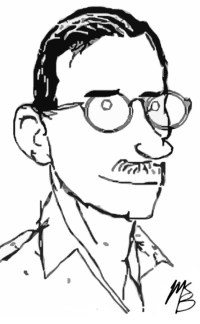
Maj-Gen. G. Kitching

Major-General George Kitching
Edmonton Regiment
11th Infantry Regiment

4th Canadian (Armoured) Division
Kitching

To command an infantry battalion must surely be the most rewarding command of any in the Army. It is the last time in the chain of command that you actually command men whose allegiance is to you because in our system the regiment or battalion is the cell on which brigades, division and corps are based. In the Army, loyalty is something that cannot be stretched too far. I do not think you can ask anyone to be “loyal” to a corps, division or brigade.

(Kitching, Mud and Green Fields, 130)

Born on 9 September 1910 in Guangzhour, Canton, China, George Kitching was a professional British Army officer and graduate of the Royal Military College at Sandhurst. Following Far East postings to Singapore and India with the Gloucestershire Regiment, Kitching suddenly resigned his commission and moved to Montreal in 1938. He joined the Royal Canadian Regiment on the outbreak of the Second World War and was attached with the 1st Canadian Division overseas as a staff officer.

Continue reading

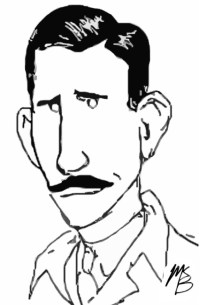
Lt-Col. E.B. Wilson

Lieutenant-Colonel Ernie Wilson
Edmonton Regiment
WilsonEB

Since I have been in this theatre I have seen considerable numbers of both officers and men of the unit and I can assure you that not only will they doubly appreciate your thoughtfulness but that in the case of the Loyal Edmonton Regiment they are all extremely proud that the regiment bears the name of the city, coupled with the honor ‘loyal’ bestowed by His Majesty.

(Wilson to Mayor Fry in Edmonton Journal, 14 Aug 1944, 9)

Born in Innisfail, Alberta on 2 March 1904, Ernest Brown Wilson was King’s Counsel and a graduate of the University of Alberta, where he had belonged to the Canadian Officers Training Corps. He went overseas with the Edmonton Regiment in December 1939 and succeeded Lieutenant-Colonel W.G. Stillman in August 1940. He remained in command in England for almost the next two years.

Continue reading

Lt-Col. W.G. Stillman

Lieutenant-Colonel Bill Stillman
Edmonton Regiment

And within 20 minutes His Majesty had arrived. He chatted freely to me as he passed down the line, had me introduce every one of the officers, and spoke with a number of our men. Altogether he spent more than 15 minutes with us. And what a delightful gentleman he was! Absolutely no side at all. We felt quite at home immediately. And the King remembered me from his visit to Edmonton; what do you think of that?

(Lt-Col. Stillman in Edmonton Journal, 15 Feb 1940, 11)

Born in Tunbridge Wells, Kent, England on 16 July 1892, William George Stillman was a provincial civil servant, musician, and First World War veteran. He had immigrated to Canada in 1912, enlisted as a private in the 175th Battalion and served in France as a lieutenant with the 31st Battalion in 1918. He rejoined the militia in the early 1930s and had becoming command officer of the Edmonton Regiment shortly before the outbreak of the Second World War.

Continue reading

Lt-Col. H.P. Bell-Irving

Lieutenant-Colonel H.P. Bell-Irving
Seaforth Highlanders of Canada
Loyal Edmonton Regiment

Bell Irving

In the attack of the Seaforths of Canada on Agira, July 28, 1943, Major Bell-Irving, officer commanding “A” company was ordered to gain and hold the sharp ridge on the right which was held by the enemy in strength …The courage and determination with which this offer pressed forward completely disregarding his own safety was an inspiration and contributed to the success of the battalion attack.

(D.S.O. citation, Vancouver Sun, 15 Oct 1943, 16)

Born in Vancouver on 21 January 1913, Henry Pybus “Budge” Bell-Irving came from a prominent military family and was son of a Royal Canadian Navy commander. Having joined the Seaforth Highlanders in the early 1930s, he left the University of British Columbia to go overseas with the regiment in December 1939. With an award of the Distinguished Service Order for heroism in Sicily, Bell-Irving became second-in-command after the promotion of Major J.D. Forin to take over the battalion.

Continue reading

Lt-Col. S.W. Thomson

Lieutenant-Colonel Syd Thomson
Seaforth Highlanders of Canada
Royal Highlanders (The Black Watch)

Thomson

I went to investigate and naturally, but stupidly, drew my revolver as I approached the vehicle with a couple of chaps. The stupid part being that the revolver marked me as an officer. Several shots were fired from the side of the road and I got one on the inside fleshy part of my right thigh which just missed providing me with the voice of a tenor. Fortunately the bullet went clear through … I could not drop my shorts for an examination, however by putting a hand up one leg I was reasonably satisfied that I was not to become a eunuch.

(S.W. Thomson, “Wounded in Sicily,” 109)

Born in Salmon Arm, British Columbia on 14 November 1914, Sydney Wilford Thomson was son of the town mayor and worked odd jobs during the Great Depression. Having joined the Rocky Mountain Rangers in the 1930s, he mobilized with the outbreak of war and went overseas with the Seaforth Highlanders as a lieutenant. He landed in Sicily as a company commander on 10 July 1943.

Continue reading

Lt-Col. A.J. Creighton

Lieutenant-Colonel Jim Creighton
Seaforth Highlanders of Canada
Creighton

Some of the boys who had been wounded before or during the attack on Oronta and who had not met Col. Creighton since he was a company commander were anxious to learn all about him. The Seaforths have been the most fortunate regiment in the matter of leadership. With the appointment of Col. Hoffmeister to the command of the brigade, we felt the loss of his personal leadership intimately.

(Maj. Roy Durand in The Province, 17 Jun 1944, 46)

Born in Dartmouth, Nova Scotia on 26 April 1903, Allen James Creighton graduated from RMC, served with the Canadian Engineers, and completed an engineering degree from McGill before settling in British Columbia in 1926. He was the son of Lieutenant-Colonel Frank Albro Creighton, who was killed in 1916 in command of the 1st Battalion. A lumberman and militia officer with the Seaforth Highlanders, Creighton went overseas with the regiment in December 1939.

Continue reading

Lt-Col. J.D. Forin

Lieutenant-Colonel J. Douglas Forin
Seaforth Highlanders of Canada
Forin

The Germans we are fighting are young, husky and well-trained, obstinate in defence but like all Germans, a frightened, screaming, panic-filled lot when routed from their holes and forced into the open …

News in the world is good. Italy has gone—irrevocably. How this breed fancied themselves world conquerors is beyond explanation.

(Forin letter to parents, in Vancouver Sun, 24 Aug 1943, 13)

Born in Nelson, British Columbia on 11 October 1900, John Douglas Forin was a Vancouver lawyer and graduate of Queen’s University and Columbia. A prewar member of the Seaforth Highlanders, he became second-in-command in England and took over temporarily in August 1942 after Lieutenant-Colonel J.M.S. Tait went home medically unfit. He passed command over to Lieutenant-Colonel Bert Hoffmeister in October and reverted to second-in-command.

Continue reading

Maj-Gen. B.M. Hoffmeister

Major-General Bert Hoffmeister
Seaforth Highlanders of Canada
2nd Infantry Brigade

5th Armoured Division
Hoffmeister

I’ll never forget one of my most embarrassing moments, having given my usual spiel, and having told them how important it was to keep right up close to the shell bursts, that the first shell bursts were all forward and there was absolutely no danger. In keeping up, you got to the German positions before they got their heads up, it reduced casualties and so on … when one round landed behind us. We were all flat on the ground, of course … but every soldier in that company looked around at me as if to say, “OK wise guy, what have you got to say about this?”

(Hoffmeister quoted in Delaney, The Soldiers’ General, 124)

Widely regarded as Canada’s most successful and respected general in the Second World War, Bertram Meryl Hoffmeister commanded a battalion, a brigade, and a division from the landings at Sicily, through the Italian campaign until the final battles in Northwest Europe. Born in Vancouver on 15 May 1907, he was a lumber sales manager and member of the Seaforth Highlanders of Canada since 1927. He mobilized as a captain in September 1939 and three years later assumed command of the regiment he would lead into battle.

Continue reading