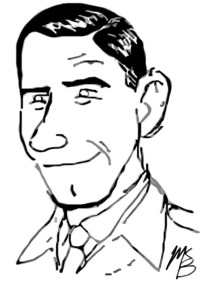
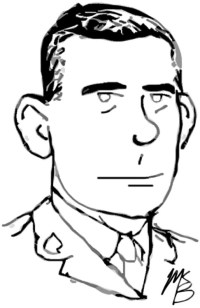
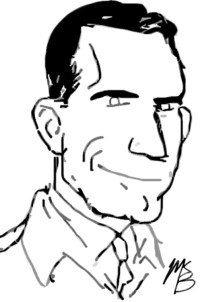
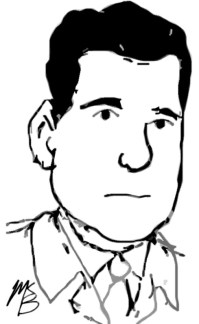
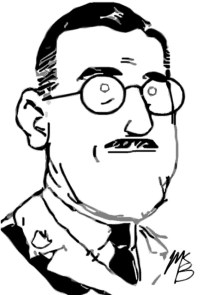
Lt-Col. P.W. Bennett

Lieutenant-Colonel Peter Bennett
Essex Scottish Regiment
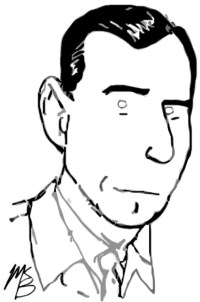
Bennett

It is with the deepest regret that I find now our paths going in different ways. You on to greater successes than ever. I want to express my great appreciation to you all for your wonderful support, your enthusiasm, your fighting qualities and your good humour. Good luck to you all and give him couple from me as often as you like,

(Bennett farewell, War Diary, Sept 1944)

Born on 7 February 1917 in Fort William, Ontario, Peter Ward Bennett was a University of Toronto graduate, accountant, and junior officer with the 48th Highlanders of Canada. By the D-Day landings of 6 June 1944, he had been promoted to brigade major with the 7th Infantry Brigade. After a commanding officer of the Essex Scottish was relieved of command from nerves in July and his successor was evacuated wounded, the 27-year-old Bennett was assigned to take over the regiment on 8 August 1944. He recalled, “I arrived about dusk and somebody immediately came up to me and asked if I’d seen the new colonel yet. I said ‘That’s me,’ and he looked very surprised.”
Continue reading

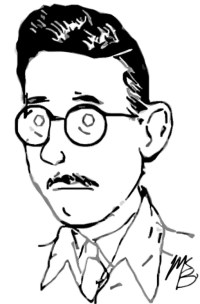
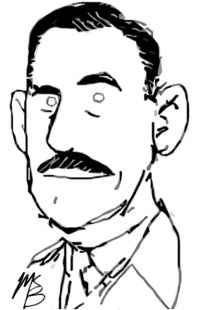
Lt-Col. T.S. Jones

Lieutenant-Colonel Tommy Jones
Essex Scottish Regiment
Jones

It is the biggest event of the day when the mail comes and there are one or two letters in the bunch for you, I cannot stress too strongly the part letters play in keeping up a fighting man’s morale. Sometimes it is difficult for the boys in the trenches to write daily, but that is no reason for us back home to be derelict in our duty to them. They cannot receive too many letters.

(Quoted in Windsor Star, 15 Nov 1944, 10)

Born on 14 February 1913 in Fort William, Ontario, Thomas Sidney Jones enlisted as a lieutenant with the Lake Superior Regiment and served as battalion adjutant. Rising through the ranks, he transferred to the Essex Scottish Regiment in January 1944, succeeding Major J.D. Mingay as second-in-command. Two weeks after D-Day, Jones joined an advance party to Normandy before the rest of the regiment followed on 5 July 1944.

Continue reading

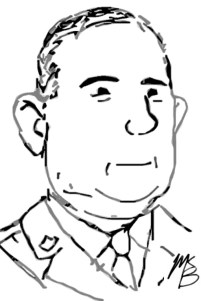
Lt-Col. B.J.S. Macdonald

Lieutenant-Colonel Bruce Macdonald
Essex Scottish Regiment
MacdonaldBJS

This case, the first of its kind to be tried in a Canadian Military Court, is of considerable importance, not only in that it concerns the murder of a large number of Canadian prisoners of war; but also, in that it is the first occasion …in which an effort will be made to establish, not only the immediate responsibility of a high ranking officer, for atrocities committed under his order, but also his vicarious responsibility for such crimes, committed by troops under his command, in the absence of a direct order.

(Macdonald opening address, Kurt Meyer on Trial, 97)

Born on 2 December 1902 in Rose Bay, Nova Scotia, Bruce John Stewart Macdonald held a law degree from the University of Alberta and was a prominent lawyer in Windsor, Ontario. Having belonged to the Essex Scottish Regiment since 1929, he went overseas as a company commander but later returned for instructional duties. Having missed the Dieppe Raid which virtually annihilated the regiment, Macdonald became second-in-command and succeeded Lieutenant-Colonel John Mothersill in May 1943.

Continue reading

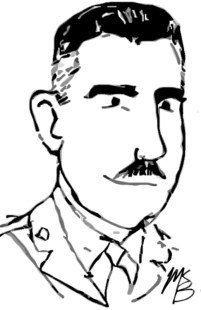
Lt-Col. J.H. Mothersill

Lieutenant-Colonel John Mothersill
Essex Scottish Regiment
Mothersill

It must be extremely difficult to you all back home to imagine the terrific ordeal which the boys so courageously endured … In face of such a curtain of rifle, machine gun, mortar and artillery fire, the battalion never once faltered, the lads advanced unflinchingly and throughout the engagement were cheerful and solute.

(Quoted in Windsor Star, 7 Oct 1942, 3)

Born on 26 March 1897 in Charlottetown, Prince Edward Island, John Henderson Mothersill was a First World War veteran and president of a Windsor insurance agency. Rejected for enlistment earlier, he joined a reinforcement draft in 1917 and served in France as a signaller with the field artillery. Postwar he gained a commission with the Essex Scottish Regiment and by mobilization in September 1939 was second-in-command.

Continue reading

Lt-Col. F.K. Jasperson

Lieutenant-Colonel Fred Jasperson
Essex Scottish Regiment

And how magnificently you have supported those soldiers, all those who have gone from this community into the services, I know from personal experience, and there are thousands to bear witness to this, that we never wanted for anything you could give us, the greatest of which was that intangible thing, morale—the very fibre and life of a soldier—morale. You gave it to us by the real love and marvelous generosity of your hearts.

(Quoted in Windsor Star, 25 Jul 1945, 6)

Born on 16 July 1900 in Kingsville, Essex, Ontario, Frederick Kent Jasperson was a lawyer, fiction writer, and scholar, having attended the University of Toronto, Columbia Law School, and Osgoode Hall. Active in the militia, he had belonged to the 48th Highlanders of Toronto and was commissioned in the Essex Scottish as he started a law career in Windsor. As third-in-command, he led the regiment overseas in summer 1940, following the advance party of Lieutenant-Colonel A.S. Pearson and second-in-command J.H. Mothersill.

Continue reading

Lt-Col. A.S. Pearson

Lieutenant-Colonel A.S. Pearson
Essex Scottish Regiment

This time we are ready. In 1914, war came upon us like a bombshell. This time we have known of its imminence. We are more or less prepared for the orders that came today. We must accept things as they are and do our duty.

(Pearson quoted in Windsor Star, 3 Sep 1939, 12)

Born on 11 November 1891 in Toronto, Arthur Stephen Pearson was a First World War veteran, lawyer, businessman, and commanding officer of the Essex Scottish since 1936. Twenty years earlier he enlisted as a captain in the 234th Battalion, reverted to lieutenant to join the 75th Battalion in France and was twice wounded in action. On the outbreak of war in September 1939, Pearson immediately started a recruitment drive to bring the regiment to full strength.

Continue reading

Lt-Col. H.C. Arrell

Lieutenant-Colonel H.C. Arrell
Royal Hamilton Light Infantry
Arrell

Major Arrell held court on the top floor of the convent. He explained to the attentive soldiers that their role was to stop the enemy if he attacked from the north. At all costs, they were to stop the Germans from overwhelming allied positions and gaining ground around Tilburg, Antwerp and Brussels. “In brief,” said a calm but somber Arrell, “we are a stand and die battalion, totally committed to stopping the enemy.”

(Kelly, “There’s a goddamn bullet for everyone …”, 285)

Born on 18 March 1914 in Caledonia, Ontario, Hugh Cameron Arrell graduated from the Ontario Agricultural Collage in Guelph and belonged to the Dufferin and Haldimand Rifles. In April 1940, he transferred as a lieutenant to the Royal Hamilton Light Infantry which went overseas that summer. He was promoted captain less than two years later and deployed to France with the regiment as a major in July 1944.

Continue reading

Lt-Col. G.M. MacLachlan

Lieutenant-Colonel G.M. MacLachlan
Royal Hamilton Light Infantry
MacLachlan

No scheme we ever did is anything like this for toughness, not so much in the sense of great forced marches but in the way of continual work, alarm, fatigue and nerve strain and unlimited dirt, cold and wet.

(MacLachlan letter, 23 Jan 1943)

Born on 4 June 1914 in Winnipeg, Graham Martin MacLachlan was a University of Toronto graduate, lawyer, and militia captain with the Royal Regiment of Canada. In January 1943, he was one of several Canadian officers selected to gain combat experience with the British Army in North Africa. After joining the 5th Battalion, Royal East Kent Regiment (The Buffs) in Tunisia, he wrote to a friend “Things have worked out wonderfully. I took a 2 1/c and at once stepped into a bit of fun. This bn is good and I have learned as much in 5 days as one learns in 3 mths in England.”

Continue reading

Lt-Col. W.D. Whitaker

Lieutenant-Colonel Denis Whitaker
Royal Hamilton Light Infantry
Whitaker

The ramp dropped. I led the thirty odd men of my platoon in a charge about twenty-five yards up the stony beach. We fanned out and flopped down just shorty of a huge wire obstacle. Bullets flew everywhere. Enemy mortar bombs started to crash down. Around me, men were being hit and bodies were piling up, one on top of the other. It was terrifying.

(Whitaker, Dieppe: Tragedy to Triumph, 243)

Born on 27 February 1915 in Calgary, William Denis Whitaker was a sportsman, soldier, equestrian, businessman, and historian. After attending the University of Toronto and RMC, where he excelled in hockey and football, he played quarterback for the Hamilton Tigers in the Ontario Rugby Football Union in the 1937-39 seasons. Having joined the city’s militia regiment, he mobilized for active service with the Royal Hamilton Light Infantry and went overseas in 1940. He would be one of the only officers to land at Dieppe and escape the beach unwounded.

Continue reading

Brig. J.M. Rockingham

Brigadier John Rockingham
Royal Hamilton Light Infantry
9th Infantry Brigade
Rockingham

During the action, Lieutenant Colonel Rockingham completely embodied the qualities of the infantry commander. He showed great coolness, good judgement, determination and ability as a leader. His dash and offensive eagerness infected the whole battalion and contributed in no small degree to the success attained.

(D.S.O. citation, 2 Aug 1944)

Born on 24 August 1911 in Sydney, Australia, John Meredith Rockingham grew up in Canada, Barbados, England, and Australia before permanently settling in British Columbia in 1930. Commissioned for several years with the Canadian Scottish Regiment, he mobilized for overseas service in 1940. Two years later he transferred to the Royal Hamilton Light Infantry, which had sustained heavy losses in the Dieppe Raid of 19 August 1942. He became second-in-command and succeeded Lieutenant-Colonel J.J. Hurley in April 1943.

Continue reading