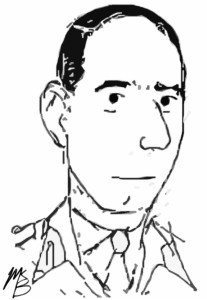
Lt-Col. D.B. Holman

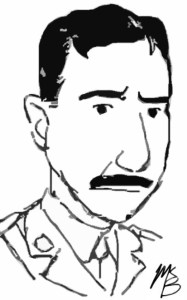
Lieutenant-Colonel D.B. Holman
Rocky Mountain Rangers

Throughout the operation he displayed great coolness under shell fire and bombing and by his energy and devotion to duty set a fine example to his men.

(M.C. citation, 1 Feb 1919)

Born on 4 June 1896 in Saint John, New Brunswick, Douglas Black Holman was a decorated First World War veteran and staff member for the Soldier Settlement Board at Salmon Arm, British Columbia. He had enlisted with the 6th Canadian Mounted Rifles in March 1915 and served in France as part of the 5th CMR and the 3rd Canadian Division Signal Company. He received a commission in the Canadian Engineers and earned the Military Cross for conspicuous gallantry in September 1918.
Continue reading

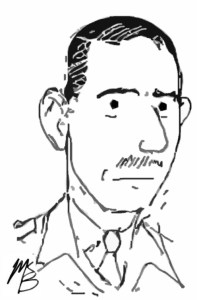
Lt-Col. C.A. Scott

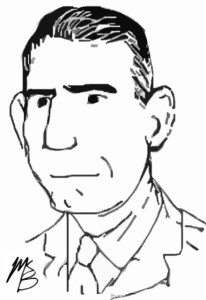
Lieutenant-Colonel C.A. Scott
Winnipeg Light Infantry

Maj. Scott is a smart, alert offr, who seems to have considerable ability and who has a orderly, logical mind. He has had a long record of efficient service both on staff and in Regt duty in Canada … It is recommended that he continue in employment as long as he is desired or until he is replaced by a battle casualty.

(Officer Survey and Classification Board report, 1 Mar 1945)

Born in Ottawa on 30 April 1903, Cuthbert Aiden Scott was a lawyer and member of Cameron Highlanders of Ottawa since 1925. Promoted to major in 1936, he volunteered with the unit when it mobilized as a machine gun battalion in July 1940. Following later administrative duties with National Defence Headquarters, Scott was appointed second-in-command of the Lanark and Renfrew Regiment in May 1942.

Continue reading

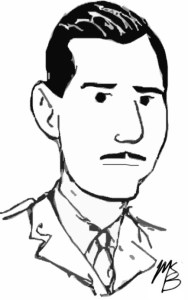
Lt-Col. H.F. Cotton

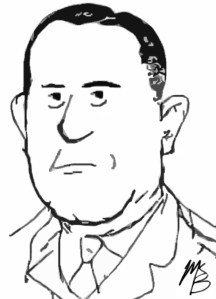
Lieutenant-Colonel Harry F. Cotton
Winnipeg Light Infantry

The Jap is not the great fighting machine we have been led to believe. He’ll battle like a madman if he outnumbers us, but this stuff about the little brown men throwing themselves on our bayonet points is just so much eye-wash.

(quoted in Vancouver Sun, 22 Nov 1944, 3)

Born in Vancouver in 1910, Henry Ferguson Cotton was a graduate of RMC and a Permanent Force officer since 1931. He served on exchange with the British Army in 1934 and was stationed in Winnipeg with the PPCLI at the start of the Second World War. He served as brigade major of the 7th Infantry Brigade in 1940 and overseas with the PPCLI until he was recalled in April 1942 to take command of the newly mobilized Winnipeg Light Infantry.

Continue reading

Lt-Col. J.A. Wilson

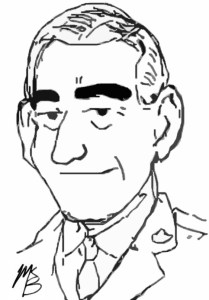
Lieutenant-Colonel J.A. Wilson
Winnipeg Grenadiers

The dead silence of that island in the half-light and the absolute lack of any sign of life as the men went ashore made everyone think the Japs had pulled inland and were waiting to trap us on the beach.

(Quoted in Times Colonist, 27 Jan 1944, 8)

Born in 1896, raised in Calgary, and educated in Scotland, James Anderson-Wilson was a First World War veteran of the Royal Air Force and a manager for the Hudson’s Bay Company in Winnipeg. A prewar militia officer with the Royal Winnipeg Rifles, he served as second-in-command overseas until being recalled to Canada in April 1942. He took command of the reformed and rebuilt 1st Battalion, Winnipeg Grenadiers, which had been destroyed at the Battle of Hong Kong five months before.

Continue reading

Maj. J.A. Hebb

Major John A. Hebb
West Nova Scotia Regiment

The Churchill visit was undoubtedly more than a matter of courtesy … This suggests that he completely recognizes Canada’s status as a world power as well as her unique position as a link with the United States on the one hand and Britain and France on the other. It is quite conceivable too that one of his motives was to draw the attention of the world to Canada’s present importance.

(quoted in National Post, 26 Jan 1952, 7)

Born in Hebbville, Nova Scotia on 19 August 1910, John Alexander Hebb was an graduate of University of King’s College and instructor at King’s College School in Windsor. An officer in the Lunenburg Regiment since 1927 and member of the COTC at university he mobilized with the West Nova Scotia Regiment on the outbreak of war in 1939.

Continue reading

Maj-Gen. R.H. Keefler

Major-General Holley Keefler
6th Infantry Brigade
3rd Canadian Division

Brigadier Keefler appreciating the need for quick and determined action and also appreciating the effect on morale the loss of their Commander would have on the troops of the brigade, took immediate command of the situation and directed the complete operation from the brigade level. Under heavy artillery and small arms fire, he personally visited the assaulting battalions, encouraging and directing the officers and other ranks and making tactical decisions on the spot. 

(D.S.O. citation, 17 Nov 1944)

Born in Weston, Ontario on 12 September 1912, Ralph Holley Keefler was a graduate of the University of Toronto and employee of Bell Telephone in Montreal. The son of a lieutenant-colonel, he joined the militia in 1925 and transferred to the artillery two years later. By 1938, he had qualified as a lieutenant-colonel and organized the first anti-aircraft battery in Canada. With the outbreak of war, he served as staff officer and later brigade major with the 2nd Artillery Division.

Continue reading

Brig. G.V. Whitehead

Brigadier Victor Whitehead
Royal Montreal Regiment
5th Infantry Brigade

… one of the guests was Brigadier Victor Whitehead, my former commander at 5th Brigade. He was a bitter man. Having trained the brigade for two years, he had been replaced, as being too old, by a former signals corps officer, Brigadier Bill Megill, who at that time did not have a clue about infantry and who later proved to be one of the Army’s most controversial brigade commanders.

(Jeffrey Williams, Far From Home, 219)

Born on 8 October 1895 in Montreal, George Victor Whitehead was a First World War veteran, insurance executive, and long serving militia officer. He attended Bishop’s College before being commissioned a lieutenant in the 148th Battalion in December 1915. He embarked for England in October 1916 and joined the 14th Battalion in France in April 1917. He was invalided from a shell wound at Passchendaele, rejoined the 14th in May 1918, and ended the war at the rank of captain.

Continue reading

Brig. P.E. Leclerc

Brigadier P.E. Leclerc
5th Infantry Brigade
7th Canadian Division

I am told that the breakdown in the brigadier’s health was a sequel to an order from H.Q. 2 Cdn Div requiring all staff officers and formation commanders to walk five miles every day.

(C.P. Stacey, “Recent Changes in Commands and Staff,” 1941)

Born on 20 January 1893 in Montreal, Pierre Edouard Leclerc was a First World War veteran, businessman, and long serving militia officer. He first enlisted as a private with 5th Field Company, Canadian Engineers in January 1915. He earned the Military Medal then took a commission in a new battalion raised in Quebec. He was wounded and shell shocked in August 1917 while attached to the 22nd Battalion. He served as commanding officer of Le Regiment De Joliette in the 1930s and by the outbreak of the Second World War was colonel of the 11th Infantry Brigade, Military District No. 4.

Continue reading

Lt-Col. L.T. Lowther

Lieutenant-Colonel L.T. Lowther
Prince Edward Island Light Horse
1st Infantry Brigade
West Nova Scotia Regiment

I think right now we are going through the most critical part of the war. What is needed most is equipment and money. Every plant in this country should be working night and day without holidays. It is not simply urgent that they do so; it is life and death. In my opinion, there isn’t anything that Canadians can do that they shouldn’t do, and do so quickly.

(Telegraph-Journal, 7 Jun 1941, 1)

Born in Prince Edward Island on 11 June 1896, Lewis Trueman Lowther was a First World War veteran, school principal, and commanding officer of the Prince Edward Island Light Horse since 1936. He enlisted with the 85th Battalion as a private in 1915 and served in France as a sergeant. After being commissioned as a lieutenant in England he returned to the front, where he was wounded in September 1918.

Continue reading

Brig. J.A. Roberts

Brigadier James Roberts
12th Manitoba Dragoons
8th Infantry Brigade

The commanding officer looks on the patrol not as a sergeant and three men, but as the sons or brothers of men he knows well at home, and he doesn’t want to commit some good boys from his or an adjoining town to a mission which may cost them their lives. While any decent person may sympathize with the commanding officer’s view, it simply won’t work in war. For one thing, a commander must be completely impartial and he must obey, with understanding, his superior’s orders.

(Roberts, Canadian Summer, 103)

Born in Toronto on 19 August 1907, James Alan Roberts was a University of Toronto graduate, hockey player and employee of the Sun Insurance Company. After two years working at the New York branch he returned to Toronto where he took a commission with the Governor General Horse Guards in 1933. By the late 1930s, he worked with his brother to start an ice cream business in Scotland. With this venture derailed by the outbreak of war in Europe, Roberts returned to Canada to volunteer in the army.

Continue reading