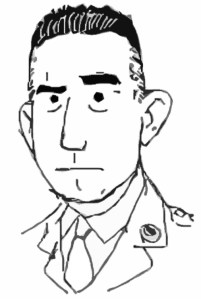
Lt-Col. F.A. Sparks

Lieutenant-Colonel F. Arthur Sparks
North Nova Scotia Highlanders
Finally the battalion started to run out of lieutenants. In the end we only had one left. This guy had to be shuffled from company to company; he was killed by a blast of machine-gun fire on the [Oct] 15th. Almost every company commander that went into that Breskens battle became a casualty—not wounded, killed.

(Quoted in Whitaker, Tug of War, 298)

Born on 14 June 1912 in Woodstock, Ontario, Frederick Arthur Sparks work for the textile mill Newlands & Co. in Galt and belonged to the Oxford Rifles militia regiment. He mobilized with the Highland Light Infantry  and went into action on D-Day as a company commander. Having been made second-in-command in July 1944, he transferred to the North Nova Scotia Highlanders after the replacement of Lieutenant-Colonel C.C. Petch with Lieutenant-Colonel D.F. Forbes at the beginning of August.
Continue reading

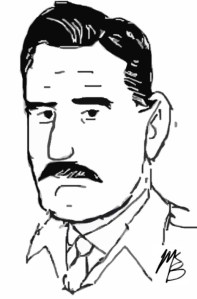
Lt-Col. D.F. Forbes

Lieutenant-Colonel D.F. Forbes
North Nova Scotia Highlanders

We are down here to study Anglo-American tactics in the field in the field in the hope of learning their methods and to take this knowledge back to our boys in England. But right now our biggest trouble consists of being bored stiff for lack of something to do.

(Quoted in Montreal Star, 18 Jan 1943, 2)

Born on 24 October 1906 in Tatamagouche, Nova Scotia, Donald Frederick Forbes belonged to the Colchester and Hants Regiment from 1921 to 1937 and then served as adjutant with the Cape Breton Highlanders. He transferred to the North Nova Scotia Highlanders in 1941 and served as second-in-command during the Normandy campaign. For refusal an order he viewed as a waste of his men, Lieutenant-Colonel Charles Petch was fired and Forbes took over on 3 August 1944.  

Continue reading

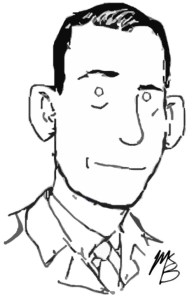
Lt-Col. K.R. Mitchell

Lieutenant-Colonel Karl Mitchell
North Nova Scotia Highlanders

If I have to work on this side of the Atlantic, I don’t know of any place I’d rather be than here (Brockville). O.T.C.’s have the most important mission in the army in Canada–preparing future officers who are going to lead the Canadian Army into battle.

(Kingston Whig-Standard, 31 Jul 1943, 2)

Born on 9 March 1894 in Dartmouth, Nova Scotia, Karl Reginald Mitchell was a Truro pharmacist and First World War veteran. He had joined the Princess Louise Fusiliers in 1910 and went overseas on a reinforcement draft in 1916. He joined the 27th Battalion in France, where he was twice wounded. He ended the war as a corporal. By the Second World War, he served the North Nova Scotia Highlanders at the rank of major.

Continue reading

Brig. H.W. Murdock

Brigadier H.W. Murdock
North Nova Scotia Highlanders
18th Infantry Brigade

Lance-Corporal Horatio W. Murdock was in charge of a Lewis gun which he used with great skill and deadly execution. When his platoon was putting outposts on a railway embankment strongly held by the enemy, he advanced with his Lewis gun at close range, giving covering fire and holding the enemy back, inflicting heavy casualties on him. By his courage and skill he enabled the post to be established with small

(The 85th in France, 170)

Born on 4 April 1895 in Amherst, Nova Scotia, Horatio Ward Murdock was former head of the Canadian Infantry Association and commanding officer of the Cumberland Highlanders from 1930 to 1936. He had enlisted with the 193rd Battalion in March 1916 and two years later reverted from sergeant to corporal to join the 85th Battalion in France. He earned the Good Conduct Badge and was training to be an officer when the war ended.

Continue reading

Lt-Col. A.G. McLellan

Lieutenant-Colonel Arnold McLellan
North Nova Scotia Highlanders

Breath sounds are clear all over chest, no adventitious sounds, but mor distant and weaker over and about scar … Complain of shortness of breath, slight on exertion, also pain at times in wound.

(Medical History of an Invalid, 30 Jul 1919)

Born on 20 April 1892 in Amherst, Nova Scotia, Arnold Guy McLellan was president of a gold mine company and commanding officer of the North Nova Scotia Highlanders since 1936. He had enlisted with the 193rd Battalion in March 1916 and two years later reverted from corporal to private to join the 85th Battalion in France. He was invalided from a through-and-through bullet to the chest in September 1918, which required a long recovery.

Continue reading

Lt-Col. C. Petch

Lieutenant-Colonel Charlie Petch
North Nova Scotia Highlanders
4th Princess Louise Dragoon Guards

France was tough from D-Day for a couple of months. Tough as you know what. But it was not Italy. Italy was a different show. In France we had the armor and the transport and the men and power. We drove and conquered. But in Italy it was a case of bracing the enemy and then when he gave, driving through.

(Ottawa Citizen, 4 Oct 1945, 13)

Born on 18 December 1904 in Manchester, Lancashire, England, Charles Petch came to Canada with his family as an infant. He graduated with a degree in commerce from McGill University and worked as an investment banker while also a militia officer with The Black Watch. He transferred to the 8th Reconnaissance Regiment as second-in-command in 1941. Following a series of promotions and senior officer courses, he was appointed commanding officer of the North Nova Scotia Highlanders in September 1942.

Continue reading