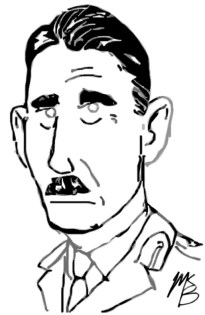
Lt-Col. J.M. McAvity

Lieutenant-Colonel Jim McAvity
2nd Armoured Regiment (Lord Strathcona’s Horse)
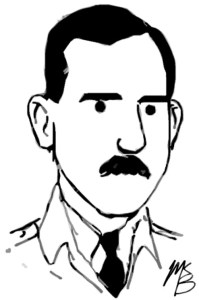
McAvity

Throughout these operations and previously in the Italian theatre throughout the breaking of the Gothic Line in August 1944, the crossing of the River Conca, up to Coriano Ridge and the battles of the Po Plain the outstanding ability, enthusiasm and drive of this officer was undoubtedly of very great bearing on the successful completion of these operations.

(D.S.O. citation, 8 May 1945)

Born on 20 November 1909 in Montreal, James Malcolm McAvity was a tennis player and businessman. A graduate of RMC in 1931, he joined the army in 1940 and was one of a dozen officers to attend tank tactics training in England. He personally bought 18,000 acres of land for the Meaford tank range near Camp Borden. He went overseas with the Halifax Rifles in June 1943 and transferred to the Lord Strathcona’s Horse in August.
Continue reading

Lt-Col. P.G. Griffin

Lieutenant-Colonel Pat Grffin
2nd Armoured Regiment (Lord Strathcona’s Horse)
Griffin

Many orders may mean the sacrifice of life to gain an ultimate important objective such orders will not be given by the comd without a great deal of consideration and when given they must be obey instantly and implicitly.

(P.G. Griffin, LdSH War Diary, 28 Apr 1944)

Born in County Down, Ireland, on 8 March 1893, Philip (Patrick) George Griffin was an advertising manager in Toronto and a First World War veteran. He had joined the Royal Canadian Dragoons in 1913 and earned a commission with the Canadian Machine Gun Brigade at Vimy Ridge. He served the Lord Strathcona’s Horse until retirement in 1929 for health reasons. Ten years later he joined his old regiment as a captain and went overseas as second-in-command in November 1941.

Continue reading

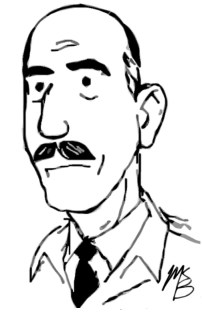
Brig. N.A. Gianelli

Brigadier Norman Gianelli
2nd Armoured Regiment (Lord Strathcona’s Horse)
Gianelli

I resent very much his using the title brigadier. He has it on his door. I don’t know whether he uses it to make people think they are coming up before someone high and mighty, but as far as I’m concerned, a brigadier is only a lance-jack general.

(Councilman David Post in Toronto Star, 17 Feb 1955, 26)

Born in Toronto on 29 January 1895, Norman Angelo Gianelli was a First World War veteran and professional army officer. Commissioned with the 8th Canadian Mounted Rifles in February 1915, he went overseas for training and instructional duties. While on a tour of the front with an artillery battery in May 1916, he was wounded and shell shocked. On return to Canada in 1917, he served as assistant adjutant-general in Ottawa, and joined the Permanent Force in 1920. Serving for twenty years with the Lord Strathcona’s Horse, he succeeded Lieutenant-Colonel F.M.W. Harvey in July 1940.

Continue reading

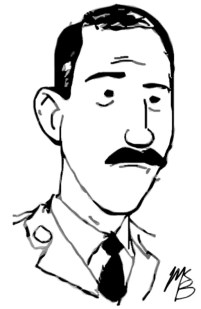
Lt-Col. F.M.W. Harvey

Lieutenant-Colonel Fred Harvey
Lord Strathcona’s Horse
Harvey

At this critical moment, when the enemy showed no intention whatever of retiring, and fire was still intense, Lt. Harvey, who was in command of the leading troops, ran forward well ahead of his men and dashed at the trench, skillfully manned, jumped the wire, shot the machine-gunner and captured the gun. His most courageous act undoubtedly had a decisive effect on the success of the operation.

(V.C. citation, 8 Jun 1917)

Born in Athboy, County Meath Ireland, on 1 September 1888, Frederick Maurice Watson Harvey worked as a rancher and surveyor after immigrating to Alberta at the age of twenty. In February 1915, he enlisted with the 13th Canadian Mounted Infantry before being commissioned over a year later. Overseas he transferred to the Lord Strathcona’s Horse in France as a lieutenant in November 1916. Initially awarded Distinguished Service Order for actions on 27 March 1917, his heroism was soon determined to merit the Victoria Cross.

Continue reading