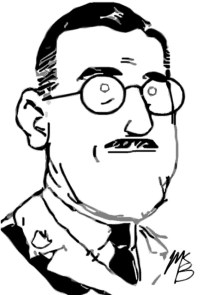
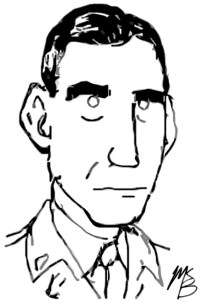
Lt-Col. K.W. MacIntyre

Lieutenant-Colonel Ken MacIntyre
Rocky Mountain Rangers
Essex Scottish Regiment
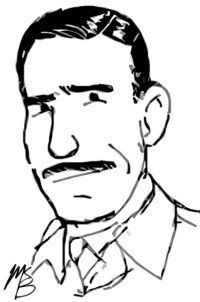
MacIntyre

Communism—Communism is the rule of a godless dictatorship and I will oppose with all the mental, moral and physical strength I posses the treasonable activities of those whose object is to overthrow our government by force and establish a dictatorship controlled from abroad.

(Quoted in Windsor Star, 2 Feb 1949, 6)

Born on 12 December 1914 in Milton, Ontario, Kenneth Wilfred MacIntyre was a Western University graduate and underwriter for a Windsor insurance company. He enlisted as a second lieutenant in the Essex Scottish Regiment on the outbreak of war and served as adjutant overseas. He returned home a captain in April 1942 and became second-in-command of the Oxford Rifles, mobilized for home defence.
Continue reading

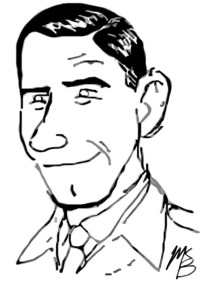
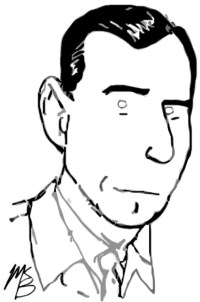
Lt-Col. P.W. Bennett

Lieutenant-Colonel Peter Bennett
Essex Scottish Regiment
Bennett

It is with the deepest regret that I find now our paths going in different ways. You on to greater successes than ever. I want to express my great appreciation to you all for your wonderful support, your enthusiasm, your fighting qualities and your good humour. Good luck to you all and give him couple from me as often as you like,

(Bennett farewell, War Diary, Sept 1944)

Born on 7 February 1917 in Fort William, Ontario, Peter Ward Bennett was a University of Toronto graduate, accountant, and junior officer with the 48th Highlanders of Canada. By the D-Day landings of 6 June 1944, he had been promoted to brigade major with the 7th Infantry Brigade. After a commanding officer of the Essex Scottish was relieved of command from nerves in July and his successor was evacuated wounded, the 27-year-old Bennett was assigned to take over the regiment on 8 August 1944. He recalled, “I arrived about dusk and somebody immediately came up to me and asked if I’d seen the new colonel yet. I said ‘That’s me,’ and he looked very surprised.”

Continue reading

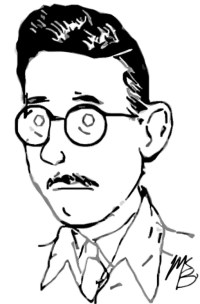
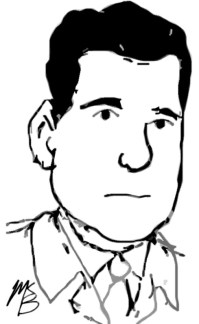
Lt-Col. T.S. Jones

Lieutenant-Colonel Tommy Jones
Essex Scottish Regiment
Jones

It is the biggest event of the day when the mail comes and there are one or two letters in the bunch for you, I cannot stress too strongly the part letters play in keeping up a fighting man’s morale. Sometimes it is difficult for the boys in the trenches to write daily, but that is no reason for us back home to be derelict in our duty to them. They cannot receive too many letters.

(Quoted in Windsor Star, 15 Nov 1944, 10)

Born on 14 February 1913 in Fort William, Ontario, Thomas Sidney Jones enlisted as a lieutenant with the Lake Superior Regiment and served as battalion adjutant. Rising through the ranks, he transferred to the Essex Scottish Regiment in January 1944, succeeding Major J.D. Mingay as second-in-command. Two weeks after D-Day, Jones joined an advance party to Normandy before the rest of the regiment followed on 5 July 1944.

Continue reading

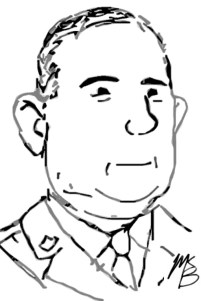
Lt-Col. B.J.S. Macdonald

Lieutenant-Colonel Bruce Macdonald
Essex Scottish Regiment
MacdonaldBJS

This case, the first of its kind to be tried in a Canadian Military Court, is of considerable importance, not only in that it concerns the murder of a large number of Canadian prisoners of war; but also, in that it is the first occasion …in which an effort will be made to establish, not only the immediate responsibility of a high ranking officer, for atrocities committed under his order, but also his vicarious responsibility for such crimes, committed by troops under his command, in the absence of a direct order.

(Macdonald opening address, Kurt Meyer on Trial, 97)

Born on 2 December 1902 in Rose Bay, Nova Scotia, Bruce John Stewart Macdonald held a law degree from the University of Alberta and was a prominent lawyer in Windsor, Ontario. Having belonged to the Essex Scottish Regiment since 1929, he went overseas as a company commander but later returned for instructional duties. Having missed the Dieppe Raid which virtually annihilated the regiment, Macdonald became second-in-command and succeeded Lieutenant-Colonel John Mothersill in May 1943.

Continue reading

Lt-Col. J.H. Mothersill

Lieutenant-Colonel John Mothersill
Essex Scottish Regiment
Mothersill

It must be extremely difficult to you all back home to imagine the terrific ordeal which the boys so courageously endured … In face of such a curtain of rifle, machine gun, mortar and artillery fire, the battalion never once faltered, the lads advanced unflinchingly and throughout the engagement were cheerful and solute.

(Quoted in Windsor Star, 7 Oct 1942, 3)

Born on 26 March 1897 in Charlottetown, Prince Edward Island, John Henderson Mothersill was a First World War veteran and president of a Windsor insurance agency. Rejected for enlistment earlier, he joined a reinforcement draft in 1917 and served in France as a signaller with the field artillery. Postwar he gained a commission with the Essex Scottish Regiment and by mobilization in September 1939 was second-in-command.

Continue reading

Lt-Col. F.K. Jasperson

Lieutenant-Colonel Fred Jasperson
Essex Scottish Regiment

And how magnificently you have supported those soldiers, all those who have gone from this community into the services, I know from personal experience, and there are thousands to bear witness to this, that we never wanted for anything you could give us, the greatest of which was that intangible thing, morale—the very fibre and life of a soldier—morale. You gave it to us by the real love and marvelous generosity of your hearts.

(Quoted in Windsor Star, 25 Jul 1945, 6)

Born on 16 July 1900 in Kingsville, Essex, Ontario, Frederick Kent Jasperson was a lawyer, fiction writer, and scholar, having attended the University of Toronto, Columbia Law School, and Osgoode Hall. Active in the militia, he had belonged to the 48th Highlanders of Toronto and was commissioned in the Essex Scottish as he started a law career in Windsor. As third-in-command, he led the regiment overseas in summer 1940, following the advance party of Lieutenant-Colonel A.S. Pearson and second-in-command J.H. Mothersill.

Continue reading

Lt-Col. A.S. Pearson

Lieutenant-Colonel A.S. Pearson
Essex Scottish Regiment

This time we are ready. In 1914, war came upon us like a bombshell. This time we have known of its imminence. We are more or less prepared for the orders that came today. We must accept things as they are and do our duty.

(Pearson quoted in Windsor Star, 3 Sep 1939, 12)

Born on 11 November 1891 in Toronto, Arthur Stephen Pearson was a First World War veteran, lawyer, businessman, and commanding officer of the Essex Scottish since 1936. Twenty years earlier he enlisted as a captain in the 234th Battalion, reverted to lieutenant to join the 75th Battalion in France and was twice wounded in action. On the outbreak of war in September 1939, Pearson immediately started a recruitment drive to bring the regiment to full strength.

Continue reading

Lt-Col. J.E.C. Pangman

Lieutenant-Colonel Jack Pangman
Carleton and York Regiment
Essex Scottish Regiment
Pangman

We have entered a major war. Industry is anticipating or is already sharing in the increased money put into circulation by our war effort … The war profits of the present struggle will not accrue to the common shareholders so directly or fully as was the case in the last war. This time government control of prices and excess profit taxes should be an effective rein on large profits. Industry will have to pay its share of the war costs.

(Pangman, Financial Post, 20 Jan 1940, 8)

Born in Toronto on 12 June 1908, John Edward Case Pangman was a stockbroker and fifteen-year prewar member of the Queen’s Own Rifles. He mobilized for active service in June 1940, and went overseas with the regiment as second-in-command the following summer. After attending the War Staff College at Camberley, England, he was posted to Sicily to replace Lieutenant-Colonel F. Dodd Tweedie of the Carleton and York Regiment in August 1943.

Continue reading