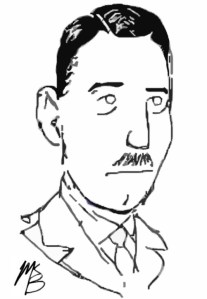
Lt-Col. R.M. Ross

Lieutenant-Colonel Dick Ross
Cameron Highlanders of Ottawa
The Camerons were the best damned machine-gun battalion that ever worked on any front. The men were wonderful all the way through. Ottawa can be proud of every one of them.

(Quoted in Ottawa Journal, 12 Dec 1945, 2)

Born on 28 May 1909 in Montreal, Richard Montgomery Ross was a prewar member of the Cameron Highlanders of Ottawa. He rejoined the battalion with the outbreak of the Second World War and rose to major and served as “D” Company commander when the machine gun and mortar unit deployed on D-Day. “There was a tremendous amount of smoke, and everything in view seemed to be afire,” Ross recalled. “Shells were bursting around, but so terrific was our air support that there was very little ‘aimed’ fire.”
Continue reading

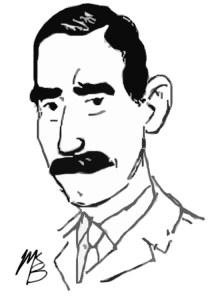
Lt-Col. P.C. Klaehn

Lieutenant-Colonel P.C. Klaehn
Cameron Highlanders of Ottawa

He brought to his task of Commanding Officer all devotion to duty and considerable knowledge as a Machine Gunner, which has resulted in the Unit under his command attaining a very high standard of training … This officer, over and above his normal military duties, has contributed all his spare time to the organization and development of sports within my division.

(O.B.E. citation, 2 Sep 1943)

Born in Valleyfield, Quebec on 10 September 1895 and raised in Saskatchewan, Percy Carl Klaehn was a sportsman, teacher, and First World War veteran. He had enlisted in the 6th Universities Company out of North Battleford in June 1916 and joined the PPCLI on a reinforcement draft by the end of the year. He earned a commission in 1918 and rejoined the PPCLI during the final phase of the war. With the outbreak of the next war in 1939, Klaehn joined the Saskatoon Light Infantry as a captain.

Continue reading

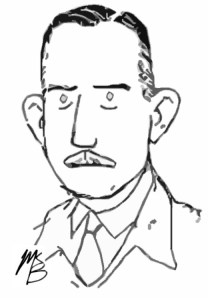
Lt-Col. G.F. Clingan

Lieutenant-Colonel G.F. Clingan
Cameron Highlanders of Ottawa

Under very heavy shell fire, this Officer reconnoitered the ground for advantageous positions, and showed great skill and judgement in his selection, as all positions later proved tactically sound. During the operations, when his crews were suffering from very heavy shell fire, he went from gun to gun, helping with the wounded, and greatly encouraged the men by his fine example. Although wounded, he refused to leave his command and continued to carry on until relieved, a period of several hours.

(M.C. citation, 1 Jan 1918)

Born in Virden, Manitoba on 1 July 1894, George Francis Clingan was a decorated veteran of the First World War and the Siberia Expeditionary Force. His uncle, Liberal MLA and doctor Lieutenant Colonel George Clingan, raised the 79th Battalion, which the twenty-year old Clingan joined in October 1915. He was commissioned the next year in England and went to France as a reinforcement officer for the 4th Brigade, Canadian Machine Gun Company.

Continue reading

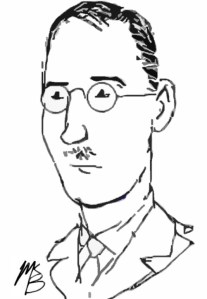
Lt-Col. G.H. Rogers

Lieutenant-Colonel G.H. Rogers
Cameron Highlanders of Ottawa

We have had a couple of visits from Fritz planes and some of our boys got into action against him on one visit as he came down very low. They claim to have got the rear gunner as they put it out of action but we have no confirmation. It certainly broke the monotony for them and they are anxiously awaiting for a return visit.

(Ottawa Citizen, 8 Apr 1941, 19)

Born in Ottawa on 28 July 1895, George Harold Rogers was a funeral director, First World War veteran, and commanding officer the Cameron Highlanders of Ottawa since 1936. He had enlisted in the 38th Battalion as a private in May 1915, served garrison duty in Bermuda and arrived in England with the unit in June 1916. Promoted to regimental company sergeant-major, he deployed to France two months later. A year later he was recommended for a commission and by 1918 was seconded to the Royal Air Force.

Continue reading