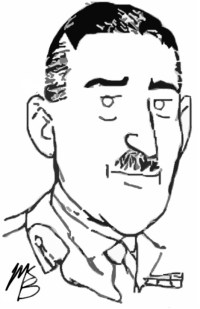
Lt-Col. W.D. Heyland

Lieutenant-Colonel Dalt Heyland
Calgary Highlanders
Heyland

His outstanding leadership and sound tactics were reflected in the continued successes of his battalion in battle. Major Heyland by his devotion to duty, vigorous enthusiasm and fearless bearing has earned for himself the admiration and respect of his entire unit and by his efforts has contributed very materially to the efficiency and the fine record of the Calgary Highlanders.

(D.S.O. citation, 10 Nov 1945)

Born on 31 October 1906 in Claresholm, Alberta, William Dalton Heyland commanded “B” Squadron in the 15th Alberta Horse, having belonged to the militia since 1930. He reverted to lieutenant on mobilization and joined the Calgary Highlanders as a platoon leader overseas by the end of 1940. He went overseas with his friend and fellow Alberta Horse member Lieutenant Ross Ellis. Another local friend wrote home from England that “Dalt is just as handsome as ever and it is a treat to watch the feminine eyes follow him down the street. We would say Claresholm is doing alright.”
Continue reading

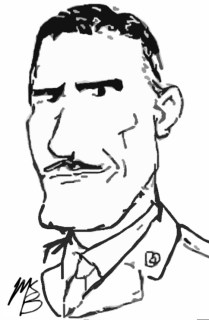
Lt-Col. R.L. Ellis

Lieutenant-Colonel Ross Ellis
Calgary Highlanders
Ellis

This is quite a day in history, 5 years of war … Day by day doesn’t count anymore because so often there is no distinction between days and then a date catches up to me. I realize it as a date that brings me closer to you and that is what I am living and praying for.

(Ross Ellis to Marjorie Ellis, 3 Sept 1944)

Born on 15 June 1915 in High River, Alberta, Ross Laird Ellis was a sergeant in the 15th Alberta Horse before qualifying for a commission in August 1940. He joined the Calgary Highlanders in England as a platoon leader by the end of the year but was soon selected for training as an instructor. He was posted to Camp Vernon, British Columbia at the rank of major. He reverted to captain to return overseas and rejoin the Highlanders when they deployed to France in July 1944.

Continue reading

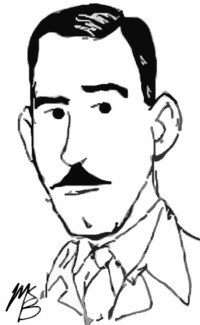
Lt-Col. D.G. MacLauchlan

Lieutenant-Colonel Don MacLauchlan
Calgary Highlanders
MacLauchlan

There is no doubt that MacLauchlan never succeeded in hiding his fears well enough to give his men the impression that he was courageous–a possible great failing in a field commander. He had voided the front even though, ironically, he found himself under fire, or close to it, several times … In later years [Brig] Megill would recall: ‘It was quite genuine battle exhaustion that knocked him out.

(Bercuson, Battalion of Heroes, 180)

Born on 19 July 1905 in Charlottetown, Prince Edward Island and raised in Alberta, Donald George MacLauchlan joined the Calgary Highlanders out of high school in 1921. His enthusiasm for soldiering and time devoted to militia training cost him his job as a newspaperman just a year before the outbreak of war. He went overseas as a company commander in August 1940 and became second-in-command in England. He succeeded Lieutenant-Colonel J. Fred Scott in February 1942, although his appointment appeared tenuous.

Continue reading

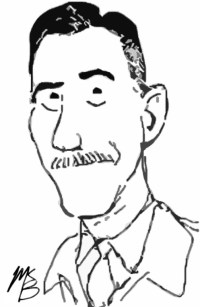
Lt-Col. J.F. Scott

Lieutenant-Colonel Fred Scott
Calgary Highlanders
Scott

Perhaps the person reading this Diary right now has become rather fed up with my constant reference to Battle Drill but perhaps if you continue on reading this Diary and come to the day, say a year or two from now, and read “The Calgary Highlanders captured an important enemy position by a machine-like pincer movement” you will see why I have stressed so much this type of training.

(War diary, 31 Dec 1941)

Born in Meaford, Ontario on 3 July 1892, James Fred Scott enlisted with the 89th Battalion in 1916 and served with the Royal Flying Corps before returning to the infantry with the 50th Battalion in France. He was struck off strength to Canada with a diagnosis of trench fever in summer 1917. Following demobilization, he completed a law degree in Toronto and passed the Alberta Bar. Commanding officer of the 15th Alberta Horse since 1936, in September 1939, he succeeded Lieutenant-Colonel H.H. Riley of the Calgary Highlanders, who had been declared medical unfit for active service.

Continue reading