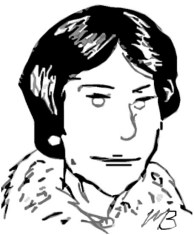
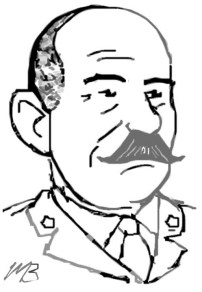
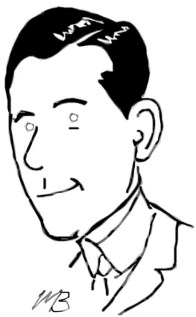
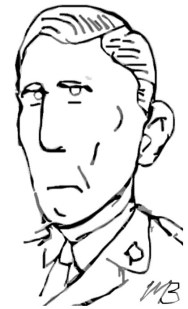
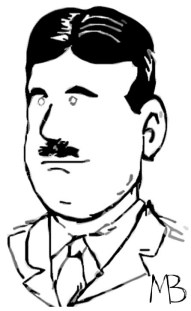
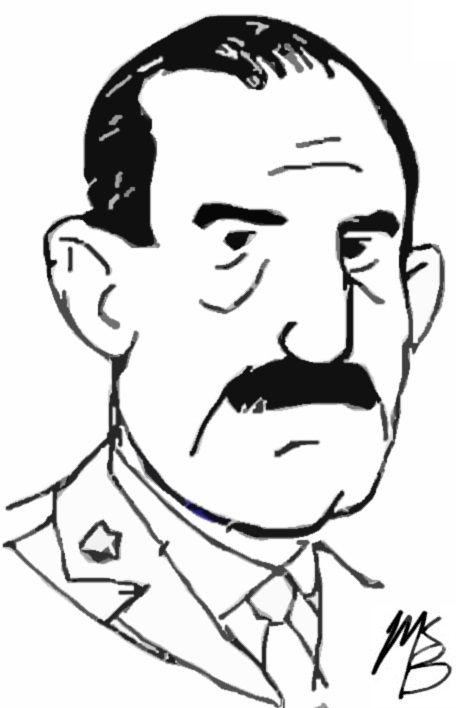
Lt. Col. Grant

Lieutenant Colonel D.M. Grant
122nd (Muskoka) Battalion
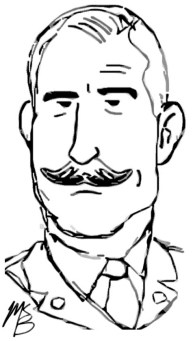
Grant

This affords an opportunity to the men who are accustom to working in the bush to take on their regular line of work for the next year or so, have a trip to England or France and if on the ground when Peace is declared will have the time of their lives. It is ENTIRELY a separate force from the fighting units.

(122nd Batt., Recruiting Poster, 1917)

Born on 2 April 1868 in Deleware, Ontario, Donald McKenzie Grant was a Huntsville lawyer and son of Rev. George Munro Grant (1835—1902). Commanding officer of the 35th Regiment, he was initially authorized to raise a new battalion from Simcoe County in November 1915. However, he soon ordered to switch with Lieutenant Colonel D. H. MacLaren of the 157th to organize the 122nd from Muskoka. A local newspaper wrote, “Such a change would have made many men give up their work in disgust, but such was not the case with Col. Grant, who thus roved his true military worth, sincerity, loyalty and determination.” Continue reading
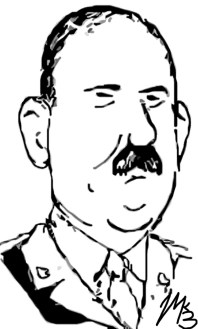
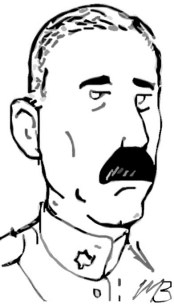
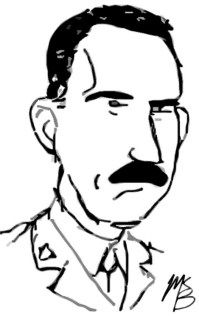
Lt. Col. Bruce

Lieutenant Colonel W.H. Bruce
173rd (Canadian Highlanders) Battalion
WHBruce

A very good officer well qualified and with many years experience in the Militia. He is tactful, popular with all ranks and fitted for command. He has organized and trained a battalion which does him credit.

(Maj. Gen. Lessard, Inspection Report, 12 Oct 1916)

Born on 26 May 1870 in Hamilton, Ontario, Walter Hamilton Bruce was a seed merchant and militia officer. He had belonged to the 13th Royal Regiment for 14 years and the 91st Highlanders for nine years. In February 1916, Bruce began to organize the 173rd Battalion from his hometown.   Continue reading

Lt. Col. Fee

Lieutenant Colonel J.J.H. Fee
109th (Victoria & Haliburton) Battalion
Fee

& Lady Flora McCrea Eaton

LadyEaton

I have often thought that if I were a man I would be at the front to relieve them. The honor and glory of the Canadian soldier is all his own because he has made it himself. It is our duty now that we see that he is not deserted.

 (Lady Eaton, Toronto Star, 8 Dec 1917, 5)

On 24 May 1916, the 109th Battalion under the command of John James Havelock Fee assembled before a crowd of ten thousand in Lindsay, Victoria Country as it prepared to depart overseas. Speeches followed by Victoria member of parliament and Minister of Militia, Sir Sam Hughes, and the battalion’s sponsors, Sir John and Lady Eaton.

Continue reading

Lt. Col. Scobell

Lieutenant Colonel S.B. Scobell
235th (Durham and Northumberland) Battalion
Scobell

I had the opportunity of returning to Canada but refused absolutely, and fought hard until I landed this position. I am still and will continue to be paid by the Dominion Government, but will be attached to the Imperial army for duty.

 (Scobell, Toronto Star, 13 August 1917)

Sidney Brandage Scobell, a druggist and Orangeman with twelve years’ experience in the 19th Lincoln Regiment, was authorized to raise the 235th from the counties of Northumberland and Durham in 1916. He was born in St. Catharines on 7 February 1871. After his understrength unit was broken up in May 1917, Scobell sought a position in the field. By August, he was seconded to the Imperial Forces.

Continue reading

Lt. Col. Genet

Lieutenant Colonel Harry Genet
58th (Central Ontario) Battalion
Genet

Is it too much to expect that our fellow-citizens, now living in Canada in comfort and security, purchased by the blood of their brothers here in France, will sin all differences, political or otherwise, and unite in the common cause of our Empire and make one great effort to support and reinforce their army in the field?

(Col. Genet, Toronto Globe, 17 Dec 1917, 3)

Born on 20 February 1864 in London, England, Harry Augustus Genet had served for five years in the 2nd Middlesex Regiment before immigrating to Canada. He worked for the Adams Wagon Works in Brantford and joined the 38th (Dufferin) Rifles. After Lieutenant Colonel F. A. Howard left with the First Contingent in 1914, Genet assumed command of the 38th regiment. In April 1915, he was authorized to raise the 58th Battalion from central Ontario, Toronto and Hamilton. Continue reading

Lt. Col. White, MP

Lieutenant Colonel G.V. White, MP
224th (Lumbermen) Battalion
GWhite

We cannot be too generous in our treatment of our sailors, soldiers and airmen. I take it that this measure will recompense fairly generously the men and women who have served their country well. I believe the people of Canada will wholeheartedly endorse this very important legislation.

(Senator White, Debates, 11 Aug 1944, 452)

Gerald Verner White was Conservative Member of Parliament for Renfrew North. Born on 6 July 1879 in Pembroke, Ontario, he was the son of Peter White (1838—1906), a lumber tycoon and former Speaker of the House of Commons. After his father’s death, the younger White won a by-election for Renfrew North in 1906. A militia officer with the 42nd Regiment, White enlisted as senior major with J. F. De Hertel’s 130th Battalion in November 1915. By February 1916, he transferred to the 224th Foresters as second-in-command to Alexander McDougall. Continue reading

The Anti-German

Lieutenant Colonel W.M.O. Lochead
118th (North Waterloo) Battalion
Lochead

Give us leaders! Men of ability. Soldiers who know what soldiering is. We deem it unwise to hand our bodies over to the keeping of a four-month recruit. If you want to accomplish results in recruiting, get a competent soldier at the head of the regiment.

(Berlin Trade and Labour Council, 1915)

William Merton Overton Lochead was a leading figure in the Berlin business community and insurance firm manger. He was born on 10 January 1874 in Camden Township, Ontario and graduated from Queen’s University. Although he had limited experience in the militia, Lochead was selected to raise the 118th Battalion from Berlin, Ontario due to his reputation for business management and organization. Continue reading

Lt. Col. Rose

Lieutenant Colonel Hugh A. Rose
98th (Lincoln & Welland) Battalion
Rose

This is a great and inspiring cause, that of fostering peace and goodwill between two great nations, and will serve as an example to all the countries of the world. No better time could have been chosen for the launching of such a movement. The Kellogg Peace Pact has lately been ratified and confirmed by the leading powers of the world.

 (Rose’s speech on International Peace, Gardener’s Chronicle of America, 1929, 363)

Hugh Alexander Rose was born on 12 April 1881 in Welland, Ontario. He joined the 44th Regiment in 1897, rising to the rank of lieutenant colonel. After the outbreak of the Great War, Rose and his militiamen were tasked with guarding the Welland Canal. In November 1915, he was authorized to organize the 98th Battalion. Continue reading

Lt. Col. McPhee

Lieutenant Colonel Jack McPhee
177th (Simcoe Foresters) Battalion

Knowing the Colonel slightly, we were affected by that indefinable quality of true manliness which he radiated. The affection was contagious. Doubtless it affected thousands.

(Northern Advance, 7 Dec 1922, 2)

After returning home in March 1916 from one year in the trenches, Captain John Bingham McPhee married Eva Hamlin Harrison. Instead of a honeymoon, he organized the 177th Battalion from Simcoe County. Born in Barrie, Canada West on 26 March 1865, McPhee was an accountant with twenty-two years’ experience in the 35th Regiment. He had enlisted as a paymaster with J.A.W. Allan’s 20th Battalion and served on the front until he was recalled to command the new battalion.

Continue reading

Lt. Col. Sparling

Lieutenant Colonel H.C. Sparling
73rd (Royal Highlanders of Canada) Battalion
Sparling

The dissolution of the battalion caused the greatest regret and depression among all ranks, and the officers, who had witness the splendid work of the men in the Bn. during the last four months, could only express the highest admiration for the way all N.C.O’s and men carried out their duties during that time, with the knowledge of the possible dissolution of the battalion.

(Sparling, 73rd War Diary, 19 Apr 1917, 36)

Herbert Cosford Sparling was born in Kerrwood, Ontario on 6 February 1880. Previously a member of the Mississauga Horse, Sparling had moved to Ottawa shortly before the First World War. He enlisted as senior major in Peers Davidson’s 73rd Battalion, which deployed to France in March 1916 as part of the 12th Infantry Brigade, 4th Division. Sparling assumed command in December 1916, but the battalion was removed from the line on 9 April 1917 just before the battle of Vimy Ridge. Continue reading