Lt. Col. Wilson

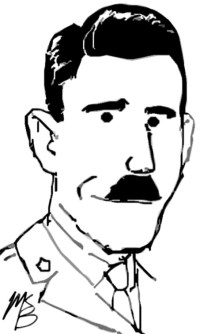
Lieutenant Colonel Alex Wilson
33rd (London) Battalion

Wilson

I know more about Colonel Wilson, as a military man, than his own brother does. To my mind, he is one of the finest fellows living, even though he is a Grit … I picked him out against the wishes of everyone in London, and I am afraid they have made the old man’s road somewhat hard. He is very hard of hearing which, to my mind, accounts for all the trouble on his part.

 (Sam Hughes to Robert Borden, 12 Nov 1915)

Born on 17 November 1855 in Seaforth, Canada West, Alexander Wilson was pharmacist with thirty-five years’ experience with 33rd Huron Regiment. A noted marksman, Wilson was a five-time member of Canada’s Bisley team and won several Dominion Rifle Association awards. By the time he was appointed to lead the 33rd Battalion in late 1914, he was, however, past his prime.

Continue reading

The Scapegoat

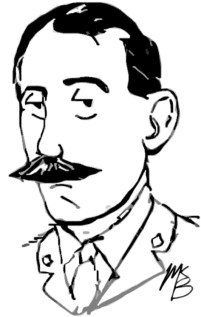
Major H. LeRoy Shaw
87th (Grenadier Guards) BattalionShawHL

Major Shaw said that he was going overseas because he had no ties or obligations to hold him back, and that his spirit was only the same as many of his friends, and of many with whom he was not acquainted. With them, he said, it was a question of where their home and family duties ended and duty to their country began. 

(Maj. Shaw speech, Montreal Gazette, 14 Feb 1916, 14)

Born on 28 June 1878 in Prince Edward Island, Harold LeRoy Shaw was manager of the Montreal Imperial Life Assurance Company when he joined the 87th Battalion in September 1915. He went to France as a company commander in August 1916. He served as acting battalion commander between March and May 1917, and led the 87th through the Battle of Vimy Ridge.

Continue reading

The Vimy Pilgrim

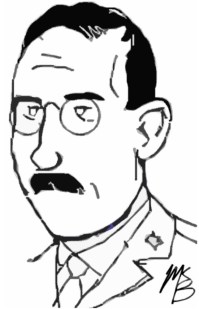
Lieutenant Colonel D.E. Macintyre, D.S.O., M.C.
28th (Northwest) Battalion
Macintyre

At Vimy, Canadians for the first time during the war were a united body. They did what the French failed to do, what the British couldn’t do. They captured the ridge and did it in one jump, in such a manner that it shocked the Germans and caused their leader, Ludendorff, considerable dismay. The French today even are amazed that Canada did that, just as they are amazed that Canada sent 600,000 men to war when she didn’t have to.

(Lt. Col. Macintyre speech, Owen Sound Sun-Times, 9 Apr 1938, 11)

Born on 17 May 1885 in Montreal, Duncan Eberts Macintyre went west at the age of fifteen. He became, as he termed it “a Prairie storekeeper,” as well as land broker and insurance agent in Moose Jaw, Saskatchewan. He was commissioned as a lieutenant in the 28th Battalion in October 1914. He was promoted to captain shortly after the battalion deployed to France and by early 1916 was serving on the general staff with a series of Canadian brigades. He organized and led the 1936 Vimy Pilgrimage, and further helped to cement the battle in public consciousness with his 1967 book, Canada at Vimy

Continue reading

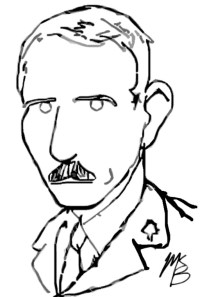
Lt. Col. Lalor

Lieutenant Colonel W.J.A. Lalor, M.C.
2nd Motor Machine Gun Brigade

This Officer gives a history of four years service in France, as a Machine Gun officer. Towards the end of his service, he states, he was developing symptoms of a fear neurosis, and this was finally precipitated by being blown up … There has been a strong tendency to repress his Overseas experiences, and towards self-reproach, as a result of his break-down. He states, now, he is afraid of the crowds, and cannot go to a Theatre. He is afraid to go over a bridge for fear that he will jump off. He has not made up his mind about his future.

 (Maj. A.A. Fletcher, Neurological Report, 13 Nov 1919)

Born in Muskoka, Ontario on 22 May 1878, William James Austin Lalor was a prospective homesteader in the west when the Great War broke out. He enlisted with the 1st Battalion in September 1914 and went to France in February 1915. Shortly thereafter he transferred to the Machine Gun Brigade, earning the Military Cross and a promotion to captain.

Continue reading

Lt. Col. Wilkin

Lieutenant Colonel F.A. Wilkin, M.C.
1st Motor Machine Gun Brigade
Wilkin

Has headaches – nearly constant and at times severe. States that his memory and thinking and reasoning power become very poor after he has been at work a few hours. Insomnia.

 (Medical Board Report of Lt Col. Wilkin, 28 Sept 1918)

Born in Yokohama, Japan on 8 July 1872, Francis Alfred Wilkin was an Alberta land surveyor and member of the Corps of Guides. He joined the Canadian Motor Machine Gun Brigade in January 1915 as a lieutenant and succeeded Lieutenant Colonel Raymond Brutinel as commanding officer in October 1916. Worn down after long service, he was replaced in March 1918 by Major William Keating Walker.

Continue reading

Lt. Col. Scroggie

Lieutenant Colonel J.A. Scroggie, D.S.O., M.C.
16th (Canadian Scottish) Battalion

Some correspondents have stated that trench warfare days were days of monotony broken by half-hours of Hell. While that is exaggerated it is in a sense true.

(Lt. Col. Scroggie speech, Kingston Standard, 7 Mar 1922, 2)

Born in Scotland on 4 August 1890, James Austin Scroggie immigrated to Canada in 1911 and took up fruit farming in British Columbia. He enlisted with the 30th Battalion as a private in November 1914, and joined the 16th Battalion in the field on a reinforcement draft six months later. Having proven himself as the NCO leader of the bombing section, he was commissioned a lieutenant on 12 May 1916. By the end of the war, he was twice-wounded, three-times mentioned in dispatches, and earned the Military Cross and two Bars.

Continue reading

Lt. Col. Semmens

Lieutenant Colonel J.N. Semmens
78th (Winnipeg Grenadiers) Battalion

 it will act like a wild tornado to fan the flame of anger that burns within us now when we see the cryptic phrase, “Remember Hong Kong.” That anger is not alone aimed at the Japanese but at anything that impedes or hampers the all-out effort of this country of ours. To the Winnipeg Grenadiers it means grim preparedness.

(Col. Semmens, Ottawa Citizen, 11 Mar 1942, 3)

Born in Toronto on 7 October 1879, John Nelson Semmens was a Winnipeg architect and militia captain in the Winnipeg Grenadiers. He first joined the 100th Battalion under the command of fellow architect Lieutenant Colonel J.B. Mitchell before transferring to the 78th to act as second-in-command. He assumed temporary command during Battle of Passchendaele until Lieutenant Colonel James Kirkcaldy recovered from his wound in March 1918.

Continue reading

Col. Nelles

Colonel Charles M. Nelles
Royal Canadian Dragoons

It will thus be seen that he had enjoyed the exceedingly unique distinction of having served his Sovereign and country on three occasions, the Canadian Rebellion, the Boer War and the world hostilities, which broke out in 1914. His military honors were many. He was mentioned in dispatches, awarded the D.S.O. and became a Companion of the Order of St. Michael and St. George.

(Brantford Expositor, 15 Feb 1936)

Born in Brantford, Canada West on 31 August 1865, Charles Mecklan Nelles was a Permanent Force soldier and veteran of the 1885 Rebellion and the Boer War. In summer 1914, his son Norman, who had just received a commission at RMC, joined a British Army regiment while his son Percy was already serving in the Royal Canadian Navy. On 29 January 1915, Second Lieutenant Norman Nelles of the Northamptonshire Regiment was killed in France. Four months later his father went to France as commander of the Canadian Dragoons, which fought dismounted as part of the 1st Canadian Division.

Continue reading

Lt. Col. Leonard

Lieutenant Colonel Ibb Leonard, D.S.O.
7th Canadian Mounted Rifles & Canadian Light Horse

Leonard

Talking about spring, I was much struck on Monday when up in front to see the buds and grass started in little pieces here & there that had not been touched by shell fire even trees that were half shot away seemed to be make an effort to abide the summons of spring and sprout a few little buds.

 It was almost pathetic and made you want to curse and crush the ruthless hands that are responsible for all this destruction and sadness in the face of beautiful and wonderful nature. One almost wonders why God allows it but wonderful are his ways and we must try and understand them and have faith that He is working out a great problem for our good. I can hear the steady rumble of the guns as well as the singing bird.

(Lt-Col. Leonard to sister, 2 May 1917)

Born in London, Ontario, on 30 July 1882, Elton Ibbotson (Ibb) Leonard was a graduate of the Royal Military College and McGill University. On the outbreak of the Great War, as a militia officer with eleven years in the 1st Hussars, he applied several times for an appointment with the Cavalry Brigade without success. Discouraged by the few opportunities for a cavalryman in a modern war, he was appointed to command the 7th Canadian Mounted Rifles in February 1915.

Continue reading

Lt. Col. Watt

Lieutenant Colonel E.J. Watt
240th (Renfrew) Battalion

Watt

I would prefer to assist in organizing Bombing squadrons composed of men of 45 years of age & over who could qualify as aviators.… Teach us to fly and drop Bombs. Just as soon as we are competent and capable send us to France, give us machines and bombs and say ‘This is your machine, there are your bombs and there’s the enemy country so go to it and if you come back, there are plenty more bombs. And I herewith volunteer to take the first machine across and knock H– out of enemy infantry & country.

(E.J. Watt to defence minister, 26 Sept 1939)

Born in Lamarck, Ontario on 4 July 1884, Edgar John Watt was a stove and furnace manufacturer with twelve years’ experience in the 42nd Regiment. Although denied a posting as second-in-command of the 130th Battalion for lacking field officer qualifications, by June 1916 he had been given command of the 240th Battalion. Former 42nd Regiment commanding officer, fifty-three year old Lennox Irving, came out of retirement to serve as Watt’s second-in-command.

Continue reading